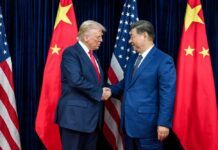
Trump’s AI chip ban has backfired, igniting a Chinese tech rally that lifted the Hang Seng Tech Index more than 60% in 2025.
At a Glance
- Hang Seng Tech Index jumped 60% in 2025, closing at 5,946.59 in September.
- Baidu, Tencent, Alibaba, and JD.com saw major single-day gains.
- Surge comes despite China’s worsening property crisis.
- Analysts warn of overheating and market disconnect.
A Rally Built on Restrictions
The Trump administration’s renewed AI chip export ban has paradoxically fueled China’s tech surge. By limiting access to U.S. semiconductors, Washington pushed investors to bet on domestic innovation.
The Hang Seng Tech Index, launched in 2020, climbed above 5,900 in September, with companies like Baidu recording gains of over 9% in a single day. Alibaba, Tencent, Meituan, and JD.com also benefited as optimism spread across Hong Kong’s financial hub.
Watch now: Hong Kong Stock Market Outlook: Hang Seng Index Poised for Steady Growth in 2025
The rally signals investor faith in Beijing’s industrial strategy, contrasting sharply with China’s slumping real estate sector. Property giants remain mired in debt, yet capital floods into technology stocks, highlighting a sharp sectoral divide.
Risks of Market Overheating
The 60% surge has sparked warnings from analysts who see signs of overheating. Trading volumes in Hong Kong tech shares have spiked, with both institutional and retail investors chasing quick returns.
The gains occur against a backdrop of economic stress. Evergrande’s collapse in 2021 set off a property crisis that still weighs on China’s growth. Despite this drag, investors treat tech as a hedge against U.S. volatility and China’s own downturn.
Bulls argue Chinese tech remains undervalued given its potential in AI and e-commerce. Bears counter that valuations are detached from fundamentals, echoing past tech bubbles where hype exceeded reality.
Strategic Blowback for Washington
Beijing’s market surge exposes a paradox for U.S. policymakers. Measures intended to slow China’s technological ascent appear to be accelerating it instead. The ban on advanced chips has given cover to domestic innovation efforts and spurred global investors to pour money into Chinese firms.
Hong Kong’s exchange plays a central role by connecting mainland firms with foreign capital. This bridge reduces China’s reliance on U.S. markets, undercutting Washington’s leverage in future trade disputes.
The timing complicates American strategy. With potential trade talks looming, Beijing now has less incentive to compromise. Strong domestic markets offer funding for research, expansion, and global competition, reducing the sting of U.S. sanctions.
Sources
Hong Kong Exchanges and Clearing