The Trump administration has escalated its criticism of European digital regulations, launching a deregulatory AI policy aimed at defending free speech and threatening tariffs on EU member states.
At a Glance
- Trump calls EU’s Digital Services and Markets Acts “Orwellian”
- New U.S. AI framework emphasizes free speech and minimal oversight
- U.S. threatens tariffs in retaliation for digital regulation
- EU imposes fines on U.S. tech giants under DMA compliance rules
- Conflict increases risk of regulatory fragmentation and “splinternet”
Divergent Regulatory Philosophies
The Trump administration’s campaign against the European Union’s digital regulations has intensified in 2025, with senior officials branding the EU’s Digital Services Act (DSA) and Digital Markets Act (DMA) as suppressive and anti-innovation. These laws, enacted in 2022, were designed to limit the market power of dominant tech firms and address online disinformation. However, the White House now frames them as ideologically driven constraints on free expression and commercial growth.
Watch now: ‘There’s no room for negotiation’: EU’s big message on digital regulation · YouTube
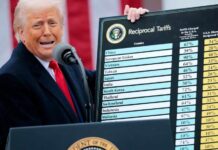
In response, President Trump unveiled a deregulatory AI strategy that promotes innovation and shields tech companies from what he deems regulatory overreach. This policy shift signals a widening transatlantic rift over the future of internet governance, data rights, and corporate accountability. U.S. rhetoric has included threats of retaliatory tariffs on EU nations pursuing what Washington considers discriminatory digital policies.
Strategic Clashes and Global Impacts
At the core of this dispute are divergent views on digital sovereignty and the role of governments in shaping online ecosystems. The European Commission maintains that the DSA and DMA are necessary to protect consumers, promote competition, and curb online harm. Yet, the Trump administration views these measures as covert economic protectionism targeting U.S. tech firms like Meta, Google, and Apple.
In January 2025, the U.S. withdrew from the OECD global tax framework, further souring digital trade negotiations. Subsequently, multiple American companies were fined under DMA compliance requirements, triggering a diplomatic backlash. The State Department has issued statements condemning EU policies as “censorship disguised as fairness,” while the European Commission remains firm, asserting that its laws are non-negotiable in trade talks.
Tech Industry in Turbulence
Caught in the middle are multinational tech corporations now navigating parallel legal frameworks across the Atlantic. These firms are lobbying both governments for policy clarity, with concerns about regulatory duplication, compliance costs, and market access uncertainty. For companies reliant on AI, the U.S. deregulation push offers short-term relief, but exposure to EU penalties remains a looming risk.
The standoff also complicates cross-border data flows, cloud infrastructure deployment, and AI training access. Analysts warn that without a coordinated international framework, companies may be forced to fragment their services—one model for Europe, another for the U.S., and potentially others for Asia-Pacific markets. This fragmentation accelerates fears of a “splinternet,” where global internet cohesion deteriorates under the pressure of competing legal regimes.
Outlook and Escalation Risks
As Trump intensifies his deregulatory agenda ahead of the 2026 election cycle, U.S. foreign policy is expected to increasingly link trade access with digital regulatory alignment. Meanwhile, EU officials, led by Commission President Ursula von der Leyen, have reaffirmed their commitment to strict enforcement of platform accountability laws, even at the cost of escalating economic tensions.
The stakes extend beyond economics into ideological territory: the Trump administration’s framing of the issue as a battle for free speech has elevated the digital policy debate into a cultural conflict. With no sign of compromise, the U.S.-EU tech standoff may set the tone for how global AI governance, digital rights, and platform regulation evolve over the next decade.
Sources
European Union Institute for Security Studies