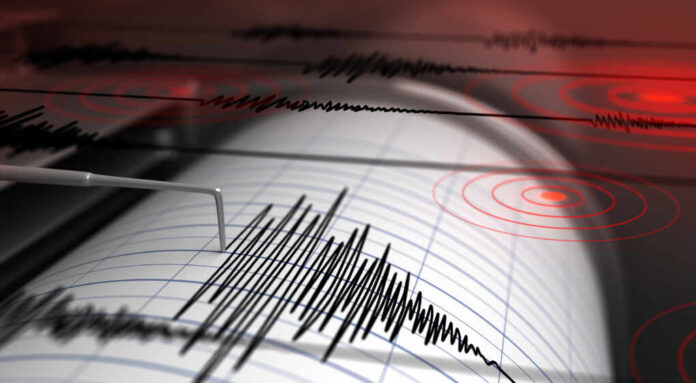
A rare 3.0-magnitude earthquake jolted the New York–New Jersey metro area late Saturday night, rattling nerves across multiple states but leaving no reported injuries or damage.
At a Glance
- A magnitude 3.0 quake struck Hasbrouck Heights, NJ, at 10:18 p.m. on August 2, 2025
- Epicenter was 6 miles deep and roughly 13 miles west of Midtown Manhattan
- Tremors felt from Brooklyn and Upper Manhattan to Connecticut and Virginia
- No injuries, structural damage, or casualties reported
- Residents heard booms and felt shaking lasting several seconds
Urban Quake, Rural Faults
The Saturday night jolt originated in Hasbrouck Heights, a densely populated suburb of New Jersey that lies west of the Hudson River and just beyond Manhattan. The quake’s tremors reached across five states, prompting thousands of social media posts and emergency service calls from confused and startled residents.
The seismic event lasted only a few seconds but was powerful enough to rattle windows and prompt evacuation of some apartment buildings. Several residents described loud bangs preceding the vibrations, likening the sensation to a subway train passing directly beneath their homes.
Watch now: Earthquake RATTLES New York: 3.0 Magnitude Tremor · YouTube
The Empire State Building’s official account quickly reassured followers with a post reading, “I AM FINE,” though several other prominent landmarks reported brief alarms being triggered. Transit systems remained unaffected, and emergency management offices confirmed no disruption to infrastructure or utilities.
Deep Faults, Shallow Preparedness
Unlike the seismic hotspots of California or Alaska, the Tri-State region sits atop an intraplate fault system—ancient and largely dormant lines such as the Ramapo Fault. These faults can still produce occasional low-level quakes, which often propagate widely due to the dense, rigid bedrock of the Eastern U.S.
This event follows a more severe magnitude 4.8 earthquake that struck Tewksbury, NJ, in April 2024—the most powerful to hit the region in over a century. While that quake caused minor structural damage and disrupted power in some zones, Saturday’s temblor appears to have left only shaken nerves in its wake.
Geologists warn, however, that such events serve as crucial reminders. With much of the region’s infrastructure designed without seismic resilience in mind, even modest tremors could have outsize impacts if they occur near key transit lines, bridges, or aging residential zones.
Rattled But Resilient
While emergency alerts did not escalate into broader disaster protocols, city agencies across New York and New Jersey issued reminders to check for minor structural issues—such as shifted foundations or cracked ceilings—and to secure loose items in homes and workplaces.
Seismologists say aftershocks are unlikely but possible. Residents are urged to remain vigilant and to treat even low-magnitude quakes as wake-up calls for preparedness.
Urban planners and engineers have long debated the need for seismic retrofitting in the Northeast. Saturday’s quake, though minor, has reignited conversations among experts about the fragility of century-old infrastructure in one of the world’s most densely populated corridors.