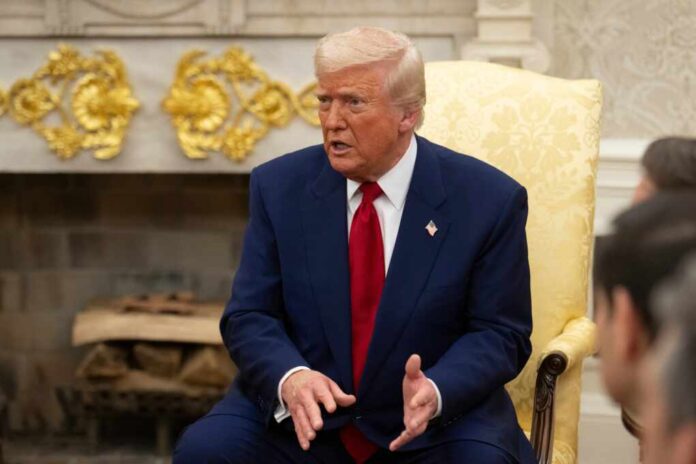
Labor Day 2025 marks the first under Donald Trump’s second term, and unions and grassroots groups are mobilizing nationwide against what they describe as a sweeping rollback of worker protections.
At a Glance
- Trump administration has weakened labor protections, cut OSHA staffing, and curtailed union rights
- More than 900 “Workers Over Billionaires” protests took place across the U.S.
- Chicago demonstrations denounced Trump’s proposal to send in federal forces
- 1.2 million immigrants have left the labor force in 2025 amid enforcement crackdowns
Trump’s Labor Rollbacks
President Trump’s return to office has brought sweeping changes to workplace regulations. His administration has frozen or reversed safety rules, rolled back wage protections for federal contractors, and sharply reduced staffing at the Occupational Safety and Health Administration. According to labor advocates, these measures weaken enforcement and endanger vulnerable workers, particularly in low-wage and high-risk sectors. Union leaders say the cuts to oversight of mine safety and construction standards increase the likelihood of preventable accidents.
In addition, Trump dismissed the National Labor Relations Board chair earlier this year, leading to the voiding of union contracts covering roughly one million federal employees. Collective bargaining rights were curtailed in several agencies, a move that unions contend erodes decades of hard-fought gains. Labor groups argue that these changes disproportionately harm home care and service workers, many of whom are women of color.
Watch now: Watch: Massive Anti-Trump Union-Led Labor Day Protests Rock Chicago &
Cities Across America | AC1G
“Workers Over Billionaires” Protests
In response, thousands of workers and supporters joined a coordinated campaign of marches and rallies. Organized under the banner “Workers Over Billionaires,” more than 900 protests were held across the country, from major metropolitan centers to smaller industrial towns. Demonstrators called attention to economic inequality, rising corporate influence, and what they described as the sidelining of basic worker needs.
Union officials highlighted that programs such as Social Security, Medicaid, and public education are increasingly overshadowed by policies benefiting wealthy donors and corporations. Speakers at rallies urged Americans to remember Labor Day’s original purpose as a day to recognize working-class contributions rather than corporate power.
Chicago as a Flashpoint
One of the largest demonstrations took place in Chicago, where an estimated 5,000 to 10,000 people gathered. The protest was fueled by Trump’s suggestion that he may send National Guard troops and immigration enforcement agents into the city. Local leaders, including Mayor Brandon Johnson, rejected the plan and argued that militarization would destabilize communities rather than improve safety.
The city has also launched legal efforts to resist potential federal deployments, framing the dispute as both a labor and civil rights issue. Protesters carried signs declaring “No troops in Chicago” and “Protect Workers, Not Billionaires,” underscoring how the labor movement has merged workplace concerns with broader questions of democracy and governance.
Shrinking Labor Force
Beyond protests, data released by the U.S. Census Bureau and Pew Research Center shows a sharp contraction in the workforce. Between January and July 2025, more than 1.2 million immigrants—both documented and undocumented—have left the labor pool. Analysts attribute this shift to intensified immigration enforcement, which has disrupted sectors heavily dependent on immigrant labor.
Agriculture, construction, and home health care have been among the hardest hit, with employers reporting shortages that slow projects and drive up costs. Economists warn that reduced labor participation could limit growth and strain service systems in states with aging populations. Labor advocates argue that these disruptions highlight the importance of immigrant workers to the national economy.
Sources