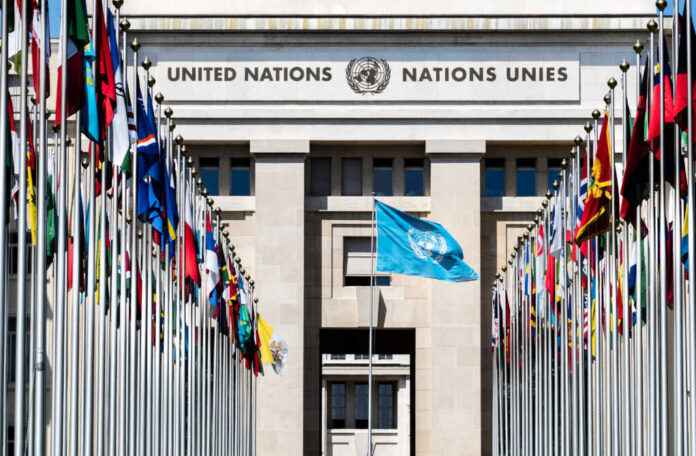
The United Nations Human Rights Council convened an urgent debate on El Obeid after UN officials and member states warned that roughly 500,000 civilians could be at risk if the siege worsens.
Quick Take
- A core group of five states pushed the urgent debate after warning of escalating violence in and around El Obeid.
- Britain said ten straight days of drone strikes had killed at least 50 civilians and damaged civilian infrastructure.
- United Nations officials and rights groups warned that about 500,000 people were at risk, including more than 100,000 displaced people.
- Sudan’s delegation did not respond during the council session, leaving the allegations unanswered at that meeting.
Why the Council Acted
Germany, Ireland, the Netherlands, Norway, and the United Kingdom submitted the request that triggered the urgent debate. Their case rested on a fast-moving military threat around El Obeid, where they said civilians were trapped by siege-like conditions and cut off from basic services. The United Kingdom’s human rights ambassador also said the danger had become immediate and that the city faced a widening risk of atrocities.
The warning was not vague. Britain said ten consecutive days of drone strikes had killed at least 50 civilians across El Obeid and North Kordofan. The same statement said the attacks caused major damage to civilian infrastructure and left about 500,000 civilians at risk of large-scale atrocities. Those figures gave the debate a sharper edge than a routine political argument. The allegations increased the urgency of the council’s discussion.
What the Evidence Showed
Reporting cited by the council pointed to repeated drone strikes, destroyed infrastructure, fuel shortages, water shortages, and thousands of trapped residents. The United Nations Human Rights Office also said sexual violence had followed the spread of the conflict and displacement routes across Sudan. Together, those findings suggest a wider pattern of harm, not just one isolated battlefield event. UN officials and rights organizations have compared the reported risks in El Obeid with patterns documented elsewhere in Sudan.
Other findings deepened the concern. The Sudan Doctors Network said the Rapid Support Forces had detained 20 doctors, including four women, since overrunning el-Fasher, and that their whereabouts remained unknown. If confirmed, attacks on medical personnel could further reduce access to healthcare for civilians. It also shows how the war has spread beyond front lines into detention, health care, and the basic machinery of survival.
What Is Still Missing
The debate also exposed a major weakness in the public record. Sudan’s delegation declined to address the council, so there was no official state response to test the claims in open session. The materials discussed at the debate also did not include direct civilian testimony from inside El Obeid, which leaves outside observers relying on official warnings and secondhand reporting. That gap does not erase the allegations, but it does limit what can be confirmed right now.
That absence of a rebuttal is part of the larger problem in Sudan. The absence of competing accounts or additional primary evidence makes independent verification more difficult and leaves important questions unresolved. In that vacuum, distrust grows fast on both sides of the political divide.
For readers looking past the diplomatic language, the core issue is plain. The council is hearing warnings about siege conditions, drone strikes, mass atrocity risk, sexual violence, and the detention of doctors at the same time. The debate reflects the challenge of responding to warnings of mass civilian harm while investigators continue gathering evidence.
Sources:
youtube.com, reuters.com, globalr2p.org, instagram.com