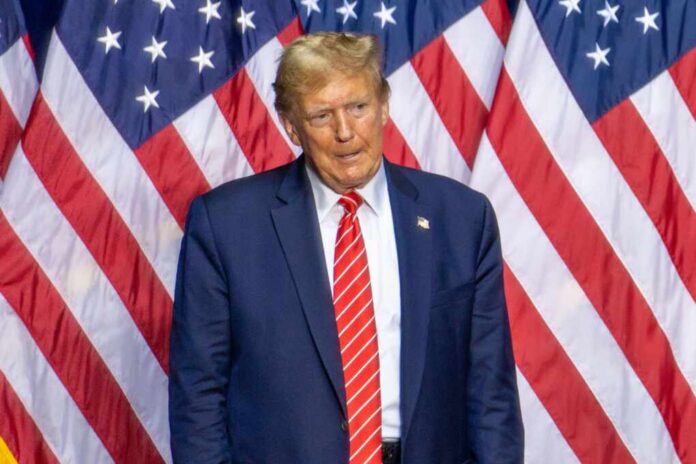
As Israel and Hamas stand on the brink of resuming full-scale war in Gaza, the Trump administration’s flagship peace framework has reached a critical deadlock. Designed to enforce security, free hostages, and rebuild the territory under strict conditions, the plan is now paralyzed by the very hard realities of the conflict. Disputes over disarmament, the future role of Hamas, and long-term security guarantees have frozen the deal’s crucial next phases, raising the immediate threat of a wider regional conflict two years after Hamas’s initial October 7, 2023, attack.
Story Highlights
- Israel and Hamas are re‑mobilizing for major combat in Gaza as a U.S.-brokered Trump‑aligned peace plan deadlocks.
- Disputes over hostages, Israeli withdrawals, Hamas’ future role, and long‑term security have frozen the deal’s next phases.
- Two years of war since Hamas’ 7 October 2023 massacre have left Gaza shattered and Israel under constant threat.
- Regional players like Iran and Hezbollah are poised to exploit any collapse of the framework, raising the risk of a wider war.
How Trump’s Gaza Framework Reached a Breaking Point
As of January 2026, President Donald Trump’s 20-point Gaza peace plan has reached a critical breaking point. The U.S.-proposed “Comprehensive Plan to End the Gaza Conflict,” closely tied to Trump’s foreign‑policy circle, began with a hard‑nosed premise: stop the rockets, free the hostages, secure Israel’s borders, and then rebuild Gaza under stricter conditions. The first phase, launched on October 8 in the war’s second year, traded hostages for Palestinian prisoners, partial Israel Defense Forces withdrawals, and more humanitarian aid. That fragile formula briefly reduced large‑scale fighting but never created genuine trust between the sides.
Later phases demanded much tougher decisions. Israel pushed for ironclad guarantees that Hamas would lose meaningful military power and governing authority. Hamas, which still controls networks on the ground and retains remaining hostages and rockets, resisted disarmament and political marginalization. Each side accused the other of foot‑dragging or bad faith. As talks stalled, Israeli forces resumed targeted strikes and limited ground operations, while Hamas quietly reorganized, setting the stage for a potential return to full‑scale war.
The deadly war in Gaza is reportedly set to resume after President Trump's peace deal between Israel and Hamas stalls. The Israeli military has drawn up plans for a new ground operation inside Gaza. Rather than disarming, Hamas has been rebuilding military capabilities according… pic.twitter.com/6YWPOsJS9O
— Robbie Mouton (@mcgmouton57) January 10, 2026
From October 7 Massacre to a Stalled Peace: What Changed and What Didn’t
Hamas’s October 7, 2023 assault shattered any remaining illusions about the group’s intentions. Coordinated rocket barrages and infiltration into Israeli communities killed around 1,200 people and dragged some 250 hostages into Gaza. Israel’s response—airstrikes, siege, and ground invasion—devastated much of the enclave and displaced most of its population. Over two years, tens of thousands of Palestinians have been killed, infrastructure has collapsed, and entire neighborhoods have been erased from the map.
For many American conservatives, the Trump‑linked peace framework looked like a late attempt to impose order after years of failed “process.” Unlike earlier, foggy two‑state formulas, this plan tied concrete steps—hostage releases, phased IDF pullbacks, and reconstruction money—to strict security benchmarks and regional normalization. But the same ideological stubbornness that doomed Oslo and later efforts still dominates. Hamas refuses to act like a demilitarized political actor. Israel, burned by past withdrawals and under constant rocket threat, refuses to gamble again with its citizens’ lives.
Regional Powder Keg: Iran, Hezbollah, and the Risk of a Larger War
Behind the Gaza front sits a bigger strategic fight that your television sound bites rarely explain. Since 2023, exchanges of fire between Israel and Hezbollah on the Lebanese border, Iranian drone and missile attacks, and Houthi disruptions in the Red Sea have turned the conflict into a multi‑front test of Western resolve. A breakdown of the Trump‑branded Gaza plan would not just mean more urban combat in Khan Younis or Gaza City; it could reopen intense fighting with Hezbollah and embolden Tehran’s proxies across the region.
That reality matters for Americans who are tired of endless wars and globalist entanglements. A stable, pro‑U.S. security architecture in the Middle East keeps shipping lanes open, energy prices in check, and Iran’s ambitions contained—without flooding the region with American troops. When negotiations freeze and rockets fly, pressure rises for Washington to choose between deeper involvement or accepting a power vacuum that radical actors will gladly fill.
What This Means for American Conservatives at Home
For a U.S. audience already dealing with inflation, border chaos, and years of woke foreign‑policy experiments under Biden, the Gaza stalemate feels familiar: lofty rhetoric, little accountability, and enemies who sense weakness. The difference now is that a Trump‑aligned administration is trying to reverse that pattern. The Gaza framework emphasizes leverage and conditionality instead of blank checks. Hostages and security come first, reconstruction and political recognition come later, and only if terror infrastructure is dismantled.
Yet even the best‑designed plan cannot erase decades of bad incentives overnight. International institutions continue targeting Israel and sometimes equating its actions with a U.S.-designated terrorist organization, while largely failing to restrain Hamas or Iran. That legal and diplomatic pressure constrains Israeli decision‑makers without forcing real behavioral change from jihadist actors. For Americans who value national sovereignty and the right of self‑defense, the message is clear: if this is how the global system treats Israel, it will not treat the United States much better.
Looking Ahead: Hard Choices for Trump, Israel, and the Region
As Israel and Hamas prepare for another possible round of major operations, Trump’s team faces a stark choice. They can tighten conditions and risk watching the framework collapse into renewed war, or they can soften demands and risk entrenching Hamas as a permanent, armed power on Israel’s border. Neither path is pretty, but the second would reward terrorism and further erode the credibility of American deterrence—exactly what many conservative voters warned would happen after years of indulgent, appeasement‑minded diplomacy.
For families watching from Arizona, Ohio, or Texas, this conflict may feel far away, yet its lessons hit close to home. Peace without security is an illusion, whether on the streets of southern Israel or at the U.S. southern border. Deals that ignore ideology and refuse to draw clear red lines only postpone the next crisis. As Trump’s administration tries to salvage its Gaza framework, the outcome will say a lot about whether the West has finally relearned that simple, hard truth.
Watch the report: Has The Gaza Ceasefire Deal Failed – And Will It Ever Move To Phase 2?
Sources:
- From 7 October 2023 to 7 October 2025: A timeline of two years of war in the Gaza Strip
- Israel-Hamas war: A timeline of events in the year since 7 October amid fears of wider Middle East conflict
- Two years on: A timeline of key events in Israeli-Palestinian conflict