A rare public clash between the White House and the Vatican is now putting America’s first pope under a harsh political spotlight at home.
Quick Take
- President Donald Trump attacked Pope Leo XIV on Truth Social, calling the pontiff “WEAK on Crime” and “terrible for Foreign Policy.”
- Trump’s criticism centered on the pope’s anti-war comments on Iran and reported opposition to U.S. actions involving Venezuela, immigration enforcement, and crime policy.
- The dispute is unusual because Leo XIV is the first American pope, raising the stakes for U.S. Catholics and Washington-Vatican relations.
- So far, public reporting indicates no response from Pope Leo to Trump’s remarks.
Trump’s Truth Social post turns a religious figure into a domestic political target
President Trump used a Sunday-night Truth Social post to sharply criticize Pope Leo XIV, portraying the new pontiff as aligned with liberal politics rather than spiritual leadership. Trump called Leo “WEAK on Crime, and terrible for Foreign Policy,” and urged him to focus on religion instead of politics. In follow-up comments to reporters after landing in Washington, Trump reportedly described Leo as “very liberal” and said he was “not a fan,” keeping the dispute in the headlines.
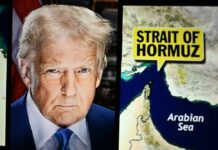
The immediate issue is a widening disagreement over war and security policy. Coverage described Pope Leo as making anti-war statements regarding the Iran conflict and warning against what he called a “delusion of omnipotence.” Trump, by contrast, framed American force and pressure campaigns as necessary to protect U.S. interests. For conservatives focused on deterrence and border security, the fight highlights a recurring question: when faith leaders weigh in, do they clarify moral stakes—or blur accountability for elected officials?
Iran, Venezuela, and immigration are driving the argument more than theology
Reporting on Trump’s remarks says he accused Pope Leo of supporting Iran acquiring nuclear weapons, a claim Trump also referenced in his airport comments. The same dynamic shows up in the Venezuela-related claims. Trump reportedly argued the pope opposed U.S. military actions tied to drug trafficking and prisoner releases. Trump defends aggressive measures as public-safety policy, while Leo is characterized as pushing back on militarized approaches. The uncertainty leaves room for both sides to rally their bases without resolving facts.
An American pope intensifies political polarization among U.S. Catholics
Pope Leo XIV’s election is historically significant because he is the first American to lead the Catholic Church. That novelty is part of why Trump’s critique landed so loudly: it places a global religious figure into the center of U.S. culture-war dynamics. Trump reportedly suggested Leo’s American background influenced the choice of cardinals so the Vatican could “deal with Trump,” a provocative claim that is presented as Trump’s view rather than a confirmed explanation of the conclave’s decision-making.
Trump also referenced the pope’s brother Louis, praising him as “MAGA” and suggesting he would prefer that kind of outlook. That personal angle reinforces how quickly the controversy moved from geopolitical questions into identity politics. For many conservatives, frustration grows when prominent institutions appear to echo the same progressive messaging voters feel they’ve been fighting in schools, corporations, and bureaucracy. For many liberals, the clash reads as another example of Trump pressuring independent institutions. Either way, the episode underscores a common conclusion: national unity keeps breaking down, even in spaces that once stayed above partisan fights.
What the dispute signals about governance, diplomacy, and the “elite” trust gap
Several outlets framed Trump’s comments as a breach of diplomatic norms, since the pope is also a head of state and a major moral authority for more than a billion Catholics worldwide. At the same time, voters across the spectrum increasingly believe powerful institutions—government, media, academia, and even some religious hierarchies—operate as self-protecting “elites” rather than servants of ordinary people. This story feeds that perception because it turns a theological office into another battlefield for influence, messaging, and loyalty tests.
For now, Trump attacked Pope Leo publicly; the criticism focused on crime, immigration, and foreign policy; and there has been no reported papal response in the referenced coverage. The larger significance is what comes next. If the Vatican answers, it could deepen a diplomatic rift. If it stays silent, the fight may still reshape how American Catholics—and Americans generally—see the boundary between moral witness and political advocacy in a government many already believe is failing them.
Sources:
Trump takes aim at Pope Leo, calling him “WEAK on Crime, and terrible for Foreign Policy.”
Trump accuses Pope Leo of being ‘terrible for foreign policy’ over pontiff’s anti-war comments
Trump attacks Pope Leo calling him ‘weak on crime’ and ‘terrible for foreign policy’