President Trump’s U.S.-led Board of Peace now claims a deal for the complete disarmament of Hamas in Gaza, a move that could reshape Middle East security and test whether terror networks can truly be forced to lay down their weapons.
Story Snapshot
- Trump says the Board of Peace has reached a phased deal for the full disarmament of Hamas and other armed groups in Gaza, tied to Israeli troop withdrawal and new local security forces.
- The disarmament roadmap builds on Trump’s earlier Gaza peace plan, which called for demilitarizing Gaza, deploying an International Stabilization Force, and installing a technocratic Palestinian government.
- Board of Peace documents outline an eight‑month timeline where Hamas tunnels are destroyed, heavy weapons surrendered, and new vetted Palestinian police take over security.
- Major questions remain about Hamas’s real willingness to comply and whether international forces can enforce disarmament against a hardened terror network.
Trump’s Board of Peace Announces Hamas Disarmament Deal
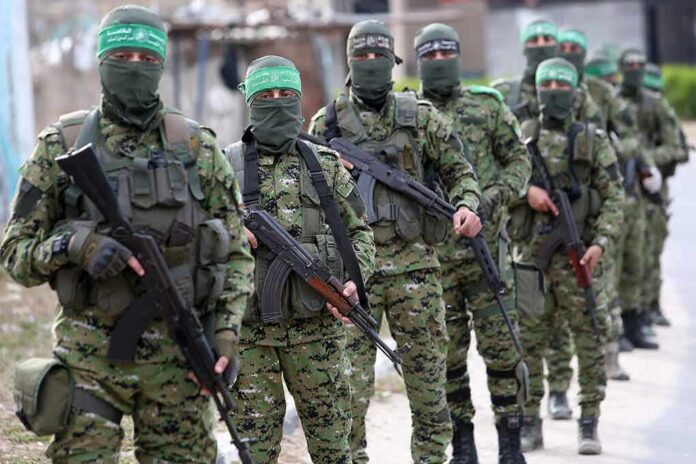
United States President Trump told Americans and the world that his Board of Peace has reached an agreement for the “complete disarmament” of Hamas and all other armed groups in Gaza. He described the deal as historic and said it would finally turn Gaza from a base for terror attacks into a place focused on rebuilding and normal life. The announcement comes after months of talks under Trump’s broader Gaza peace plan, which aims to end the long war and restore basic security.
Trump said the agreement would be carried out in phases, not in one sudden step. As armed groups disarm, Israeli forces are supposed to pull back and then withdraw from Gaza, while a new International Stabilization Force steps in to help secure the area. At the same time, a new Palestinian government would take over day‑to‑day governing, backed by a vetted police force that is meant to replace Hamas’s armed wing and other militias.
How the Gaza Peace Plan Built Toward Disarmament
This disarmament deal does not appear out of thin air; it grows out of Trump’s earlier “Comprehensive Plan to End the Gaza Conflict,” which already called for the demilitarization of the Gaza Strip. That plan promised an immediate ceasefire, the return of hostages, prisoner exchanges, and the destruction of tunnels and weapon factories tied to terror infrastructure. It also envisioned an International Stabilization Force and transitional rule by Palestinian technocrats, laying groundwork for self‑government once security was restored.
The Board of Peace was created as the main body to turn this plan into reality, with clear marching orders to oversee reconstruction and demilitarization. According to reporting on Board deliberations, officials spent months drafting a demilitarization strategy they believed both Israel and Hamas could accept. That strategy pointed toward Hamas eventually surrendering nearly all its weapons, with some limited small arms possibly allowed for a short transition as new institutions took root.
Inside the Disarmament Roadmap: Tunnels, Weapons, and New Police
Detailed leaks from the Board of Peace’s proposal show a strict, step‑by‑step path to disarm Hamas over about eight months. The plan starts with a committee of Palestinian experts taking security control in Gaza and preparing to collect weapons. In later stages, Hamas would hand over all heavy arms and military equipment, and agree to the destruction of its tunnel network and military installations that once supported rocket fire and cross‑border attacks.
Axios reporting says negotiators built the deal around a basic rule: one government, one legal system, and one legitimate security force in Gaza. All heavy and light weapons are supposed to be decommissioned over six to eight months, with Hamas giving maps of tunnels, weapons plants, and arms depots. A new Palestinian police force, made up of thousands of officers vetted by Israeli security services, would then patrol areas declared demilitarized, backed by an international stabilization mission.
Can Hamas Be Forced to Disarm – and Who Enforces It?
Even as Trump hails a “complete disarmament” agreement, some outlets note that Hamas has not yet fully confirmed all details in public, and past statements show the group tying any disarmament to full Israeli withdrawal. Board of Peace members have pledged billions for Gaza relief and reconstruction, but analysts point out there is still “little indication” that a stabilization force is ready to confront Hamas if it resists. This gap raises enforcement questions that matter for long‑term security and for Israel’s trust in the process.
Donald Trump says a 'Board of Peace' has brokered a deal for #Hamas' disarmament and a phased Israeli troop withdrawal from Gaza. The proposal marks a major development in the ongoing Gaza conflict.#DonaldTrump #Gaza #Israel https://t.co/DUJLVINDXR
— Theindiamoves राष्ट्र प्रथम . (@Theindiamove) July 31, 2026
The Gaza peace plan itself makes clear that demilitarization must be verified by independent monitors, with weapons placed beyond use through an agreed decommissioning process and backed by an international buy‑back and reintegration program. That kind of outside verification is crucial, because any failure to truly strip Hamas of rockets, rifles, and tunnels would leave Israelis at risk and reward a terror group that has long targeted civilians. Trump’s supporters will watch closely to see whether this deal finally puts teeth behind years of talk about “peace through strength” in the Middle East.
Sources:
redstate.com, reuters.com, aljazeera.com, whitehouse.gov, politico.com, youtube.com, nytimes.com