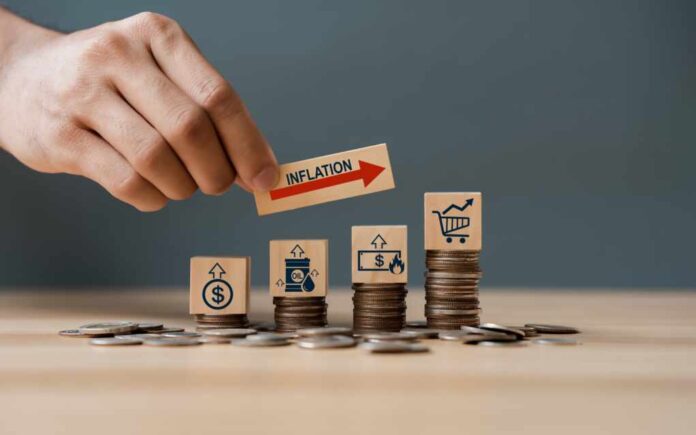
Inflation in August 2025 jumped at its fastest pace in two years, with rising food, shelter, and energy costs fueling speculation of a Federal Reserve rate cut.
At a Glance
- U.S. inflation rose 0.4% in August, the sharpest since mid-2023
- Food prices climbed 3.2% year-over-year, shelter costs up 3.6%
- Energy prices rebounded 0.7% in August after recent declines
- Tariffs and supply chain issues pushed input costs higher
- Economists split on whether the Fed should cut rates soon
Inflation Surge Hits Essentials
The Consumer Price Index (CPI) rose 0.4% in August, marking the fastest monthly gain since mid-2023. Food prices increased 3.2% year-over-year, with grocery items up 2.7% and restaurant meals climbing nearly 4%. Shelter costs rose 0.4% from July and 3.6% annually, while energy prices rebounded 0.7% in the same month, reversing a brief period of stability.
Watch now: Fed Chair Powell Warns of ‘Sticky’ Inflation
This combination of rising essentials has amplified pressure on household budgets. Unlike past inflationary spikes tied to a single sector, the current surge stems from simultaneous increases in food, shelter, and energy. Economists warn that this convergence recalls past periods of economic strain, including the 1970s stagflation era, forcing families to cut back on non-essentials and reevaluate spending priorities.
Tariffs, Global Disruptions, and Fed Uncertainty
Tariffs enacted earlier this year by the Trump administration, intended to support U.S. workers and reduce foreign trade dependence, have added to price pressures. Higher import costs for agricultural inputs and manufactured goods are colliding with lingering supply chain bottlenecks, compounding shortages. Meanwhile, energy markets remain volatile, with global production shifts and geopolitical factors sustaining price instability.
The Federal Reserve now faces a challenging policy environment. Raising interest rates could curb demand but would do little to offset supply-driven inflation. Calls for a rate cut are growing, with some analysts, such as Moody’s Mark Zandi, arguing that monetary easing could stabilize growth. Others, including Harvard’s Jason Furman, caution that cutting too early risks stoking further demand-side inflation. Forecasts for 2026 suggest food price pressures may moderate, but risks from climate, trade disputes, and energy shocks remain high.
Impact on Families and Policy Debate
For many households, the August spike translates into immediate financial strain. Rising food, rent, and energy costs erode disposable income, hitting low- and middle-income families hardest. Small businesses in food service and hospitality face squeezed margins as customers reduce discretionary spending. Analysts such as Michael Strain of the American Enterprise Institute highlight fiscal and trade policy as inflation drivers, while others point to global supply shocks.
Federal Reserve Chair Jerome Powell has acknowledged that inflation remains “sticky,” particularly in food and housing. The Fed continues to rely on data from the Bureau of Labor Statistics, USDA, and Energy Information Administration as it considers next steps. The policy debate underscores broader tensions between market stability, household well-being, and economic philosophy, with decisions carrying lasting consequences for both consumers and policymakers.
Sources
USDA Economic Research Service