A U.S. naval deployment near Venezuela has drawn sharp condemnation from China, igniting a new round of global tension over sovereignty, narcotics, and strategic influence.
At a Glance
- U.S. deploys three Navy warships and 4,500 personnel near Venezuela
- Mission is framed as anti-narcotics operation targeting Maduro regime
- China denounces move as foreign interference and urges restraint
- Venezuela mobilizes militia and suspends drones for 30 days
- Regional powers divided on legality and intent of the U.S. action
Deployment and Deterrence
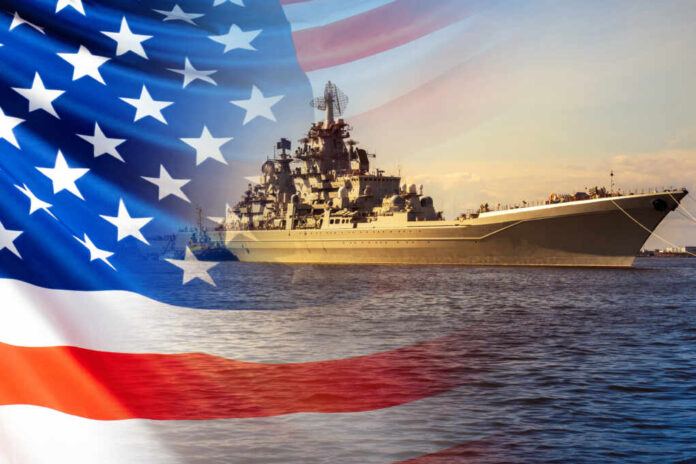
In August 2025, the United States deployed a trio of Navy warships—USS Gravely, USS Jason Dunham, and USS Sampson—along with an amphibious squadron comprising 4,500 personnel to waters off Venezuela’s coast. The Pentagon stated the mission’s primary objective is to disrupt transnational drug trafficking networks, which it alleges are supported by the Maduro government.
Watch now: U.S. warships sail to Venezuela coast to combat cartels · YouTube
U.S. officials have emphasized the operation’s role within a broader counternarcotics strategy in the Caribbean. However, the scale and timing of the deployment—along with a recently renewed $50 million reward for Maduro’s capture—have raised concerns about its underlying motives. The Washington Office on Latin America (WOLA) and other observers have warned it may be perceived as a coercive tactic aimed at regime change rather than drug interdiction.
Diplomatic Fallout
China’s Foreign Ministry swiftly condemned the deployment as a violation of Venezuelan sovereignty. Citing principles of non-interference, Beijing urged Washington to cease all military pressure in the region and instead pursue diplomatic channels. The statement aligned closely with Venezuela’s position, which called the U.S. presence a “colonial provocation” and rallied support from allies including Russia and Iran.
Inside Venezuela, President Nicolás Maduro ordered the mobilization of 4.5 million Bolivarian militia members and enacted a 30-day suspension of civilian drone flights. The Maduro administration framed the measures as defensive, asserting its right to national security and territorial integrity.
Regional Response
Latin American governments reacted unevenly. Colombia, Ecuador, and Paraguay expressed tacit support for the U.S. deployment, citing shared concerns about drug trafficking. Mexico and Bolivia, by contrast, reiterated opposition to foreign military interventions in the hemisphere, regardless of justification.
Meanwhile, the Organization of American States (OAS) issued a statement calling for de-escalation and urging respect for international law. Analysts noted that the situation underscores an increasingly fractured regional alignment on security issues—particularly as great-power rivalry intensifies across Latin America.
Strategic Calculations
Experts argue that the deployment serves both operational and symbolic purposes. While the Aegis-equipped destroyers are technically suited for maritime interdiction, their presence also signals a strategic message to adversaries. Analysts at the U.S. Army War College and Inter-American Dialogue have linked the move to Washington’s broader effort to contest Chinese and Russian influence in the Western Hemisphere.
Energy analysts warn that military activity near Venezuelan ports could exacerbate existing logistical constraints in the country’s oil export sector. Any disruption could affect global supply chains and reinforce economic instability within Venezuela, where oil remains the primary source of revenue.
Sources