
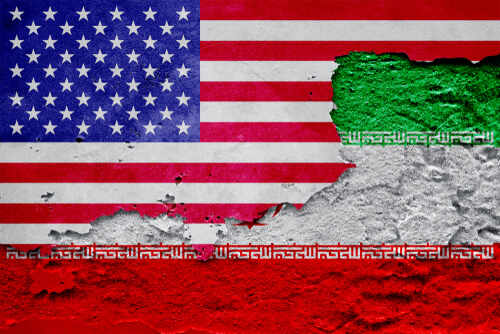
After weeks of missiles, blockades, and brinkmanship, President Trump abruptly paused a U.S. Navy plan meant to protect commercial shipping in the Strait of Hormuz—claiming “great progress” toward a deal with Tehran.
Quick Take
- Trump paused the Navy’s “Project Freedom” escort mission days after it began, signaling a possible shift from military pressure toward diplomacy.
- Iran’s reported missile and drone response to the escorts highlights how fast the region can slide from deterrence to escalation.
- Conflicting public claims—Trump saying talks are progressing, Iran previously denying negotiations—leave the real status of diplomacy unclear.
- A “dual blockade” dynamic persists: the U.S. constrains Iran while Iran constrains Gulf shipping, keeping energy markets and allies on edge.
Trump Pauses “Project Freedom” Amid Claims of Diplomatic Progress
President Trump announced a pause in the U.S. Navy mission that had begun escorting commercial vessels out of the Persian Gulf through the Strait of Hormuz. The mission, described in research as “Project Freedom,” started on May 4 and was paused around May 5–6, with Trump citing “great progress” toward a deal with Tehran. The timing matters: the pause came immediately after Iran warned the escorts violated the ceasefire framework.
The administration’s messaging has been mixed in public. Trump described the conflict as largely complete and also suggested the Strait was “open,” while the same research indicates Iran continued efforts to restrict passage. Secretary of State Marco Rubio separately confirmed that the offensive phase of U.S. operations—described as “Operation Epic Fury”—had concluded, signaling a “watch-and-wait” posture rather than an all-out withdrawal from the region.
Why the Strait of Hormuz Still Drives Global Risk
The Strait of Hormuz is not a niche geopolitical flashpoint; it is a major artery for global energy movement. Roughly 21% of global petroleum trade transits this corridor, which is why any disruption quickly shows up as higher insurance costs, shipping delays, and price volatility. For American families already sensitive to inflation and energy costs, this is the kind of overseas shock that can hit domestic budgets fast.
The short-term goal of escorting ships is straightforward: keep commerce moving and deter attacks on civilian shipping. But in practice, escorts can also be read as a political signal—either resolve or provocation—depending on the viewer. Iran reportedly responded to the escort rollout with missile and drone attacks aimed at the UAE and Oman, while also threatening to “completely” close the Strait and target regional energy and desalination infrastructure.
The “Dual Blockade” Problem: Pressure Cuts Both Ways
The reports point to a “dual blockade” reality: the U.S. Navy constrains Iran economically while Iran constrains Gulf access by threatening or blocking the Strait. That produces a tug-of-war that can make diplomacy more likely, because both sides bear costs, but it also raises the danger of miscalculation. If either side believes it can gain leverage with one more strike or one more naval move, escalation can resume quickly.
CSIS analysis cited in the research argues the U.S. maritime pressure is “working” and that Iran is under serious strain, yet it also warns Iran remains on a war footing even after a ceasefire began. That combination—economic pressure with continued military readiness—helps explain why this pause is being read as tactical rather than a clear end state. The escort pause reduces immediate friction, but it does not remove the underlying contest.
Conflicting Claims Undercut Trust—and Make Verification Essential
The biggest uncertainty is whether negotiations are real, active, and capable of producing enforceable outcomes. Trump’s claim of “great progress” conflicts with Iran’s prior denials of active talks, and also flags internal U.S. differences in how the war is characterized. From a limited-government, common-sense standpoint, Americans should expect clear objectives, measurable benchmarks, and honest public accounting—especially when U.S. forces and global energy stability are involved.
The next practical test is not a press statement; it is what happens on the water. If commercial traffic remains threatened, insurers and shipping firms will price in danger regardless of diplomatic rhetoric. If attacks subside and verifiable channels open, the pause could be the start of a controlled de-escalation. The public does not have enough confirmed detail in the available research to judge the terms on offer, but the stakes are plain: energy prices, allied security, and whether deterrence can be maintained without drifting into a long war.
Sources:
Trump Admits Defeat? U.S. Officially Unilaterally Confirms War With Iran Over | Watch
CSIS – Latest Analysis on the War with Iran