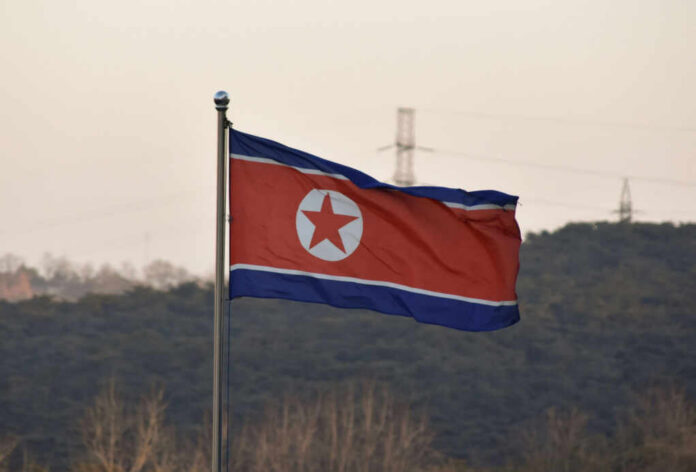
When North Korea can lob missiles toward the Yellow Sea with almost no accountability, it is one more reminder that Washington’s permanent foreign‑policy class is playing with fire while ordinary Americans bear the risks and costs.
Story Snapshot
- North Korea launched multiple missiles and projectiles toward the Yellow Sea and surrounding waters, which South Korea calls a “weapons demonstration.”[1][4]
- Regional governments say these launches violate United Nations Security Council resolutions and deepen an already volatile security environment.[1][3]
- Analysts and media quickly frame each launch as strategic signaling even though hard facts about the missiles often remain incomplete for hours or days.[1][3]
- For Americans across the political spectrum, repeated crises like this raise doubts about an expensive foreign‑policy establishment that rarely delivers lasting security.
What Happened Over the Yellow Sea
South Korea’s Joint Chiefs of Staff reported that North Korea fired several cruise missiles toward the Yellow Sea early on January 24, 2024, describing the activity as another “weapons demonstration” on the peninsula.[1] The launches came after North Korea had already fired around 350 artillery shells near its southern maritime border earlier that month, underscoring a pattern of sustained military pressure.[1] In more recent incidents, regional outlets and social media accounts describe North Korea launching several projectiles, including at least one short‑range ballistic missile, into the same area.
Media in South Korea and Japan have also reported separate North Korean ballistic missile launches toward the East Sea, sometimes called the Sea of Japan, where projectiles traveled roughly 350 kilometers before falling into the water.[3] Governments in Tokyo and Seoul say these actions violate United Nations Security Council resolutions that already prohibit the regime from testing ballistic missile technology.[3] United States Indo‑Pacific Command has repeatedly assessed that such launches do not pose an immediate threat to United States territory, but still treats them as destabilizing to allies in the region.[3]
Strategic Signaling or “Routine” Tests?
South Korea’s military explicitly labeled the January Yellow Sea launch a “weapons demonstration,” which strongly suggests that at least one close neighbor views these firings as deliberate shows of force rather than simple exercises.[1] At the same time, the most detailed contemporaneous reporting admits that early public information is thin: the South Korean text message to reporters confirmed the launch but did not provide range, payload, or detailed flight data, and intelligence services were still analyzing the event.[1] That gap between hard data and fast political interpretation fuels ongoing debate about how intentional North Korean signaling really is in each case.
Coverage of later Yellow Sea incidents follows the same pattern, with outlets and commentators describing “unidentified projectiles” that are only later classified as short‑range ballistic missiles or cruise missiles.[4] This sequence shows how quickly governments and media construct a narrative of deterrence and escalation before the technical facts are confirmed.[1][3] For citizens trying to make sense of it, the result is another opaque crisis in which the public is told to accept official interpretations while the underlying evidence remains largely classified or incomplete.[1][3]
Why This Matters for Ordinary Americans
North Korean launches highlight how fragile the global security environment has become, yet they also expose how little control ordinary Americans have over foreign policy decisions that could drag the country toward conflict. Each new launch prompts more military posturing, more joint exercises, and more spending justified as necessary to deter distant threats.[3] Conservatives who worry about endless commitments abroad and liberals who worry about underfunded domestic priorities can both see how permanent tension on the Korean Peninsula helps sustain a costly status quo.
💥North Korea has fired an unidentified missile toward the Yellow Sea, according to South Korea’s military. The launch included a rare mixed salvo of close-range ballistic missiles, multiple-rocket artillery shells, and suspected suicide drones. pic.twitter.com/WsctbeAEqe
— LN24 International (@ln24_intl) May 26, 2026
These missile tests also reinforce a broader concern that key decisions are being made by a small circle of unelected national security professionals and defense contractors rather than by citizens or even their elected representatives. The same establishment that oversaw years of war in the Middle East now manages a simmering standoff in East Asia, with limited transparency and little accountability when strategies fail. For many on the right and the left, North Korea’s latest “weapons demonstration” becomes another data point suggesting that the system is better at perpetuating crisis than resolving it.
Sources:
[1] Web – North Korea launches cruise missiles into Yellow Sea in latest …
[3] YouTube – Iran Ally Launches Ballistic Missile Near U.S. Military Hub In East …
[4] Web – North Korea fires 2 ‘ballistic missiles’ toward East Sea – Anadolu …