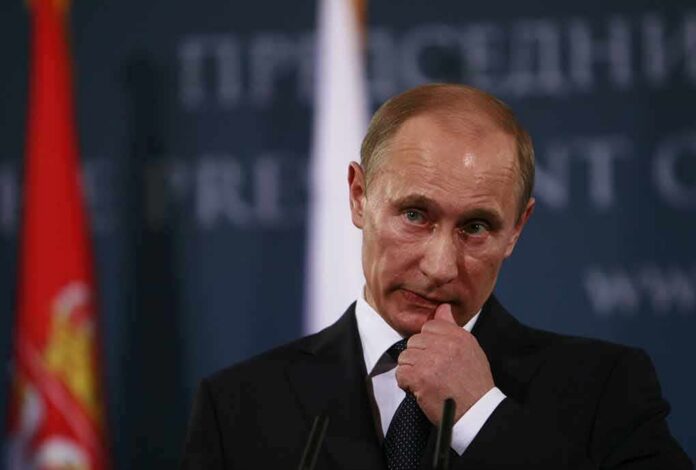
South Carolina’s Senate landscape changed overnight as Lindsey Graham’s death turned a Russia sanctions push into unfinished business.
Quick Take
- Graham had just announced a sanctions deal with the Trump administration before his death.
- The vacancy triggered a temporary appointment and a fast path to a special election.
- Coverage tied Graham’s legacy to Ukraine and Russia policy, not just to his Senate seat.
- The record shows the political urgency, but not the bill text or Senate action after his death.
Graham’s Final Foreign-Policy Push
Days before he died, Graham said he had reached an agreement with the White House on a version of the Russian sanctions bill that the administration would support. Reporting also said he had been pushing sanctions on Russian oil to cut funding for Vladimir Putin’s war in Ukraine, and that he had recently returned from Kyiv after meeting with President Volodymyr Zelenskyy. That timing made the bill part of the immediate story, not a distant policy debate.
The central political question was simple: would Graham’s last major foreign-policy push survive his death and still move forward in the Senate? Allies framed the sanctions effort as part of his broader legacy on Ukraine, while national coverage treated it as one of the most visible unfinished items left behind by a powerful senator. That gave the bill a symbolic weight that went well beyond routine legislative housekeeping.
A Senate Seat That Changed the Math
Graham’s death created an immediate vacancy, and South Carolina Governor Henry McMaster appointed Darline Graham Nordone to fill the seat until early January. State law also set a fast special-election process, with filing deadlines and an August primary calendar that kept the race in motion almost at once. Reuters and USA Today said the vacancy mattered because it affected Senate business, committee work, and the narrow Republican advantage.
That institutional shift helps explain why the sanctions story became bigger than one bill. Graham chaired the Senate Budget Committee and sat on other major committees, so his absence changed both the numbers and the workload inside the chamber. Reuters reported that Congress returned under the pressure of his death and other absences, which left Republican leaders managing votes, committee seats, and succession at the same time.
Legacy Talk Versus Legislative Proof
Tributes from Trump and other allies reinforced the image of Graham as a foreign-policy player who could work across party lines. NBC News and Fox reporting portrayed him as a central Senate voice on Ukraine and sanctions, which made passage of the bill look like a fitting tribute to his agenda. But the record supplied here does not include the bill text, a committee report, or a floor calendar entry showing that the Senate actually moved the measure after his death.
South Carolina Russell Fry (establishment candidate) is dual-candidating for U.S. House (SC-07 re-election) and the special Republican primary for the Senate seat left open by Lindsey Graham’s death. He keeps the House ballot line as a fallback. If he wins the Senate, he vacates… pic.twitter.com/YeUdvWnCmY
— Jungleball2 (@JungleBall_2) August 8, 2026
The available material strongly supports the idea that Graham was actively engaged in the Russia sanctions fight right before he died. It does not prove the Senate advanced the bill, renamed it, or formally treated it as a memorial priority. For readers watching Washington from the outside, this is a familiar pattern: a death creates urgency, but the government still has to decide whether the policy itself gets real follow-through.
Sources:
aljazeera.com, cnn.com, reuters.com, politico.com, cbsnews.com