As Washington and Tehran quietly trade draft texts that could halt fighting “on all fronts, including Lebanon,” Americans are being told almost nothing while rival governments spin the story to their own advantage.
Story Snapshot
- Iranian and regional media say a U.S.–Iran draft deal would end the wider war, including in Lebanon, but the White House disputes key claims.[5][4][6]
- Reports describe a 60‑day ceasefire extension, reopening the Strait of Hormuz, and partial sanctions relief in exchange for Iranian steps on nuclear and regional issues.[5][2][1]
- Iranian sources highlight a clause to stop fighting in Lebanon as one of Tehran’s few clear wins, while U.S. officials downplay or deny that Lebanon is included.[7][6]
- The dispute over what is really in the draft shows how ordinary people are kept in the dark while elites bargain over war, money, and power.[4]
What Iran-linked media say the draft deal would do
Iranian and regional outlets claim negotiators have built a 14‑point draft “memorandum of understanding” between the United States and Iran that aims to end the current regional war, not just pause it.[7][1] According to these reports, the draft would extend the current ceasefire for 60 days and commit both sides and their allies to stop military operations on every front, including Lebanon.[5][2] Iranian lawmaker Malek Shariati wrote that this Lebanon clause, promising a permanent end to the war involving Tehran’s and Washington’s partners, is the only clearly favorable item for Iran in the text.[7]
Several outlets say the draft also tackles the Strait of Hormuz, a narrow waterway that carries much of the world’s oil.[1][2] Reports describe Iran reopening the strait and working to restore shipping to prewar levels within about 30 days, while the United States lifts a naval blockade on Iranian ports and eases some sanctions so Iran can export oil.[5][2] Iranian state-linked agencies, quoted in regional press, stress that Tehran would keep control over routes and transit permits and does not accept full “freedom of navigation.”[1][2]
The reported terms: ceasefire, Lebanon, sanctions, and nuclear limits
According to two regional officials who spoke with a major U.S. network, the draft memo says all military operations on every front, including Lebanon, would end “immediately and permanently” once it is in force.[5] That same summary says Iran and the United States, along with their allies, would pledge not to start a new war against each other and to refrain from threats or the use of force.[5] Other regional reporting echoes this idea of “ending the war on all fronts, including in Lebanon,” tying it to a broader framework for talks between Israel and Lebanon.[1][2]
Economic and nuclear issues sit at the core of the draft. Reports say Iran would reaffirm that it will never develop nuclear weapons and agree to dispose of its stockpile of enriched uranium under a mechanism both sides must still define.[5][2] In return, Washington would suspend or ease some sanctions and discuss frozen Iranian assets during the 60‑day window, with decisions linked to Iran’s compliance.[2] Several stories also reference an enormous postwar reconstruction or investment fund for Iran, around $300 billion, but even sympathetic coverage admits this figure is based on Iranian estimates and is not confirmed.[4][9]
Why Lebanon is the most contested piece
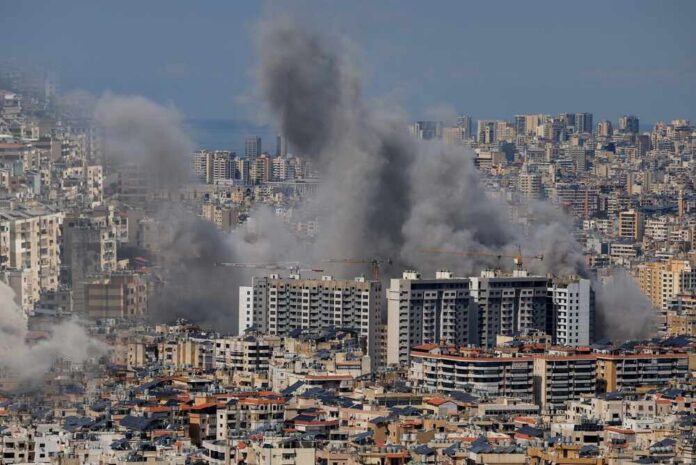
Lebanon’s place in the draft has become a major political fight. Iranian media and some lawmakers insist that stopping the war between Israel and Hezbollah in Lebanon is written into the memorandum as a key condition and victory.[7][2] One detailed U.S. report notes that pending Iran’s approval, the terms include a joint declaration that “all military operations on every front, including Lebanon, end immediately and permanently.”[5] The New Arab and other outlets similarly say the framework would “end the war on all fronts, including Lebanon,” with Washington and Tehran backing later dialogue between Lebanon and Israel.[1]
Public statements from U.S. leaders point in another direction. After a separate, shorter ceasefire deal, President Donald Trump told reporters that Lebanon was not part of that agreement and called it a “separate skirmish,” framing the Lebanon front as outside the main ceasefire terms.[6] Vice President J.D. Vance later said Iran’s belief that Lebanon was covered came from a “misunderstanding,” even as Iranian officials continued to claim the opposite.[6] This clash over Lebanon shows how each side tries to claim leverage and calm its own hardliners, while people living under bombs hear conflicting messages about whether relief is coming.
Competing narratives and what they reveal about power
U.S. officials confirm that a draft exists but stress that Iran has not agreed to all points and that details are still under negotiation.[5][8] The Soufan Center, which tracks security issues, reports that the White House even sent a draft back to Tehran with requested changes, showing that texts are moving but not final. At the same time, the White House and its allies have publicly rejected some Iranian state media descriptions of the memorandum as false or exaggerated, feeding doubt about the more ambitious claims.[4] Ordinary citizens are left to sort through leaks, anonymous sources, and state-run outlets on both sides.
Iran’s Mehr News reports the following.
These are reportedly the contents of the 14-point draft Iran–US Memorandum of Understanding.
– Immediate and permanent ceasefire on all fronts, including Lebanon.
– US commitment not to interfere in Iran’s internal affairs and to respect… pic.twitter.com/9QTsKqV0br— intogrey (@intogreyx) June 12, 2026
These mixed signals are not an accident; they reflect how modern diplomacy often works. Governments keep the real text secret, float trial balloons through friendly media, and then deny or spin anything that alarms their base.[2] In this case, reports agree on a few basic elements: a time-limited ceasefire, a reopened Strait of Hormuz, some sanctions relief, and talks on nuclear and regional issues.[5][1][3] But when it comes to the boldest promise—actually ending war in places like Lebanon—Washington and Tehran present sharply different stories, reminding many Americans on the left and right that critical choices about war, peace, and hundreds of billions of dollars are still being made far from public view.
New details of the 14-point draft memorandum of understanding between Iran and the U.S.:
— Permanent and immediate cessation of war on all fronts, including Lebanon
— The U.S. commitment to non-interference in Iran's internal affairs and respect for the sovereignty of the… pic.twitter.com/WW8hDuVwPN
— OSINT News (@OSINTNewsqrb) June 12, 2026
Sources:
[1] Web – Iran media says draft deal with US would end war including in Lebanon
[2] Web – Here’s what draft proposal of US-Iran deal entails – Firstpost
[3] Web – Exclusive: What’s inside the Iran deal Trump is close to signing – …
[4] Web – New Details Negotiations: $300 Billion Fund For Iran And A ‘halt To …
[5] YouTube – Iran leaks peace draft details: What would US get for ending …
[6] Web – A draft agreement being discussed between the United … – Instagram
[7] Web – Iran MP says draft US memo includes $300bn reconstruction pledge
[8] Web – Here’s what the draft memo for a proposed deal with Iran includes
[9] Web – US, Iran closing in on one-page memo to end war, officials say – Axios