Prosecutors say a Pennsylvania officer shot an unarmed college student who posed no threat, and they have charged him with voluntary manslaughter.
Story Snapshot
- Montgomery County’s district attorney charged Upper Pottsgrove Cpl. Sean Farrell with voluntary manslaughter in the killing of 22-year-old Glenwood “Bubba” Pysher.
- Prosecutors say the student had no weapon, raised his hands, and stood behind a car at a safe distance when he was shot.
- The case highlights how criminal charges against officers are rare and hard to win at trial nationwide.
- The student’s family and early reports say he ended up at the wrong house late at night.
Prosecutors File Voluntary Manslaughter Charge
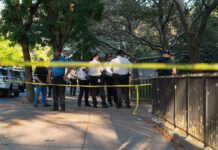
Montgomery County District Attorney Kevin Steele charged Upper Pottsgrove Township police Corporal Sean Farrell, 58, with voluntary manslaughter in the August 23 shooting of Glenwood “Bubba” Pysher, 22. Steele said the shooting was not a legal use of deadly force. He said the officer had less-than-lethal options, the student had his hands up, stood behind a car at a safe distance, and did not have a weapon. The charge was announced in Norristown on September 1.
Associated Press reports state that Pysher had gone to the wrong house before the encounter. The district attorney’s office said county detectives led the investigation. Local television and wire reports carried the charging news soon after Steele’s statement. Authorities did not release further evidence details at the time of the charging announcement. An arrest begins the court process; the officer is presumed innocent unless a jury finds otherwise.
What Investigators Say Happened
Steele linked the decision to charge to specific facts. He said Pysher did not hold any weapon, showed his hands, and was at a distance that did not pose an immediate threat. He also said the officer had other tools he did not use. Based on those findings, Steele said the shooting failed the legal standard for deadly force. He concluded the facts met voluntary manslaughter under Pennsylvania law for an unjustified killing.
ABC News and local outlets reported the family’s account that friends told them Pysher was on a back porch before police arrived, and that he was at the wrong address. The district attorney later announced the criminal charge, which aligned with his public stance that the force was unlawful. Police officials deferred detailed comment during the investigation phase, which is common in active cases.
Why This Case Resonates Nationally
Cases where prosecutors charge on-duty officers with homicide remain rare. A Bowling Green State University review found 97 nonfederal officers were arrested for murder or manslaughter in on-duty shootings from 2005 to 2018, and only 35 were convicted as of that report. That record shows how difficult these cases are to win, even after charges are filed. Each charged case draws heavy focus because it is unusual and often becomes a local stress test for accountability.
A Pennsylvania police officer who fatally shot a 22-year-old college student, who had ended up at the wrong house late at night and was waiting for friends to pick him up, has been charged with voluntary manslaughter, a prosecutor says. https://t.co/eCURWoYqX2
— NBC News (@NBCNews) September 2, 2026
Pennsylvania has seen a few high-profile outcomes, including a 2022 Philadelphia case where a jury convicted a former officer of voluntary manslaughter in the shooting of an unarmed man, described at the time as a rare result. Other jurisdictions have seen convictions later reversed or retried, underscoring how hard these cases are from start to finish. Prosecutors and defense teams fight early over facts because trial outcomes often hinge on those first frames.
What It Means For Public Trust
People across the political spectrum worry that powerful insiders face one set of rules while everyone else lives under another. When an officer is charged for a killing that prosecutors say was avoidable, many see a system finally acting. Others see a system that only moves after public pressure. Both views reflect the same stress: people doubt government can police itself. Clear facts, open records, and steady due process are the best path to rebuild trust in cases like this.
Sources:
washingtontimes.com, post-gazette.com, 6abc.com, abcnews.com, nytimes.com