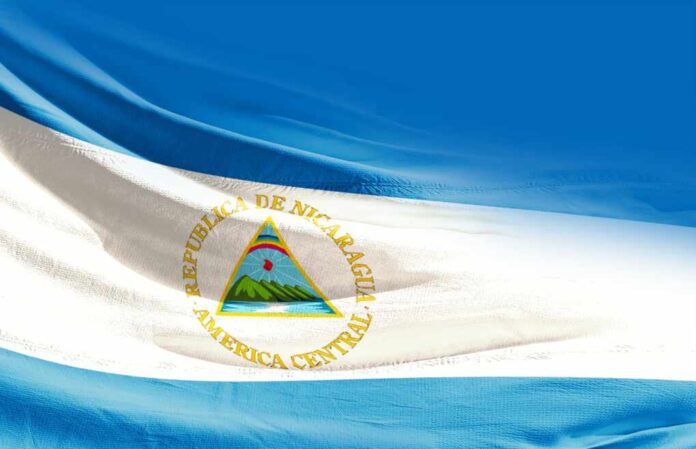
Communist China has tightened its grip on Central America as Nicaragua hands over its energy future to a Chinese state-owned giant sanctioned by the United States.
Story Snapshot
- Nicaragua finalized a $57 million wind farm deal with a Chinese state firm sanctioned by the US, deepening Beijing’s influence in the region.
- This marks the fourth major energy project contract between Nicaragua and China in under two years, accelerating a dramatic geopolitical shift.
- Washington’s leverage in the hemisphere is threatened as authoritarian regimes cozy up to Chinese interests, undermining US-led efforts to defend liberty and traditional values.
Nicaragua’s Energy Sector: From U.S. Ally to Beijing Client
Since returning to power in 2007, Nicaragua’s Sandinista government has made renewable energy expansion a top priority, but the country’s alignment has shifted sharply in recent years. In 2021, President Daniel Ortega severed ties with Taiwan and recognized China, opening the floodgates for Chinese investment. Between January 2024 and March 2025 alone, Nicaragua secured four major Chinese loans totaling over half a billion dollars for energy projects, culminating in the March 2025 wind farm agreement with China Communications Construction Company (CCCC), a firm sanctioned by the United States for its role in military and coercive activities.
This strategic pivot is not just about energy: it signals a realignment away from Western oversight and toward Beijing’s global agenda. With the signing of the “La Mesita” wind farm project in Estelí, Nicaragua’s government—led by Ortega and Vice President Rosario Murillo—continues to centralize power and deepen dependence on Chinese state enterprises. The project’s $57.4 million price tag is only the latest in a string of energy deals, all negotiated with minimal transparency and maximum executive control, sidelining democratic oversight and leaving ordinary Nicaraguans with little say in their nation’s future.
Report: Nicaragua Signs Massive ‘Wind Farm’ Deal with Communist China #news https://t.co/lTLMVvQiXx via @BreitbartNews
— Filtered News (@filterednews) October 3, 2025
Debt, Dependency, and the Shadow of the Belt and Road
The financial structure of these deals echoes China’s Belt and Road Initiative, notorious for luring developing nations into debt traps that Beijing can leverage for political concessions. As Nicaragua’s renewable energy capacity climbs—now accounting for more than 84% of national electricity—so too does its economic dependence on Chinese lenders. Critics warn that the rapid influx of opaque loans may undermine the country’s long-term sovereignty, leaving it vulnerable to Chinese influence not just in infrastructure but across the political spectrum. The risk: a future in which Chinese interests supersede national priorities, and American influence is crowded out of a region critical to US security and trade.
While Nicaragua touts record-setting electric coverage and economic gains, it is cautioned that such progress may come at the expense of liberty, accountability, and the traditional values cherished by free societies. These agreements, celebrated by authoritarian leaders in Managua and Beijing, are negotiated without meaningful public scrutiny or opposition input, raising red flags about the erosion of checks and balances—a hallmark of constitutional government.
US Sanctions, Regional Security, and the Erosion of Western Influence
The United States has responded by sanctioning CCCC and voicing concern about China’s expanding footprint in the Western Hemisphere. Yet, with Ortega and Murillo consolidating power and sidelining civil society, US leverage is at risk of diminishing. Nicaragua’s embrace of Chinese capital—despite the regime’s repressive record and disregard for democratic norms—highlights a broader trend: authoritarian governments exploiting foreign investment to entrench their rule and evade accountability. For US policymakers and American families, these developments represent not just an economic or environmental issue, but a direct challenge to regional stability, constitutional order, and the principles of self-determination that underpin US foreign policy.
Limited data is available on the precise terms and long-term impact of these deals, as government transparency remains minimal. However, the pattern is clear: as Washington faces growing competition from Beijing, the stakes for liberty, sovereignty, and American values in Central America have never been higher.
Looking ahead, the deepening China-Nicaragua partnership should serve as a wake-up call for US leaders and citizens alike. The risk is not only the loss of economic influence but the steady erosion of freedom, family values, and constitutional principles in countries once allied with the United States. Conservatives must remain vigilant and demand policies that defend American interests, push back against globalist overreach, and support the cause of liberty in our own hemisphere.
Watch the report: Los Chinos comunistas están acabando Nicaragua.
Sources:
Nicaragua and China sign an agreement for the construction of a wind farm
Report: Nicaragua Signs Massive ‘Wind Farm’ Deal with Communist China
Nicaragua and China break ground on landmark solar project
Nicaragua to sign agreement on wind energy project with China
Nicaragua Renewable Energy Sector Fiche