
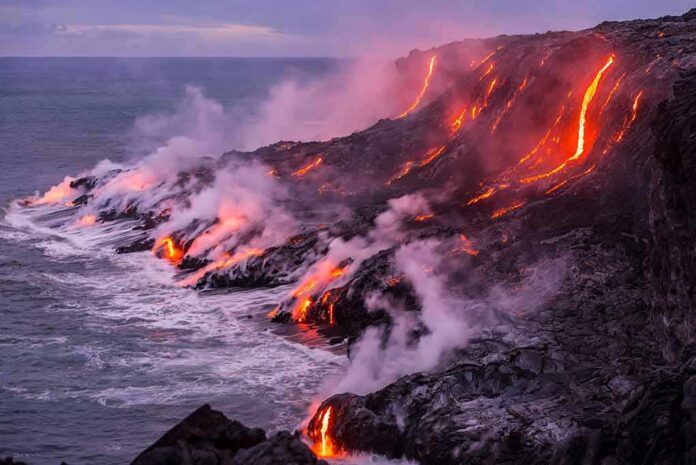
Hawaiian scientists confirmed new lava flows at Kīlauea’s summit on November 2, and the aviation alert jumped to orange as overflows surged inside the crater.
Story Highlights
- U.S. Geological Survey reported lava began flowing at 11:43 a.m. Hawai‘i time on November 2.
- Repeated overflows from the north vent sent lava across the Halemaʻumaʻu crater floor.
- Aviation alert level moved to orange with “eruption ongoing,” signaling increased activity.
- Flows stayed confined to the summit crater and nearby summit area, away from homes and roads.
What Officials Confirmed Happened at Kīlauea
United States Geological Survey scientists reported that lava started to flow at about 11:43 a.m. Hawai‘i time on November 2. The activity began at Kīlauea’s north vent inside Halemaʻumaʻu crater. The notice described this as low-level eruptive activity that produced a large lava flow from the vent. The update anchored the timing and the location with direct observation. It also made clear the activity was part of the ongoing summit eruption sequence seen since late 2024.
Hawaiian Volcano Observatory updates later in the afternoon said vigorous overflows continued from the north vent. Those overflows fed a lava flow across the crater floor. Scientists described dome growth at the vent, with heights of five to ten feet and widths of thirty to forty feet. They logged quick changes in lava level, with drops and rises within minutes, and new overflows that matched those swings in real time that afternoon.
Alert Level and What It Means for the Public
The United States Geological Survey issued an aviation notice listing the color code as orange and stating “eruption ongoing.” The notice tied that status to the observed start time late that morning. An orange code warns pilots and airlines that a volcano is erupting or likely to erupt with ash or other hazards possible. In this case, the activity was lava effusion at the summit, not an ash-rich blast, but the change still signaled rising risk to aviation.
Officials also stressed where the lava was going. Flows were confined to Halemaʻumaʻu crater and the southwest side of the summit caldera, known as Kaluapele. That detail matters for people who live or travel on Hawaiʻi Island. It shows the new flows were not moving toward homes, highways, or towns. The setting inside the summit area contained the immediate hazard to the park’s closed zones and to airspace, not to neighborhoods.
How This Fits Kīlauea’s Stop-and-Start Pattern
Kīlauea’s summit eruption has behaved in bursts since December 2024. Activity often centers on the same north and south vents inside the crater. Scientists have documented repeated cycles that include dome building, lava level drops, fresh overflows, and pauses. The November 2 sequence continued that script. A later afternoon update even logged a sixth overflow that began at 5:12 p.m., with dome heights reaching up to twenty feet, showing the system pulsing through the day.
Officials also drew a line between what was seen and what could come next. They described the day’s activity as precursory to a possible stronger fountaining episode labeled episode 56. That episode was forecast within a window rather than declared complete. This careful wording helps prevent confusion. It explains that lava was flowing and overflows were real, while the larger, named event remained a forecast, not a done deal at the time of the notice.
Why Clear Risk Signals Matter
Clear alerts and plain language protect people on the ground and in the air. The aviation code orange told airlines and pilots to pay attention, even without a major ash cloud. The location note told residents and visitors that the hazard stayed within the summit crater. Together, those signals help reduce panic while keeping caution high. When officials share exact times, locations, and limits, the public can plan and avoid danger without guessing.
How to Read Volcano Headlines Without the Hype
Fast-moving eruptions can spark big claims online. Photos and streams look dramatic, and they are. But the key facts here are simple: lava flowed from the north vent, overflows crossed the crater floor, and the lava stayed inside the summit area that is already controlled. Scientists tracked the swings in lava level minute by minute. They raised the alert for aviation while keeping the focus on real, observed changes, not on worst-case leaps.
What to Watch Next
People should watch for updated notices on whether a larger fountaining episode starts, and whether the flows remain contained. Park advisories, webcam updates, and new bulletins will clarify if access areas change. For now, the story is active lava inside the summit and a raised flight alert, not lava moving toward homes. This measured approach respects public concern, fights rumor, and keeps attention on verified signals from the scientists on the crater rim.
Sources:
youtube.com, volcanoes.usgs.gov, usgs.gov