
Barack Obama told newly elected House Democrats that America still wrestles with old hierarchies, reviving a core question: who is included in “We, the People?”
Story Snapshot
- Obama asked if “We, the People” includes everyone or if caste-like hierarchies still shape power.
- He urged lawmakers to prize ideological, regional, and religious diversity, not just race.
- Supporters cite his own office’s excerpts; critics say he ignores gains in legal equality.
- The closed-door setting leaves only partial transcripts, not a full official record.
What Obama Said Behind Closed Doors
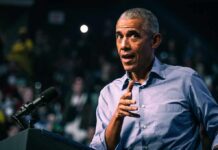
Obama met with newly elected House Democrats in November 2026 and pressed a basic test of American inclusion. He asked whether “We, the People” truly covers everyone, or whether the nation still clings to caste systems, hierarchies, and privileges that outlived major turning points. The quotes came from excerpts provided by his office and reported by national outlets. A complete official transcript has not been identified, which limits outside verification of the full remarks.
Obama praised the group’s diversity and widened that term beyond race. He said power comes from varied life paths, including religion, region, and ideology. He told them to expect disagreements because members carry their districts’ views and their own lived experience to Washington. He argued they could still agree on core values if they listened and showed grace to one another. The framing linked inclusion to representation and to how Congress debates policy.
Why The Comments Spark Pushback
Conservative writers blasted the “caste” language as unfair to the country’s record on legal equality. One commentator said it rewrites a history of steady expansion of rights and ignores progress won through war and reform. Others argued that Obama’s own two election wins and the rise of diverse leaders show the system can include outsiders. These critics see his language as stoking identity conflict instead of building shared civic ground.
Some opinion writers also point to milestones that expanded who counts. They cite the Nineteenth Amendment, school desegregation decisions, and the Fourteenth Amendment’s promise of equal citizenship. That view holds that reforms did not break from the founding creed but pushed the nation closer to it. In this telling, today’s core legal rules put all citizens on the same civic footing, even as disputes continue over wealth and access.
What We Know And What We Don’t
The strongest evidence for Obama’s position is the direct attribution of his quotes to his office and matching press accounts. The weakness is the lack of detail. He named no current law, policy, or institution as an example of a surviving hierarchy. He did not define “caste systems,” which leaves room for people to read very different meanings into his words. Without a full transcript, outside reviewers cannot fill those gaps.
The pushback side has its own limit. Citing legal progress shows formal inclusion, but it does not alone answer whether real access and outcomes line up. That larger question needs data on voting, income, housing, health, and justice across groups and places. It also needs a clear map for which gaps reflect choice, which reflect policy, and which reflect private power. Neither the remarks nor the commentary package that kind of evidence here.
How This Lands With A Frustrated Public
Americans on the right and left see systems that feel rigged. Many think the government serves elites first and average people last. Obama’s words speak to that fear of unfair rules. His critics answer with pride in reforms that proved change is possible. Both views touch real parts of our past. Yet today’s fight is about proof. Are the doors open in name only, or in practice too? That is a test numbers, not slogans, can settle.
Here is a practical way forward for readers. Demand specifics from leaders who speak about “systems” or “privilege.” Ask for the named rule, the number it changes, and how we will track results. Expect the same from those who say the work is done. Ask for proof that access and outcomes match the law’s promise. In a noisy media market, precision is power. Clear facts can cut through spin and help citizens hold Washington to the nation’s founding ideals.
Sources:
huffpost.com, theroot.com, redstate.com, wnd.com, the-aporia.com, x.com, thedailybs.com, shawlocal.com