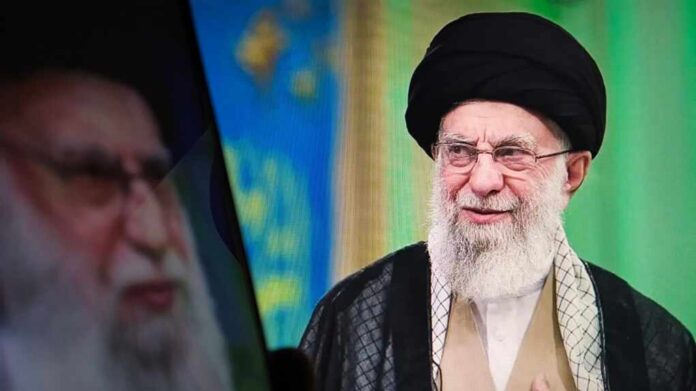
Iran’s supreme leader, Ayatollah Ali Khamenei, recently denounced nationwide anti-government protesters as “vandals” allegedly acting to please former President Donald Trump, exposing the regime’s deep fear of American strength. These protests, which have spread to roughly 180 cities across the country, are fueled by years of economic pain, high unemployment, and political repression. The regime has responded with internet blackouts and a vicious crackdown, even as Trump openly warned Tehran against killing demonstrators, promising a “very hard” response to a bloody massacre.
Story Highlights
- Khamenei labeled nationwide anti-government protesters “vandals” allegedly acting to please President Trump.
- Protests over inflation, unemployment, and repression spread to roughly 180 cities across all 31 Iranian provinces.
- Trump openly warned Tehran against killing protesters and promised a “very hard” response to a bloody crackdown.
- The regime responded with internet blackouts, narrative warfare, and an expected wave of arrests and torture.
Khamenei’s Attack on Protesters – And His Obsession With Trump
Iran’s Supreme Leader Ayatollah Ali Khamenei took to state television during a fresh wave of nationwide protests and denounced his own citizens as “a bunch of vandals” supposedly trying to “please the U.S. president.” He highlighted reports that demonstrators set fire to a state TV building in Tehran and claimed they had destroyed their own property to flatter Donald Trump. Rather than acknowledge real grievances, he cast the unrest as part of a foreign-backed plot.
Khamenei also vowed the Islamic Republic would “not back down,” repeating a familiar script that blames the United States and Israel for almost every internal challenge. State media amplified his message, accusing “terrorist agents” of Washington and Jerusalem of fueling violence. The personal focus on Trump’s name showed how deeply the regime resents a U.S. president who publicly sides with the Iranian people instead of appeasing the mullahs behind closed doors.
Iran's Supreme Leader Ayatollah Ali Khamenei has emerged publicly, warning protesters to stop damaging public property, saying they're trying to please US President Donald Trump. Khamenei told Trump to focus on his own country's issues, adding that tyr-an -ts like Trump are… pic.twitter.com/XXlSyQDbRv
— Ch Asif Hamaiyon (@asif_hamaiyon) January 10, 2026
Why Iranians Are Risking Their Lives in the Streets
These protests did not start over tweets or speeches; they grew out of years of economic pain and political repression. Merchants in Tehran’s bazaars, historically cautious and often regime-leaning, closed their shops and joined demonstrations against inflation, sanctions pressure, and a collapsing currency. Their participation signaled that anger now cuts across age and class. Rights groups reported demonstrations reaching around 180 cities in all 31 provinces, an unusually wide footprint that clearly terrified the authorities.
Ordinary Iranians face high unemployment, especially young people who see no future under clerical rule. Journalists and analysts describe a population so discouraged that many protesters feel they have “nothing to lose,” a mindset that makes them harder to intimidate. Instead of addressing corruption, mismanagement, and cronyism, the regime reached for batons, prisons, and propaganda. Internet blackouts and severe restrictions helped hide casualties and arrests, giving security forces more freedom to abuse people away from the world’s cameras.
Trump’s Warnings and the Regime’s Fear of American Leverage
While Khamenei ranted about “vandals” pleasing Trump, the American president was openly warning Tehran not to slaughter its own citizens. In a radio interview, Trump said that if Iranian forces “start killing people… we are going to hit them very hard,” stressing that leaders in Tehran had been told “very strongly” what consequences they could face. These statements were consistent with his broader maximum-pressure approach, which paired crushing sanctions with vocal support for those resisting tyranny.
Iran’s rulers folded those warnings into their conspiracy narrative, claiming the unrest proved a U.S.-engineered plot. Yet their own behavior betrayed something else: fear that this White House might not look the other way if another 2019-style massacre unfolded. Security decisions were reportedly left partly to local commanders, raising the risk of uneven, unpredictable violence in different cities. For protesters, Trump’s rhetoric became a rare signal that a major power was at least willing to speak up for their right to march without being gunned down.
Crackdown Tactics: Blackouts, Prisons, and Narrative Warfare
As the unrest spread, the regime deployed its usual tools: the Revolutionary Guard, Basij militias, intelligence agents, and a near-total information clampdown. Observers expected the incarceration of hundreds or even thousands, along with torture, interrogation, and possible killings based on past crackdowns. Internet blackouts severely limited video evidence and independent reporting, making it harder for human-rights groups to track abuses and easier for authorities to deny or downplay what was happening in the streets.
Labeling protesters as “vandals” and foreign agents served a clear purpose at home and abroad. Inside Iran, it aimed to scare more cautious citizens away from joining demonstrations and to justify harsh methods against those who did. Internationally, it tried to delegitimize dissidents as Western puppets rather than men and women demanding basic dignity. For American readers, the pattern is familiar: authoritarian regimes smear their own people as traitors whenever they push for freedoms that mirror our First Amendment and basic constitutional rights.
Exiled opposition figures saw an opening and urged the outside world not to abandon the protesters. Reza Pahlavi, son of the last Shah, claimed Iranians had “demanded their freedom” and called on Trump and European leaders to help restore internet access so their voices could be heard. He argued that with enough numbers, security forces could be overwhelmed. Human-rights organizations such as HRANA documented protests in 180 cities and warned that, absent pressure, Iran’s rulers would once again resort to mass arrests and bloodshed.
Watch the report: Khamenei Calls Trump ‘Arrogant,’ Accuses Him of Iranian Blood, Predicts Overthrow
Sources:
- Iran leader says anti-government protesters are vandals trying to please Trump – The Island
- Khamenei vows zero tolerance as protests spread, blames US and Israel- The Week
- Khamenei vows ‘will not back down’ as Trump threatens to hit Iran ‘very hard’ | The latest National and International News