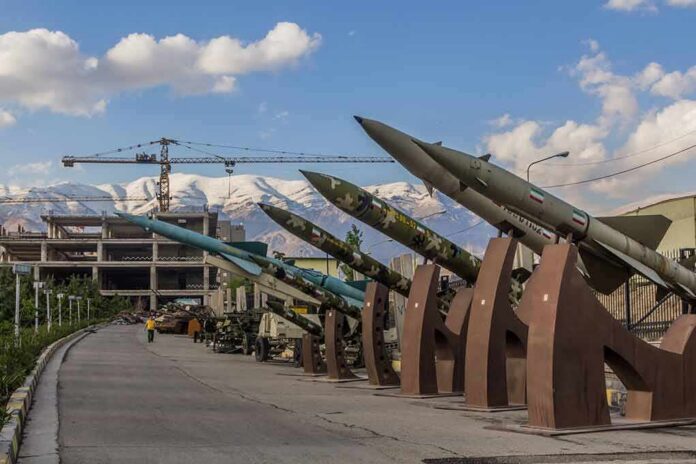
Belarus just began military drills that practice using Russian nuclear weapons on NATO’s doorstep, turning one of Europe’s most fragile frontiers into a laboratory for great‑power brinkmanship.
Story Snapshot
- Belarus is running exercises that train its forces to deploy Russian nuclear-capable systems already stationed on its soil.
- Minsk and Moscow call the drills defensive “combat readiness” checks; many Western analysts see nuclear escalation and intimidation.
- The exercises follow massive Russia–Belarus war games involving about 65,000 troops and nuclear-capable missiles, aircraft, and submarines.
- Secrecy over how many warheads are in Belarus and how they are handled fuels public distrust of all sides and deepens fears of a wider war.
What Belarus Is Actually Drilling With Russian Nuclear Weapons
Belarusian defense officials say their forces have started exercises that simulate how to deploy Russian nuclear-capable weapons already stationed in the country.[1] Reports describe Belarusian missile units and aviation squadrons training under battlefield-like conditions, practicing coordination with Russian forces for the delivery of nuclear munitions.[1] Officials in Minsk insist these are defensive drills meant to test “combat readiness and coordination” amid a changing security environment, not preparations for a first strike on NATO or Ukraine.[1]
Independent arms-control advocates confirm that Russian nuclear weapons were moved into Belarus beginning in 2023, though the exact number and locations of the warheads remain secret. Belarusian President Alexander Lukashenko previously ordered what he called an “immediate check” of the combat readiness of these nuclear assets, including an Iskander missile division and a squadron of Su‑25 attack aircraft configured for nuclear delivery. The new drills appear to build on that pattern, shifting from static deployment to mobile field operations and interoperability with Russian command structures.
How These Drills Fit Into Moscow and Minsk’s Larger Nuclear Strategy
The latest Belarus drills do not come out of nowhere; they follow a much larger Russian-led three‑day exercise involving roughly 64,000 troops, more than 200 missile launchers, nuclear-armed submarines, and air units, conducted jointly with Belarus.[2] Russian officials framed those war games as routine readiness checks and strategic deterrence, while Belarus’s participation further integrated its armed forces into Russian nuclear planning.[2] Military analyst Marina Miron told German media the drills both tested capabilities and sent a message to the eastern flank of the North Atlantic Treaty Organization (NATO).
Timing has amplified that message. The joint drills closely followed Ukraine’s largest drone attacks inside Russia, including strikes on energy and industrial facilities, and overlapped with Russian President Vladimir Putin’s high-profile trip to China. Other outlets linked Belarus’s nuclear exercises to recent tests of Russia’s Sarmat intercontinental missile and the announced deployment of a new Oreshnik nuclear-capable missile system in Belarus.[1] Taken together, these actions create a drumbeat of nuclear signaling that both Moscow and Minsk say is meant to counter growing Western military activity near Russia’s borders.[1][2]
Why Both Sides Say “Defense” While Everyone Hears “Escalation”
Belarusian and Russian officials argue they are doing what any state would do when they feel encircled: training with the weapons they already possess to make sure they work and to deter attack.[1][2] They stress that Belarus remains a sovereign state, even as part of a “union” with Russia, and insist that nuclear deployments on its territory are about preventing war, not starting one.[1] From their perspective, Western and Ukrainian accusations of escalation are propaganda that ignore years of North Atlantic Treaty Organization enlargement and military buildup.
Western governments, Ukraine, and many independent analysts see a different picture. Ukrainian leaders describe Belarus as a “nuclear staging ground” that Russia could use to threaten Kyiv or North Atlantic Treaty Organization members, and warn that stationing nuclear-capable systems so close to allied territory is coercive by design. Media reports emphasize phrases like “terrifying signal” and highlight exercise scenarios that practice moving nuclear units from unplanned locations to enhance concealment and mobility, which looks less like transparent deterrence and more like rehearsed intimidation.[2] That narrative gains traction because Moscow’s past claims about military operations have often proved incomplete or misleading.
What This Means for Ordinary Americans Who Already Distrust the System
For many Americans on the right and the left, these developments confirm a grim suspicion: decisions about war and peace are being made by distant elites while regular people absorb the risk. The fact that no one outside a narrow circle in Moscow and Minsk knows how many warheads are in Belarus, where they are stored, or exactly what is being drilled feeds deep public mistrust. Citizens are asked to accept enormous nuclear dangers while getting little transparency, and almost no say, in return.
Russia and Belarus hold joint nuclear drills following Ukrainian strikes on Moscowhttps://t.co/Zhxy911Yak
— John Hallam (@johnhallam2001) May 20, 2026
The Belarus drills also highlight how fragile the international order has become while Washington remains consumed by partisan trench warfare. As Russia and Belarus practice nuclear deployments on Europe’s edge, the American political class argues over talking points, continuing spending habits and foreign commitments that have contributed to debt, economic insecurity, and a sense that government no longer serves the people. Whether one blames “globalists,” the “deep state,” or nationalist hardliners, the result feels the same: rising nuclear tensions abroad, shrinking accountability at home, and a system that seems unable—or unwilling—to change course.
Sources:
[1] YouTube – Russia Deploys Nuclear-Capable Oreshnik Missile System in Belarus
[2] YouTube – 65000 Russian Troops Launch Nuclear Drills With Belarus, Ukraine …