When a single stroke of the pen wipes out the legal foundation for America’s climate rules, it raises the same question troubling people on both the right and the left: who is Washington really working for?
Story Snapshot
- President Trump and Environmental Protection Agency (EPA) Administrator Lee Zeldin announced a final rule repealing the 2009 greenhouse gas “Endangerment Finding.” [2][3]
- The rule eliminates federal greenhouse gas standards for cars and trucks from model years 2012–2027 and beyond, ending related compliance and reporting programs. [3]
- The administration claims over $1.3 trillion in savings and about $2,400 to $3,000 lower costs per new vehicle, but has not publicly shown its full cost analysis here. [2][3]
- The move is framed as restoring consumer choice and following the law, while critics warn it dismantles a core climate safeguard and reflects deep regulatory capture. [3][5][6]
What Trump and Zeldin Just Did at the EPA
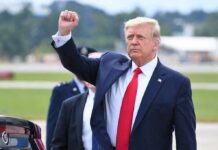
President Trump stood in the White House Roosevelt Room alongside Environmental Protection Agency Administrator Lee Zeldin to announce what they called the “single largest deregulatory action in U.S. history.” They said the Environmental Protection Agency has finalized a rule that repeals the 2009 greenhouse gas Endangerment Finding and eliminates all federal greenhouse gas standards for new vehicles and engines from model year 2012 onward. Trump described the action as “signed, sealed, and delivered,” emphasizing its finality rather than a mere proposal. [2][3]
The 2009 Endangerment Finding was the legal keystone that allowed the Environmental Protection Agency to regulate greenhouse gases from vehicles after earlier Supreme Court rulings said such gases could be treated as “air pollutants” under the Clean Air Act. By declaring that greenhouse gases from vehicles endanger public health and welfare, the finding required the agency to act. Repealing that conclusion, and the vehicle standards built on it, effectively removes one of the main federal tools for limiting climate pollution from transportation. [3][5]
The Legal Theory and the Money Pitch
Administrator Zeldin and the Environmental Protection Agency argue that Section 202(a) of the Clean Air Act never gave the agency authority to regulate vehicle emissions “in the manner previously utilized,” including for the purpose of addressing global climate change. The agency says recent Supreme Court decisions narrowed its authority and showed that the prior interpretation was unlawful. Environmental Protection Agency leaders now claim they are simply returning to the “plain language” of the statute and leaving major climate policy choices to Congress. [3]
To sell the change, the administration highlights cost savings. Trump and Zeldin assert that eliminating the Endangerment Finding and vehicle greenhouse gas rules will save taxpayers more than $1.3 trillion by ending compliance, testing, reporting, and technology requirements tied to those standards. They say the average new vehicle will cost about $2,400 to $3,000 less as a result, arguing that previous rules functioned like hidden taxes on working families and the auto industry. However, the underlying cost-benefit analysis is not provided in the available materials. [2][3]
What Changes on the Road – and What Does Not
The Environmental Protection Agency’s announcement stresses that the action is limited to greenhouse gases and does not change rules for traditional pollutants like soot, smog-forming chemicals, or toxic air emissions. Trump and Zeldin repeat that standards for those pollutants remain in place. At the same time, the agency is ending all greenhouse gas–related compliance programs for vehicles, including off‑cycle credits and incentives that encouraged technologies such as the widely disliked automatic “start-stop” feature in many newer cars. [2][3]
For consumers, that means automakers will no longer face federal greenhouse gas caps that nudged them toward more efficient engines or more electric vehicles. Companies will have broader freedom to design and sell larger, more powerful vehicles without climate-based penalties. Drivers frustrated with higher sticker prices and complex fuel‑saving technology may welcome the rollback. Yet people focused on long‑term climate risks and fuel costs see it as Washington once again favoring corporate flexibility over public protection. [3][5][6]
Why Both Sides See the Deep State—or the Corporate State
Supporters of the move, especially many conservatives, view it as a long‑overdue correction to what they see as “climate religion” and unelected bureaucrats making trillion‑dollar decisions without clear approval from Congress. They argue that past administrations used obscure legal language and agency discretion to reshape the entire auto market, driving up prices for people who just need a reliable pickup or minivan to work, while consultants and green‑tech firms cashed in on subsidies and mandates. [3]
🚨 LEE ZELDIN & TRUMP ADMIN ARE POISONING AMERICA’S DRINKING WATER
The man now running the EPA just helped repeal testing and limits for four dangerous PFAS “forever chemicals” in our tap water.
These toxic substances don’t break down — they stay in your body for decades.
What… pic.twitter.com/Ww9C0sYE5F— Our Country Our Choice (@OCOCReport) May 20, 2026
Opponents, including environmental and public‑health groups, see almost the mirror image: a government captured by industry, dismantling a core health safeguard at the request of oil companies and automakers. They warn that repealing the Endangerment Finding undercuts federal responsibility to confront climate threats that hit ordinary people hardest through floods, fires, and heat. They also note that the Environmental Protection Agency’s public materials do not show a detailed scientific refutation of the original 2009 record, deepening suspicion that politics, not evidence, is driving the change. [5][6]
What This Signals About Washington’s Priorities
For citizens across the political spectrum who already believe the federal government serves elites first, this episode reinforces familiar patterns. A major policy about the nation’s climate future and the cost of basic transportation just flipped largely through an agency rule and a White House event, not through a hard‑fought debate in Congress. The administration’s own messaging focuses on giant headline numbers and record‑breaking deregulation, while the underlying technical record remains hard for the public to see or evaluate. [2][3]
Whether one cheers cheaper trucks or fears faster warming, the deeper problem is the same: decisions with generational consequences are being made in a way that feels distant, legalistic, and opaque. That fuels the sense that the system is rigged—either by a “deep state” of regulators or by powerful industries steering those regulators. The next chapter will likely unfold in the courts, where judges, not voters, will decide how far agencies can go in either expanding or tearing down protections that many Americans assumed were settled. [3][5][6]
Sources:
[2] YouTube – Trump rescinds endangerment finding in an announcement with …
[3] Web – President Trump and Administrator Zeldin Deliver Single Largest …
[5] Web – EPA Endangerment Finding Repeal: What it Means for Clean Air …
[6] Web – Trump Administration Eliminating Greenhouse Gas Finding that …