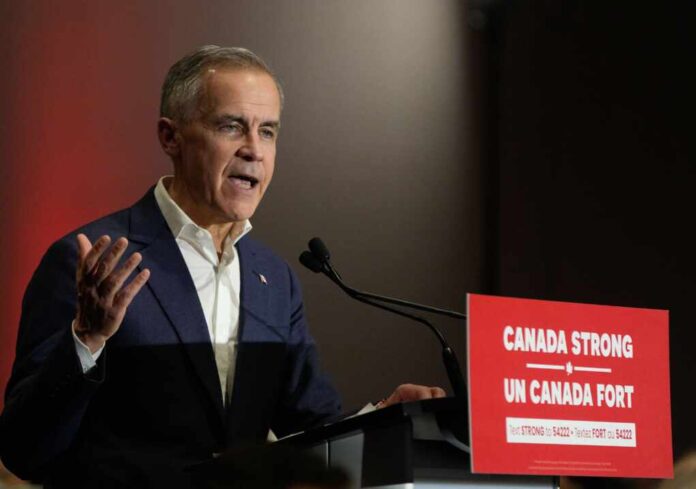
On January 16, 2026, Prime Minister Mark Carney announced a strategic trade agreement with China, a move that is already sparking concern for its divergence from US protectionist policies and for potentially undermining North American economic unity. The deal sees Canada significantly reduce tariffs on Chinese electric vehicles (EVs) from 100% to 6.1%, alongside China lifting restrictions and cutting tariffs on Canadian agricultural exports like canola. This strategic shift aims to accelerate EV adoption and foster Chinese investment in Canada’s automotive sector.
Story Overview
- Canada slashes tariffs on Chinese EVs from 100% to 6.1% under a quota system.
- China reduces tariffs on Canadian canola from ~85% to 15% and lifts other restrictions.
- Prime Minister Mark Carney’s deal diverges from US protectionist policies.
- The agreement aims to attract Chinese investment and provide affordable EV options.
Canada’s Strategic Shift in Trade Policy
On January 16, 2026, Prime Minister Mark Carney announced a strategic trade agreement with China that significantly reduced tariffs on Chinese electric vehicles (EVs) from 100% to 6.1%. This move aligns with Canada’s initiative to boost its electric vehicle supply chain and make affordable EVs accessible to consumers. In return, China will decrease tariffs on Canadian canola from approximately 85% to 15% and remove restrictions on several agricultural products, including lobster and crab.
The agreement, which allows for the annual import of 49,000 Chinese EVs, marks a departure from the previous alignment with US protectionism. This decision is seen as an effort to foster joint-venture investments in Canada, encouraging economic growth and innovation in the automotive sector. Critics, however, view this as a potential threat to North American economic unity, raising concerns about increased competition for US and Canadian auto manufacturers.
Canada agrees to cut its 100% tariff on Chinese EVs in return for lower duties on Canadian farm products, in a break with the U.S. https://t.co/jq3kddRdOD
— The Associated Press (@AP) January 16, 2026
Impact on Agriculture and Industry
For Canadian farmers, the reduction in tariffs is a significant victory, opening up a $4 billion market for canola exports and providing relief from previous trade tensions. This agreement is expected to bolster agricultural exports and enhance Canada’s economic resilience. The Canadian auto sector, meanwhile, anticipates positive outcomes from potential joint ventures with Chinese automotive companies, which could lead to job creation and increased domestic production capabilities.
While the deal offers substantial economic benefits, it also highlights a growing divide in North American trade policies. The United States, under the “Fortress North America” strategy, may view Canada’s rapprochement with China as a challenge to regional economic stability. This agreement underscores Canada’s commitment to diversifying its trade relationships and pursuing climate goals through affordable EV adoption.
Long-term Implications and Reactions
In the long term, the agreement sets a target for 50% of the EV quota to consist of affordable vehicles by 2030, potentially transforming the Canadian automotive market and accelerating the transition to cleaner energy. The joint-venture incentives are expected to attract Chinese investments, leading to the establishment of manufacturing facilities within Canada, thus strengthening the local supply chain.
Officials have praised the deal for its potential to break down protectionist barriers and introduce competitive pricing in the EV market. However, the US government may perceive this as a betrayal, further straining diplomatic relations. The success of this agreement will largely depend on the effective implementation and management of the stipulated quotas and safety standards.
Watch the report: Canada agrees to cut tariff on Chinese EVs for lower tariffs on farm products
Sources:
Electrek: Canada breaks with US, slashes 100% tariffs on Chinese EVs
Global Affairs Canada: News Release on China Trade Agreement
Prime Minister’s Office: New Strategic Partnership with China