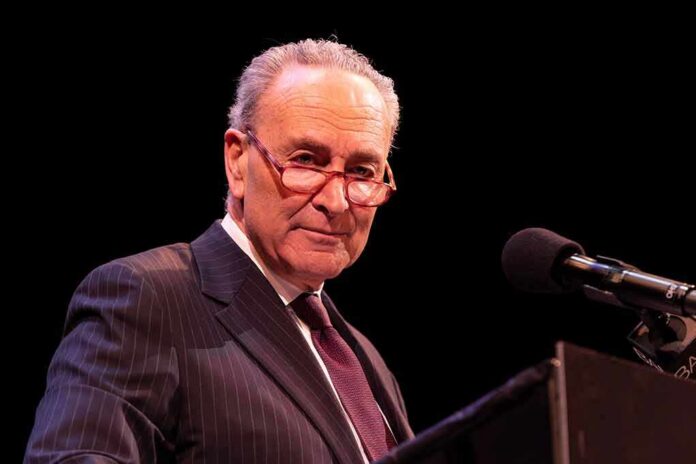
Pressed on camera about backing a socialist-aligned Senate hopeful, Senator Chuck Schumer dodged again—while reports say he privately pushed donors to support a centrist in Michigan.
Story Snapshot
- Schumer avoided answering whether the rise of Democratic Socialists helps his party and whether he would back Michigan’s progressive candidate.
- The New York Times reported Schumer privately urged donors to support Representative Haley Stevens as the most electable option in Michigan.
- Public neutrality and private signaling fit a long-running leadership tactic in contested primaries.
- The split mirrors a larger fight inside the party over electability versus ideology in must-win states.
What Schumer Said — And Would Not Say
Reporters asked Senator Chuck Schumer at his weekly press event whether he would endorse a socialist-aligned candidate in Michigan and if the rise of the Democratic Socialists helps Democrats. He declined to answer directly and moved back to talking points, repeating that his focus is on winning key Senate races. The exchange echoed other recent moments where he sidestepped endorsement questions in tough contests, including in Maine and New York races covered earlier this year.
Tuesday’s clip spread because it was simple and clear: Schumer would not say “yes” or “no” about backing the progressive in Michigan. The hesitation matters. Michigan is a top-tier battleground with a competitive general election ahead. Every signal from party leaders shapes donor money, volunteer energy, and media attention. His non-answer also signaled a familiar theme from recent cycles: leaders try to avoid inflaming a base-versus-center fight before voters choose a nominee.
Private Preference For Haley Stevens
The New York Times reported in June that Schumer, while not offering a formal endorsement, privately told donors he preferred Representative Haley Stevens and viewed her as the most viable general election candidate in Michigan. That behind-the-scenes guidance aligns with other reporting that framed Stevens as the establishment pick in a one-on-one primary versus progressive Abdul El-Sayed. The contest has drawn dueling support from national figures and set up a clean test of ideology versus perceived electability.
Other outlets described the same pattern: quiet leadership support for a moderate while progressives lined up behind El-Sayed. That divide sharpened after earlier candidates exited, turning a messy field into a head-to-head clash. The stakes are large. Losing Michigan would make the path back to a Senate majority steeper. That reality helps explain why leaders lean toward the candidate they judge safest in November, even if it risks anger from the party’s left.
Why Leaders Split Public Silence From Private Signals
Party chiefs often work two tracks in primaries. They stay neutral in public to avoid backlash, but they hint in private to shape the field. Recent coverage of Schumer’s posture in multiple states shows this approach repeated under tight timelines and heavy national focus. The goal is simple: maximize chances in swing states. The cost is also clear: the base sees a thumb on the scale and resents leaders who seem to choose donors over voters, which deepens distrust.
This tension is not new, but it looks sharper as living costs, border worries, and distrust in institutions rise. Many voters on the right and left now say national leaders protect their power first and explain the plan later. Schumer’s careful words and private nudges feed that view, even if the tactic aims at winning in November. In Michigan, that means a clash between movement energy and a case for stability on the ballot this fall.
What This Means Beyond One Primary
Michigan offers a window into how both parties treat primaries in the high-stakes map of 2026. Leaders prize candidates they think can win moderates and independents. Activists demand bold change and clear stands. When leaders refuse to say where they stand, they invite headlines about dodging and fuel claims of insider control. When they do say it, they risk a backlash that can split volunteers and depress turnout in November.
The Democrat Socialists want Chuck Schumer gone. Chuck Schumer's response: thanks for the diversity. "Being a big tent party is a strength, not a weakness," he told reporters today — right before dodging a Michigan primary endorsement question entirely. pic.twitter.com/WS1di5ieax
— Sean Hannity 🇺🇸 (@seanhannity) August 4, 2026
For readers worried that elites call the shots, this episode will feel familiar. For those focused on beating the other party, it will feel practical. Both can be true. The public will soon decide which path wins. Until then, watch for more careful answers at podiums and more private calls to donors. That is how modern primary politics works, especially when a single seat can decide which party writes the nation’s laws next year.
Sources:
washingtontimes.com, pbs.org, thehill.com, cnn.com, politico.com