The White House says President Trump deserves credit for a hurricane season with zero storms, even though nearly every scientist tracking the Atlantic points to a massive El Niño instead.
Quick Take
- No hurricane has formed in the Atlantic since the season began June 1, the longest wait in the satellite era.
- The White House publicly credited President Trump, pointing to his renaming of the Gulf of Mexico as the Gulf of America.
- Meteorologists and hurricane experts say a historic El Niño, not the name change, is suppressing storm formation.
- The claim drew mockery online, adding to a bigger debate about trust in official statements from Washington.
A Hurricane Drought Unlike Any Other
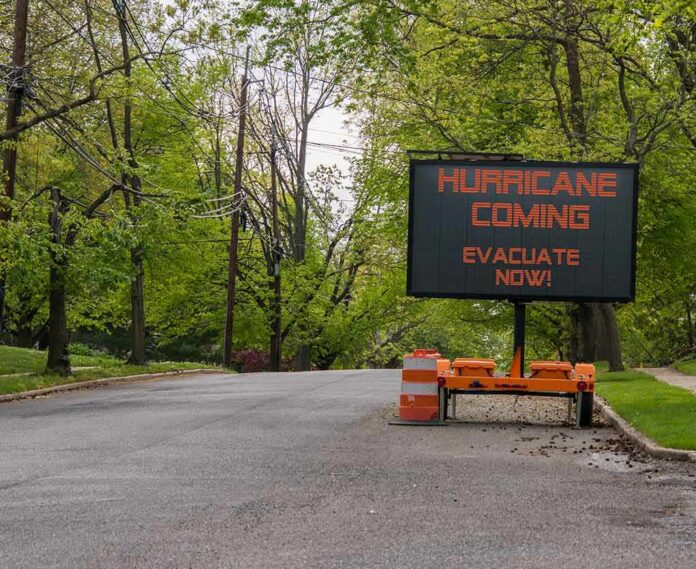
The Atlantic Ocean has gone silent this year. No hurricane has formed in the basin since the 2026 season began on June 1, a stretch that broke a 60-year record by mid-September. Only five weak tropical storms have popped up, and none grew strong enough to become a hurricane. Forecasters call it the quietest stretch since satellites started watching storms in the 1960s.
September 10 usually marks the peak of hurricane season, the time when storms are most likely to spin up. This year, that date passed with nothing on the radar. The last record for going this long without a hurricane was set back in 2002 and 2013. This year blew past it with room to spare.
White House Ties Trump to the Calm Seas
As the quiet season became national news, the White House pointed to President Trump’s decision to rename the Gulf of Mexico as the Gulf of America. The suggestion drew immediate pushback, with one report describing the White House as being mocked for crediting the president with stopping hurricanes through a name change. Critics called the link a stretch, since renaming a body of water has no known effect on ocean temperatures or wind patterns.
Social media reaction split along familiar lines. Some users treated the claim as an obvious joke, while others online floated their own theories, including unproven claims about deliberate weather manipulation. The dispute became less about hurricanes and more about whether official statements from the administration can be taken at face value.
Scientists Point to El Niño, Not Rebranding
Nearly every meteorologist who studied the quiet season landed on the same explanation: a powerful El Niño. Hurricane specialist Phil Klotzbach at Colorado State University called the cause “almost 100% El Niño,” describing the pattern’s effect on Atlantic storms as clear and well documented. Nick Novella noted the season broke the previous satellite-era record for the longest wait without a hurricane.
El Niño works by warming Pacific waters, which changes wind patterns worldwide. In the Atlantic, that shift creates strong wind shear that tears apart storms before they can strengthen. One National Weather Service meteorologist explained that any storm trying to form in the Atlantic “just hasn’t been able to fight off the wind shear.” That pattern has shown up in past El Niño years too, though rarely this strongly.
Why This Small Dispute Matters
On its own, a hurricane season with no hurricanes is good news for coastal families and insurance companies alike. But the White House’s decision to link that relief to a symbolic name change, rather than the well-documented science, feeds a broader worry shared by both liberals and conservatives: that officials in Washington sometimes reach for a flattering story over an accurate one.
That instinct, real or perceived, is part of why trust in federal institutions keeps sliding no matter which party holds power. Whether the topic is inflation, immigration, or ocean temperatures, Americans on both sides increasingly say they want leaders to explain what is actually happening, not just what sounds good in a press briefing.
Hurricane season officially runs through November 30, and forecasters caution the calm could still break. Even the record-setting 1992 season stayed quiet before producing Hurricane Andrew, one of the most destructive storms in United States history. For now, the Atlantic remains still, and the debate over who or what gets credit for that calm shows no sign of quieting down.
𝐍𝐎 𝐀𝐓𝐋𝐀𝐍𝐓𝐈𝐂 𝐇𝐔𝐑𝐑𝐈𝐂𝐀𝐍𝐄𝐒 𝐁𝐘 𝐒𝐄𝐏𝐓 𝟏𝟐 𝐅𝐎𝐑 𝐅𝐈𝐑𝐒𝐓 𝐓𝐈𝐌𝐄 𝐒𝐈𝐍𝐂𝐄 𝟏𝟗𝟔𝟔—𝐂𝐋𝐈𝐌𝐀𝐓𝐄 𝐀𝐋𝐀𝐑𝐌𝐈𝐒𝐓𝐒 𝐆𝐎 𝐐𝐔𝐈𝐄𝐓
For the first time in the 60-year satellite record, the Atlantic hurricane season reached 𝐒𝐞𝐩𝐭𝐞𝐦𝐛𝐞𝐫 𝟏𝟐… pic.twitter.com/vu1DgbamfX
— M.A. Rothman (@MichaelARothman) September 16, 2026
Sources:
townhall.com, abcnews.com, yahoo.com