Americans watched the White House lock down on live television as reporters dove for cover—yet hours later the public still lacked clear answers about what exactly happened and why information was so scarce.
Story Snapshot
- Secret Service said it was investigating a shooting incident near a White House screening area and that all protectees were safe.
- Live broadcasts captured “apparent gunshots,” sending reporters and bystanders scrambling near the North Lawn perimeter [2].
- Officials released few forensic details, leaving key facts—weapon, motive, and evidence—undisclosed [2].
- Recent precedent of gunfire near a White House screening point raises anxiety about recurring security gaps.
What Authorities Confirmed And What They Did Not
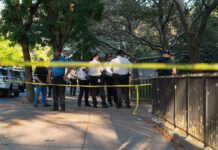
U.S. Secret Service officials stated they were investigating a shooting incident near a main magnetometer screening area by the White House and that the president, first lady, and all protectees were safe [1]. Reporters on scene described “apparent gunshots,” prompting a swift lockdown and rapid movement away from the area [2]. Authorities did not immediately confirm the source of the sounds as gunfire, identify a weapon, or present physical evidence. That investigatory posture left the core question—what precisely occurred—open pending further verification [2].
Live television images of a correspondent ducking for cover amplified the sense of danger while details lagged behind [2]. That gap between visceral video and incomplete facts followed a familiar pattern in high-stress security events, where early media frames often precede forensic clarity. The Secret Service’s emphasis on safety and containment without immediate technical confirmation balanced public reassurance with investigative caution. Viewers, however, were left to reconcile dramatic visuals with sparse official detail, a tension that frequently fuels speculation [2].
Recent Precedent Heightens Public Sensitivity
A recent shooting near the main security screening area during the White House Correspondents’ Dinner underscored the plausibility of weapons-related incidents close to federal checkpoints. That episode, which prompted a strong response by Secret Service and local police, set a mental baseline that makes subsequent loud reports near the complex more likely to be treated as credible threats. The cumulative effect is heightened anxiety and a public primed to assume the worst, especially when real-time video suggests gunfire even before lab results or recovered evidence are disclosed.
Because both incidents involve the vicinity of screening points, they raise practical questions about the layering of perimeter defenses and the distance at which decisive interdiction occurs. Officials typically avoid telegraphing protective tactics, but repeated disruptions at or near access control areas naturally invite scrutiny from citizens who expect the most secure complex in the nation to deter or neutralize threats earlier. Absent clear after-action transparency, those questions can morph into suspicions about complacency or bureaucracy.
Why The Information Gap Fuels Bipartisan Frustration
Breaking coverage that labels loud reports as “apparent gunshots” can harden into conventional wisdom while the forensic record remains thin [2]. Conservatives skeptical of federal competence see another example of a system that reacts after the fact and then withholds specifics; liberals concerned about public safety and governance see opaque processes that do not earn trust. Both sides converge on a shared complaint: federal institutions communicate slowly and selectively during incidents that demand prompt, plain-language updates supported by evidence rather than euphemisms or prolonged silence.
#BREAKING: Tense moments outside the White House as an ABC News reporter is seen taking cover after 20–30 gunshots were reportedly heard in the area. pic.twitter.com/j14q15d3Ce
— Global Spotlight 24 (@asnumrani) May 24, 2026
Transparency trade-offs are real during active investigations, but a minimal facts-first cadence could help. Clear timelines, defined perimeters, and explicit distinctions between confirmed evidence and preliminary impressions would reduce confusion. Officials could also publish sanitized after-action summaries once risks subside. Without that, ambiguity lingers, algorithms elevate the most dramatic clips, and the public’s faith in basic government competence erodes a little more each cycle—regardless of which party holds power at the moment [2].
What To Watch Next
Investigative records from the Secret Service and the Metropolitan Police Department will determine whether the sounds were gunfire, confirm if a suspect possessed a weapon, and log any recovered casings or projectiles. If officials release concrete findings—ballistic evidence, arrest details, or a motive—that will anchor the narrative in verifiable facts. If disclosures remain limited, questions about perimeter security and communications discipline will intensify, especially given the recent screening-area shooting during the Correspondents’ Dinner [2].
Sources:
[2] Web – Reporters told to run as gunshots heard near White House – 1News