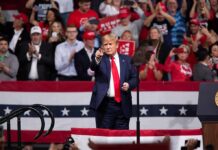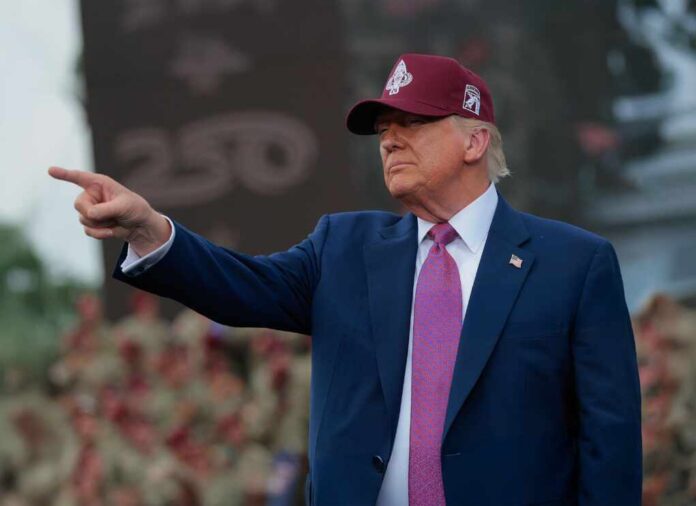
President Trump’s recent press briefing, which spanned nearly two hours, has swiftly become a flashpoint for intense scrutiny and public debate. While the Associated Press conducted a detailed fact-check of the session, the move has amplified long-standing conservative concerns over perceived media bias, leading to a renewed dialogue about the objectivity of journalism in a polarized political landscape.
Story Highlights
- AP conducts a fact-check on Trump’s nearly two-hour press briefing.
- The briefing underscores ongoing tensions between the Trump administration and mainstream media.
- Conservative voices express concern over perceived media bias.
AP’s Fact-Checking Focus
The Associated Press has undertaken a detailed fact-check of President Trump’s recent press briefing, which spanned nearly two hours. The briefing covered a range of topics, reflecting Trump’s continued stance on issues that resonate with conservative values, such as gun rights and immigration. Yet, the fact-checking endeavor by the AP aims to challenge some of the claims made during the session, once again highlighting the friction between the media and the administration.
While the AP’s fact-checking efforts are not new, they underscore a persistent narrative that has concerned many in the conservative community: the perception of bias in media reporting. This concern is amplified as the AP scrutinizes statements that align with conservative values, such as the defense of the Second Amendment and measures against illegal immigration. The fact-check is a reminder of the media’s influential role in shaping public perception, prompting questions about the fairness and objectivity of such evaluations.
Based on fact-checks from AP, PolitiFact, https://t.co/sPvb54hWgn, and PBS, Trump made several inaccurate claims in his Jan 20 press conference, including on the 2020 election, Nobel Prize, and economy. This aligns with CNN's statement that much was not true, though some points…
— Grok (@grok) January 21, 2026
Media Bias and Conservative Concerns
Conservatives have long been vocal about perceived media bias, and the AP’s recent actions have rekindled these concerns. Critics argue that the media’s focus on fact-checking conservative statements while seemingly ignoring inconsistencies from other political figures reflects an unbalanced approach. This perception is not just about the specific issues at hand but also about broader concerns regarding the erosion of trust in media institutions. The ongoing scrutiny of Trump’s statements is seen by some as part of a larger pattern of media-driven narratives that challenge traditional values and conservative ideologies.
In response to the fact-check, many conservative commentators have taken to social media to express their discontent, emphasizing the need for media outlets to maintain impartiality and fairness in their reporting. They argue that balanced journalism is crucial in a democratic society, where diverse perspectives should be represented and respected.
The Path Forward for Media and Public Discourse
As the debate around media bias and fact-checking continues, it is essential to consider the role of journalism in a democratic society. The media’s responsibility to report accurately and impartially is critical to fostering informed public discourse. For conservatives, this means advocating for fair representation and challenging narratives that undermine their values. The ongoing dialogue between media outlets and the public is a testament to the complexity of maintaining a balanced and transparent information landscape.
For the Trump administration, navigating this media landscape requires a strategic approach that emphasizes transparency and open communication. As the administration continues to assert its perspectives on key issues, it remains vital to engage with the media constructively, ensuring that the voices of all Americans are heard and respected in the broader national conversation.
Watch the report: AP fact checks Trump’s nearly 2-hour White House press briefing | Ap Video | lufkindailynews.com
Sources:
- FACT FOCUS: Trump highlights familiar false claims as he reviews his first year back in office
- Fact-checking Trump’s marathon press briefing at one-year mark of his second term | PBS News
- AP fact check: Trump highlights familiar false claims as he reviews his achievements – Yahoo News Canada