Washington’s large-scale airstrikes, dubbed Operation Hawkeye Strike, were launched after two Guardsmen and a civilian interpreter were killed. However, independent analysts are raising alarms, suggesting the attacker was from Syrian security services tied to jihadist networks—not clearly ISIS itself. This exposes a dangerous reality: the U.S. is now closely partnered with a Syrian regime that evolved out of an al-Qaeda-linked movement, forcing a difficult debate over long-term strategy and trust while simultaneously bombing other extremist factions.
Story Highlights
- U.S. forces launched large-scale airstrikes across Syria under Operation Hawkeye Strike after three Americans were killed in Palmyra.
- The campaign was ordered by President Trump to send a clear message that attacks on U.S. troops will be met with overwhelming force.
- Independent analysts warn the Palmyra gunman came from Syrian security services tied to jihadist networks, not clearly from ISIS itself.
- Washington’s partnership with a Syrian regime rooted in al‑Qaeda’s former branch raises hard questions about long-term strategy and trust.
Retaliation Strikes Hit ISIS Targets Across Syria
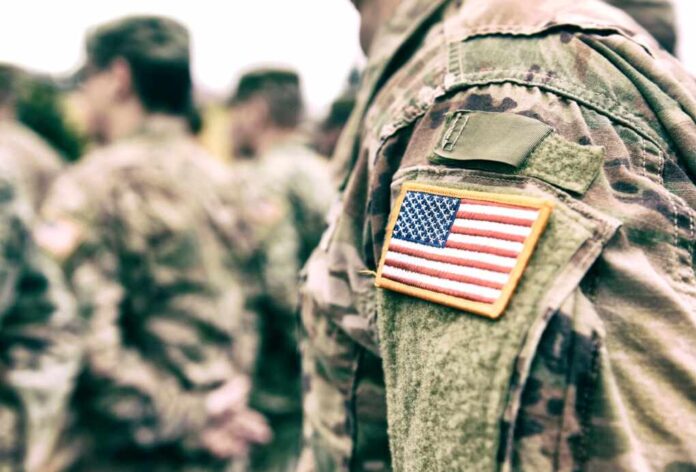
On January 10, 2026, U.S. Central Command announced that American and partner forces carried out large-scale strikes against multiple ISIS targets across Syria as part of Operation Hawkeye Strike. The operation was launched after a December 13 insider attack in Palmyra killed two Iowa National Guard soldiers, Sgt. Edgar Brian Torres‑Tovar and Sgt. William Nathaniel Howard, along with a U.S. civilian interpreter. Officials say roughly thirty-five targets were hit, signaling a sustained campaign rather than a symbolic one-off response.
CENTCOM framed the strikes as a direct warning to terrorists worldwide: if you harm American warfighters, the United States will track you down and strike you anywhere on the globe. Defense Secretary Pete Hegseth reinforced the message, declaring that the Pentagon will never forget the fallen and never relent in targeting ISIS networks. For many conservatives, this response reflects the long-demanded shift away from appeasement and ambiguity toward unapologetic defense of American lives.
The #UnitedStates carried out “large-scale” retaliatory strikes against Islamic State targets across #Syria on Sunday, following last month’s ambush near #Palmyra that killed two US soldiers and an American civilian interpreter.
Details here 🔗https://t.co/nknAz1x5AV #USA… pic.twitter.com/xRtD3puwLY
— The Times Of India (@timesofindia) January 11, 2026
Palmyra Attack Exposes Dangerous Partner-Force Vulnerabilities
The December 13 Palmyra shooting that sparked Operation Hawkeye Strike unfolded during a joint meeting between U.S. personnel and Syrian security officers, underscoring how deeply American troops are now embedded alongside local forces. The attacker, identified by Syrian authorities as a member of their own security services under investigation for jihadist ties, opened fire and killed the two Guardsmen and the interpreter. That insider profile immediately raised alarms about vetting, loyalty, and the reliability of the very forces meant to protect our troops on the ground.
Independent researchers from the Long War Journal have highlighted an important discrepancy between the official narrative and the available evidence. While CENTCOM labeled the shooter an ISIS terrorist, they note ISIS has not claimed responsibility for the Palmyra attack, which is unusual given its long pattern of boasting about killing Americans. Instead, the data points to jihadist infiltration inside Syrian security structures, where thousands of extremists with ties to al‑Qaeda and related networks reportedly operate under the regime’s umbrella.
Operation Hawkeye Strike: Justice, Deterrence, and Political Symbolism
Operation Hawkeye Strike began on December 19, 2025, when U.S. and Jordanian forces conducted the first retaliatory missions against ISIS sites in Syria at President Trump’s direction. In the days that followed, from December 20 through 29, U.S. and partner forces killed seven ISIS members and captured eighteen more in a series of raids. Naming the campaign after the Iowa National Guard’s “Hawkeye” identity was a deliberate decision, tying the operation to the memory of the fallen soldiers and signaling to military families that their sacrifice anchors national policy.
For Trump’s supporters, this approach reflects a core conservative instinct: use decisive, targeted military power to defend Americans, not open-ended nation-building or vague “global community” projects. The White House message is straightforward—America will not absorb attacks on its people without cost to those responsible. At the same time, the lack of public detail on specific targets and casualties leaves unanswered questions about how much ISIS capability has truly been degraded and how success will ultimately be measured.
Allied with Ex–al‑Qaeda Regime While Targeting ISIS
Behind the clean Pentagon talking points lies a more uncomfortable reality: Washington is now working closely with a Syrian regime that evolved out of an al‑Qaeda-linked movement. Analysts describe the government under Ahmad al Sharaa as being led and staffed by former al‑Qaeda figures and thousands of foreign and domestic jihadists folded into its security services. The same apparatus that supplies security partners to U.S. forces also shelters elements ideologically hostile to American interests and values.
U.S. Special Envoy Tom Barrack reportedly underscored this dependency by saying there is “no Plan B” in Syria, making clear that the administration sees cooperation with Sharaa’s regime as the only workable option for containing ISIS remnants. For constitutional conservatives wary of endless entanglements, this raises pressing concerns: America is now helping one set of former jihadists govern while bombing another, in a battlefield where ISIS and al‑Qaeda-aligned factions are bitter rivals. That alignment may deliver short-term tactical gains but leaves deeper strategic and moral questions unresolved.
Unfinished War and Risks of Mission Creep
More than a decade after ISIS first swept across Syria and Iraq, U.S. officials acknowledge the group has lost its caliphate but still operates as a shadowy insurgency through cells and clandestine networks. Several hundred American troops remain in Syria to advise, assist, and enable partner forces and to conduct focused counter-ISIS missions. Each new attack on Americans, like the Palmyra incident, triggers pressure for tougher action, even as the public receives little clarity on the ultimate political objective or end state.
For readers who lived through years of vague Middle East wars and bureaucratic double-speak, the pattern is familiar and troubling. Operation Hawkeye Strike showcases real American strength and honors the dead, but it also risks deepening reliance on compromised partners and expanding a campaign without a clearly defined finish line. As this operation continues, conservatives will be watching closely to ensure it remains narrowly focused on protecting American lives and does not slide back into open-ended foreign adventurism.
Watch the report: US launches fresh airstrikes on ISIS in Syria after deadly ambush
Sources:
US military strikes Islamic State in Syria – Long War Journal
CENTCOM, partner forces launch Operation Hawkeye Strike in Syria – Stars and Stripes
US carries out additional ‘large-scale’ strikes on ISIS targets in Syria – ABC News
U.S., Partner Forces Strike ISIS Targets in Syria – CENTCOM Press Release