Jurors in Orlando heard that a young mother was shot and her 1-year-old was left to die in a parked car that reached more than 120 degrees.
Story Snapshot
- Prosecutors say Doujon Griffiths shot a mother and left her baby in a car where heat likely killed her.
- Detective testimony said the vehicle’s interior temperature climbed above 120 degrees.
- Bodies were found days later in a parking lot off Lake Ellenor Drive in Orlando.
- Coverage shows name inconsistencies for the infant, and some records are not publicly available.
What Prosecutors Told The Jury
State attorneys in Orange County, Florida said Doujon Griffiths shot 20-year-old Massania Malcolm after first shooting her boyfriend. They said he took the couple’s car with Malcolm and her 1-year-old daughter inside, then left it parked where heat built up for days. Reporters in the courtroom said this was the core theory presented to jurors. The claim ties the baby’s death directly to extreme heat inside the abandoned car after the shootings.
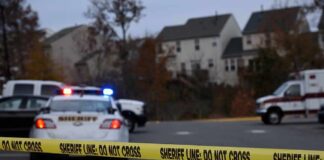
Investigators and prosecutors connected the case to a single scene. They said both victims were found in or near the same vehicle in a lot off Lake Ellenor Drive in Orlando. Local coverage has repeated that location detail since 2021. Reporters wrote the baby likely died from heat exposure after being trapped inside the car for an extended period. The state’s argument aims to show a continuous chain of actions ending with both deaths.
Evidence Presented On Heat And Causation
Trial coverage from Orlando said a detective testified that the car’s interior climbed above 120 degrees. That point backs the heat-death theory for the infant, because enclosed vehicles can turn deadly fast in Florida’s climate. The reporting states that the child likely died of heat exposure, consistent with what jurors heard in court. The heat evidence is a key link that prosecutors used to move from timeline to cause of death for the baby.
A 2024 report quoted the Orange County sheriff saying the suspect allegedly left the baby to die in the car, while also noting the charges included first-degree murder for both deaths. That aligns with how prosecutors framed the case to jurors during the trial. The state’s narrative connects the shootings, the car, and the heat, rather than treating the baby’s death as a separate event. The charges reflect that unified theory of responsibility.
What We Do Not Have In Public View
Public reporting here does not include the charging documents, the medical examiner’s autopsy, or the full trial transcript. Coverage instead summarizes what prosecutors and witnesses said in court. That means some details, like exact statutory counts or medical findings, are not visible in these sources. The reporting also shows inconsistent spellings of the baby’s last name, which can confuse readers and make independent record checks harder.
The available stories also do not lay out a full eyewitness chain for the shootings and car movement. Reporters attribute the claims to prosecutors and detectives but do not reproduce source documents or video exhibits. That is common in fast-moving trials. Still, it leaves gaps on which pieces were proved by forensics, which by testimony, and which by admissions. Those items would be clear in certified filings and transcripts that are not included here.
Why This Case Hits A National Nerve
Hot car deaths often divide public opinion. Many are tragic mistakes, while some are tied to other crimes. Florida cases have shown that heat deaths can lead to charges ranging from neglect to murder, depending on intent and context. Prosecutors here argue the baby’s death flowed from a violent act and an alleged abandonment in deadly heat. That places the case in the smaller set where the state pursues the most serious charges after a child dies in a vehicle.
People across the political spectrum see a system that struggles to protect children and deliver swift justice. Families ask why known threats slip through and why cases take years. Communities ask how a baby could be left to die in a car while agencies juggle heavy caseloads. The facts presented in this trial describe a chain of preventable harms. The broader worry is that repeat failures—violent crime, weak support systems, and slow courts—keep piling onto victims who have the least power.
Sources:
caribbeannationalweekly.com, wesh.com, us.headtopics.com, fox35orlando.com, oregon.gov