
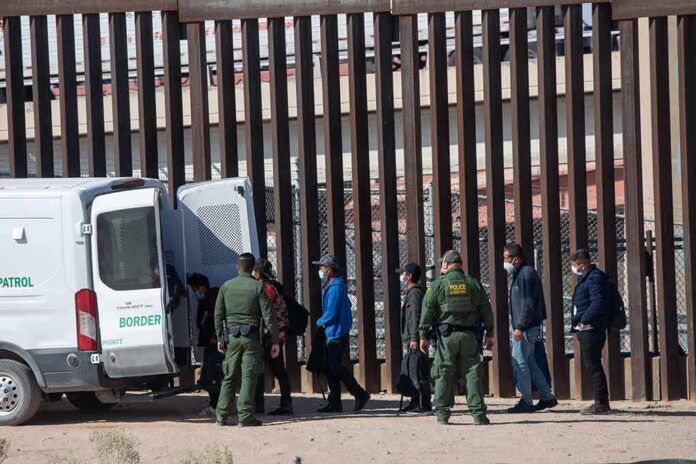
Dueling messages inside federal immigration enforcement sparked public whiplash overnight, forcing swift denials and a presidential reaffirmation that anyone here illegally remains “on the table.”
Story Snapshot
- Reports said immigration officers were told to stop arresting non-criminal immigrants; the government denied it.
- Department of Homeland Security said there was no policy change: “No one is off the table” for arrest.
- President Trump echoed the stance that arrests of those here illegally would continue.
- Recent data show many arrests already target people without criminal convictions, adding to confusion.
What triggered the uproar
Reports late Saturday said immigration officers were told to stop arresting people without criminal convictions or pending charges. The same reports said arrests would be limited to those with criminal histories and would end “collateral arrests,” which are arrests of bystanders during an operation. The claim spread fast and raised alarms among agents and activists. The story relied on anonymous sources, and no written memo was released to the public.
Department of Homeland Security (DHS) quickly denied any pause. The department said the claim was false and that immigration officers would continue to arrest anyone here illegally. DHS stated, “No one is off the table,” and rejected the idea that non-criminal arrests had been stopped. That clear statement aimed to calm the backlash and reassert control over the message after a night of confusion across field offices and social media.
Trump and the government’s on-the-record position
President Trump told a Fox News reporter that anyone in the United States illegally remains subject to arrest and deportation. That message aligned with DHS’s public denial and signaled that the administration’s enforcement posture had not changed. Supporters saw it as a needed correction; critics saw more evidence of disorder inside the system. Either way, the White House and DHS presented a united front that arrests would continue as before.
Some outlets reported that the government argued media were misreading “non-criminal” data. Officials said many so-called non-criminal arrestees still pose risks, including foreign criminal alerts or gang ties that do not show up as U.S. convictions. That debate shows how labels can distort the picture. The term “non-criminal” sounds simple, but it often covers people with civil violations, final removal orders, or serious red flags outside U.S. courts.
Why the terminology gap fuels mistrust
Recent coverage and analyses show arrests of people without U.S. criminal convictions have risen under current policy, which focused more on civil immigration violations. Reuters reported growing arrests of people with no conviction or charge, and a separate analysis found a majority of one month’s arrests involved civil violations only. Those trends help explain why a rumored pullback sounded both shocking and, to some, plausible within a shifting enforcement mix.
The lack of a public memo leaves open questions. Was there a narrow, local clarification that got misread? Was there a verbal instruction that was later walked back? Or was it simply rumor? Without documents, it is hard to judge. What is clear is the fast denial from DHS and the President’s message that enforcement remains broad. That speed may halt panic, but it also highlights a system where key decisions often surface through leaks instead of clear public guidance.
What this means for everyday Americans
People across the political spectrum see a pattern here. Confusing signals, rising arrest numbers, and vague terms feed distrust in federal leadership. Conservatives worry about any softening that could invite more illegal entry. Liberals fear civil rights risks from wide “collateral” arrests during raids. Both sides see a bureaucracy that struggles to speak clearly and own its choices. Plain language rules, public memos, and timely data would help restore confidence in how the law is enforced.
Sources:
foxnews.com, dailywire.com, hindustantimes.com, timesofindia.indiatimes.com, brennancenter.org, thegatewaypundit.com