
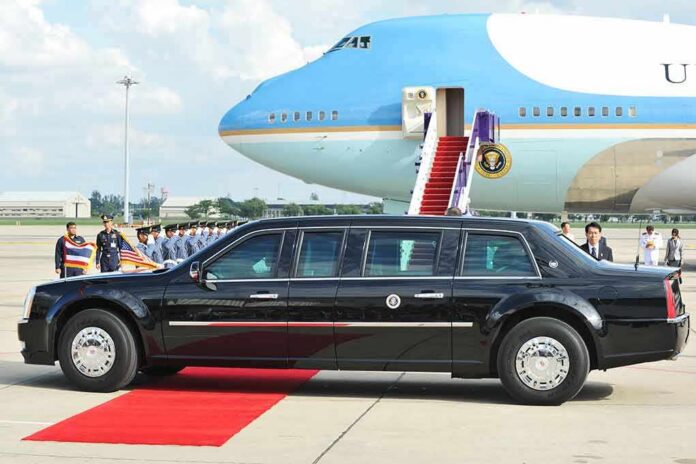
President Trump gave China’s leader Xi Jinping a full state-visit welcome in Washington, signaling high-level engagement despite sharp U.S.-China tensions.
Story Highlights
- White House hosted Xi Jinping for a formal state visit with full honors.
- China confirmed Xi’s three-day U.S. visit at President Trump’s invitation.
- Ceremony and meetings aimed to steady ties while rivalry continues.
- Airport greeting and red‑carpet optics underscored the push to manage conflict.
What Happened: A Formal State Visit With Full Honors
The White House said President Trump and First Lady Melania Trump would welcome China’s President Xi Jinping and Madame Peng Liyuan for an official state visit on September 24, 2026, with full ceremony at the White House. China’s Foreign Ministry confirmed Xi’s United States trip from September 23 to 25 at Trump’s invitation. Officials outlined arrivals, an honor guard, bilateral talks, a state dinner, and cultural events that match the highest diplomatic protocol for visiting heads of state.
Arrival plans included a rare tarmac greeting by President Trump at Joint Base Andrews, a gesture often reserved for close allies or special moments. Reports said the red-carpet sequence would feature an arrival ceremony, meetings in the Oval Office, and a state dinner hosted by the First Lady’s office. The schedule signaled a bid to lower the temperature through personal engagement at the top level, even as both sides keep firm positions on trade, technology, and security issues.
Why It Matters: Managing Rivalry Through Summit Diplomacy
Past summits show that warm ceremony can coexist with hard competition. Analysts note these meetings often slow decline, reopen channels, and set guardrails more than they deliver big deals. Beijing last hosted Trump with striking pomp in 2017, and such protocol has long served as a tool to shape tone and signal respect while talks address tough issues. This visit fits that pattern: steady the relationship, prevent crises, and keep leaders talking amid strategic rivalry.
Think tanks and policy studies describe a playbook where high-level meetings create space for follow-on dialogue across trade, military contacts, and law enforcement, even when core disputes remain. Records from prior leader meetings show that renewed contact can reopen regular exchanges and reduce risks from miscalculation, though gains are often limited and fragile. That history helps explain the full honors here: visibility, respect, and structure can make later working talks easier to start and harder to derail.
The Stakes for Americans: Economy, Security, and Everyday Costs
U.S.-China ties touch jobs, prices, and supply chains. Leaders who manage the rivalry can reduce shocks that hit energy costs, consumer goods, and farm exports. The visit came as both sides weigh trade rules, advanced chip controls, and data security. A steady channel can limit sudden tariffs or embargoes that raise prices for families and retirees. It can also help prevent military incidents that could rattle markets and retirement accounts across the country.
🇨🇳🇺🇸 Xi Jinping Arrives in US for State Visit, Welcomed by Trump
Chinese President Xi Jinping has arrived in the United States for a state visit at the invitation of US President Donald Trump, receiving a rare planeside welcome from Trump and First Lady Melania Trump at Joint… pic.twitter.com/MEgddlCGPQ
— Think BRICS (@RealBRICSnews) September 24, 2026
Many Americans on the right and left doubt Washington’s ability to deliver for working people. They watch leaders trade toasts while factories close, costs rise, and power seems concentrated in a small elite. This visit will face that test too. The measure will be practical steps that protect American industry, keep technology secure, and prevent bullying or theft, while also avoiding war. The ceremony is the opening move; results will be judged by what follows in policy and enforcement.
Sources:
cbsnews.com, whitehouse.gov, fmprc.gov.cn, scmp.com, reuters.com, thestandard.com.hk, japantimes.co.jp, apnews.com, abcnews.com, newscord.org