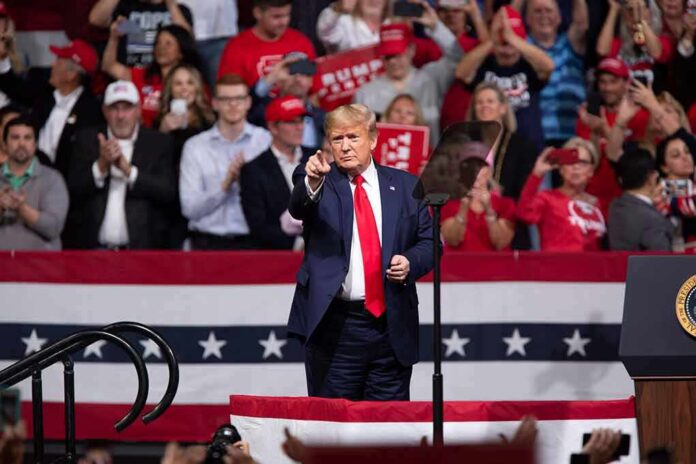
At President Trump’s Gastonia rally, a female heckler interrupted, and Trump paused to mock her before moving on.
Story Snapshot
- Trump stopped mid-speech in Gastonia to address a female heckler, then continued.
- Remarks like “Oh, it’s a she” and “She’s going home to mama” drew quick reactions.
- The rally aimed to boost Senate candidate Michael Whatley in a high-stakes North Carolina race.
- Clips of the moment spread fast online, shaping how both sides framed the exchange.
What Happened On Stage In Gastonia
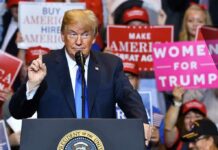
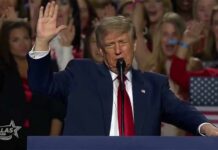
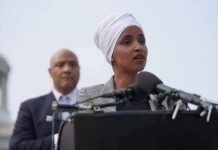
On Wednesday night in Gastonia, North Carolina, President Trump paused his speech when a female heckler shouted from the crowd. Trump turned toward the sound and said, “Let me see his face. Oh, it’s a she. Hello?” He then added, “She’s going home to mama,” before continuing with his prepared remarks. Local coverage placed Trump in Gastonia to rally support for Republican Senate candidate Michael Whatley, underscoring the state’s importance this cycle.
Event planners expected heavy traffic and significant turnout around Gastonia Municipal Airport, where the rally was staged. Authorities warned drivers about road closures near Union Road and Gaston Day School Road during the event hours. The setup followed a familiar campaign pattern, with a large outdoor venue, an energized crowd, and a tightly managed security footprint to handle both supporters and protesters near the site.
Why The Moment Traveled So Fast
Short rally clips tend to dominate online feeds because they carry strong emotion and clear conflict. Communication research calls this framing: media and users lift a few seconds from a long speech and make that slice define the story. That is why one brief exchange can read as either crowd control or ridicule, depending on who shares it and how they caption it. This cycle boosts views but trims context, which can harden divides.
Trump events have seen similar flare-ups across campaigns, with hecklers drawing quick responses and security moving in. Past rallies in the Carolinas featured repeated interruptions and strong audience reactions, which then became a media template for later coverage. The recurring pattern helps explain why this Gastonia moment slotted neatly into familiar narratives on both the left and the right after it hit social media.
How It Fits The Bigger Political Fight
The Gastonia stop centered on lifting Michael Whatley in a hard-fought Senate race, where control of Congress shapes policy on spending, immigration, energy, and the cost of living. Supporters saw Trump’s response as strength and message discipline. Critics saw disrespect and mockery toward dissenters. Both sides fed the clip into larger arguments about leadership, civility, and whether those in power listen to regular people who feel overlooked by Washington elites.
Free speech rules also frame these moments. The First Amendment protects speech, including protest, unless it pushes imminent lawless action. North Carolina law bars inciting a riot, while allowing peaceable protest. Campaigns build security and press plans around those lines. That balance explains why hecklers are usually removed quickly and why candidates often use the pause to rally their base before returning to policy or attacks on opponents.
Sources:
facebook.com, x.com, thedailybeast.com, the-independent.com, axios.com, sciencedirect.com