Fourteen newborns died in an Islamabad hospital nursery fire that spread before staff could get most babies out, officials said.
Story Snapshot
- Officials reported 14 infant deaths after a nursery blaze at Pakistan’s top public hospital.
- At least one baby was rescued, and leaders ordered an immediate inquiry.
- Early reports point to an air conditioner fault sparking the fire in an oxygen-rich ward.
- The tragedy fits a pattern of neonatal unit fires tied to weak safety systems in South Asia.
What Officials Say Happened in Islamabad
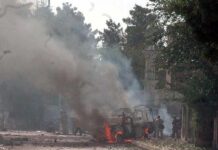
Hospital leaders in Islamabad said a fire erupted early Wednesday inside the newborn nursery at the Pakistan Institute of Medical Sciences. Government officials and the Federal Health Minister confirmed 14 infants died. Staff and responders pulled at least one baby out alive. Reporters described heavy smoke on the third floor as families rushed to the scene. Authorities announced an immediate investigation to establish the chain of events and any failures in response.
Local and international outlets reported that the blaze moved quickly through the mother and child ward. The nursery held more than a dozen newborns at the time, which made evacuation hard. Police and health officials coordinated with families on identification and next steps. Leaders called for answers on how a high-risk unit filled with oxygen equipment could be so vulnerable. An inquiry panel was tasked to find causes and recommend fixes without delay.
Early Cause Clues and Why Neonatal Wards Are High Risk
Authorities and local coverage pointed to a faulty air conditioner as a likely ignition source, with oxygen lines and devices feeding the flames. That mix is known to turn a small spark into a deadly fire. Neonatal units run many machines at once and depend on steady power. Babies cannot self-rescue, and smoke spreads fast. Safety studies stress “defend in place,” sealed doors, and fast compartment walls to slow smoke and heat in these units.
Fire safety researchers and clinicians say the region has seen repeat tragedies when old wiring, crowded rooms, and weak drills meet nonstop electrical loads. Past probes in nearby countries found missing alarms, expired extinguishers, and overloaded circuits in infant units. Experts urge routine audits, strict equipment standards, and staff training to move or shield babies in minutes. They warn that prevention is the best bet because evacuation is slow and risky for fragile newborns.
Why This Matters Beyond Pakistan
This incident highlights a broader problem: critical care wards across South Asia face aging systems and thin oversight. When power systems fail or spark, oxygen-rich spaces turn deadly fast. The cycle is familiar. Leaders order probes, families grieve, and hospitals promise upgrades. Real change requires funding for safer wiring, smoke barriers, and drills that work on a bad day. That kind of follow-through is often delayed by cost, red tape, and shifting political focus.
On August 26, 2026, a fire broke out on the third floor (Mother and Child Health ward) of the Pakistan Institute of Medical Sciences (PIMS) Hospital in Islamabad, caused by an air-conditioner fault or short circuit, tragically resulting in the death of 14 newborn babies. pic.twitter.com/ZYJ4g5qpzy
— 𝕆𝕞𝕖𝕣 𝕁𝕚𝕓𝕣𝕒𝕟 (𝕆𝕁) (@OJibran21267) August 26, 2026
For readers in the United States, the lesson is simple. Life-and-death systems fail when safety culture slips, when inspections are weak, or when budgets cut corners. Many Americans on the left and right worry that large systems put paperwork and public image ahead of prevention. Hospital fires abroad remind us that basic safeguards, clear lines of duty, and honest oversight are not luxuries. They are the minimum owed to patients and families everywhere.
Sources:
apnews.com, aljazeera.com, nytimes.com, bbc.com