China’s government blasted a U.S. sanctions bill that would slap up to 100% tariffs on countries buying Russian oil, putting Beijing on a collision course with Washington as Congress advances the plan.
Story Highlights
- Senate bill authorizes up to 100% tariffs on countries trading in Russian oil products.
- Eighty-five senators back the framework, signaling rare bipartisan muscle.
- President Donald Trump approved moving the bill forward after meeting Sen. Graham.
- China denounced the bill as “illegal unilateral sanctions” and vowed to resist.
What the Sanctions Bill Actually Does
Senate Bill 1241, the Sanctioning Russia Act of 2025, lets the President raise tariffs up to 100% on goods from countries that knowingly trade in Russian-origin petroleum products. The bill ties action to Russia’s conduct on peace talks and violations of any agreement with Ukraine. The package also builds in a 270-day exception for nations aiding Ukraine militarily or economically, creating a clear off-ramp for partners who help stop the war.
Support in the Senate is broad and unusual for Washington. A joint statement from Senators Lindsey Graham and Richard Blumenthal cited 85 cosponsors, which shows the center of gravity has shifted toward tougher enforcement against Russia’s oil cash flow. That level of backing increases the odds of passage and sends a strong signal to buyers in Asia and Europe that loopholes are closing fast.
Trump’s Green Light and the Enforcement Target
President Donald Trump approved moving the proposal ahead after meeting Senator Graham, according to a January 2026 report. That nod from the White House means executive and legislative branches are aligned on the goal: choke off revenue that fuels Russia’s war machine. The revised tariff cap at 100% replaces earlier talk of a 500% ceiling but still packs real bite if applied to nations doing large-volume Russian energy trade.
The bill focuses attention on the largest buyers of Russian crude and fuel. Reporting describes China and India among the top importers, with smaller European buyers also in view. The narrow scope aims at major enablers rather than sweeping the whole world into a trade fight. That design is meant to change cost-benefit math for Moscow’s key customers without punishing allies acting in good faith to help Ukraine.
China’s Pushback and the Legal Clash
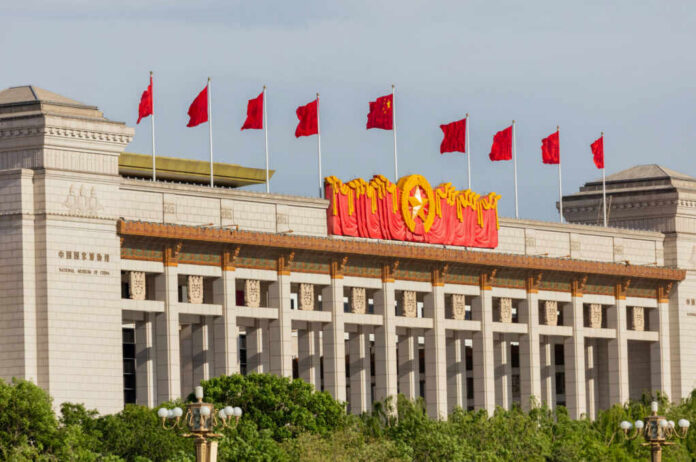
China’s Foreign Ministry called the bill “illegal unilateral sanctions” that lack United Nations Security Council approval. Beijing said its trade with Russia is legitimate and warned that coercion and double standards would backfire. Those claims set up a sharp contrast with Congress’s approach, which relies on U.S. law and secondary tariffs to deter purchases that keep Russia’s oil money flowing.
China’s message also faces a real-world wrinkle. Reuters reported that Chinese state oil giants suspended Russian oil buys in late 2025 due to sanctions risk. That pause suggests the pressure works, even as Beijing argues the trade is normal. The contradiction undercuts the idea that U.S. measures are empty threats and shows companies weigh market access to the United States when deciding how to source energy.
Why This Matters for U.S. Families and Security
American families have paid for years of weak policy with higher prices and endless foreign entanglements. This bill aims to hit Russia’s wallet without new wars or blank checks. Tying penalties to peace talks sets a clear goal. Giving a 270-day exception to countries that help Ukraine is common sense. It rewards partners who step up and puts freeloaders on notice that cheap barrels from Moscow also carry a big U.S. tariff price.
A very useful article by Krity Ambey, Shubhangi Mathur, and Asit Ranjan Mishra on the proposed US tariffs targeting buyers of Russian energy.
• A bipartisan group of US senators has introduced a revised sanctions Bill proposing a 100 percent tariff on goods from the five… pic.twitter.com/PtRhEr2HC5
— Saurabh Tripathi (@IndicNomad2024) July 16, 2026
Critics worry the 100% cap is softer than the earlier 500% idea. That is fair to watch. But enforcement intensity, not only the number, drives behavior. A steady drumbeat of clear cases, targeted duties, and fast follow-through can close the “shadow fleet” games. Congress and the administration can also tighten the net by exposing banks and shippers that grease the trades, keeping the focus on those who knowingly enable Russia’s revenue streams.
What to Watch Next on Capitol Hill
Procedural delays slowed votes earlier, even after Trump’s approval. Watch whether Senate and House leaders schedule floor action and how they handle any carve-outs. Also track waiver reports that the White House must certify to Congress. Transparent waiver use will keep pressure on countries that play both sides. Fast passage with tough oversight would show the United States can still defend its interests without feeding globalist games or endless bureaucracy.
Sources:
wsj.com, abcnews.com, bostonglobe.com, congress.gov, politico.com, lgraham.senate.gov, reuters.com, hongkongfp.com, newsweek.com