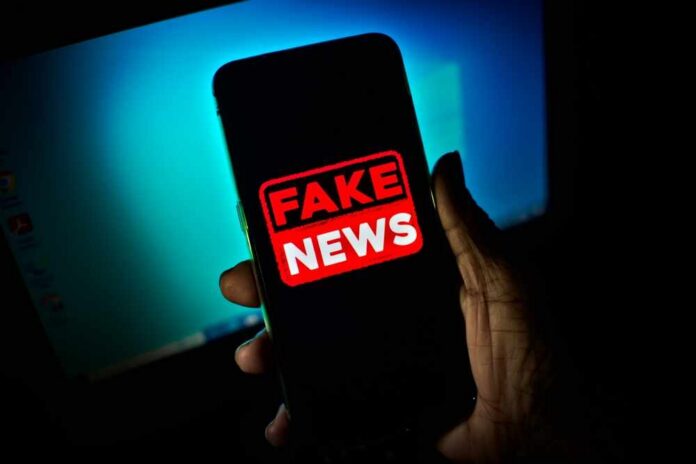
A viral claim that Mark Thatcher stood in a South African courtroom accused of murdering his wife and daughters in the United Kingdom turns out to be a stark example of how online media can twist real scandals into something even darker and completely false.
Story Snapshot
- Mark Thatcher was charged in South Africa for funding a foreign coup, not for murder.
- The real case involved an alleged plot to overthrow the government of Equatorial Guinea.
- Short online videos miscast those court scenes as a family murder case in the United Kingdom.
- This error highlights how sensational misinformation exploits public anger at powerful elites.
What Mark Thatcher Was Really Charged With
Mark Thatcher, son of former United Kingdom Prime Minister Margaret Thatcher, was arrested at his home in Cape Town, South Africa, in August 2004 under that country’s tough law against mercenary activity. Police accused him of helping to fund a plan by hired fighters to topple the president of Equatorial Guinea, a small but oil-rich African nation. In January 2005, he appeared in a South African court and pleaded guilty to breaching the Foreign Military Assistance Act by paying for an aircraft linked to the plot.
Prosecutors said Thatcher transferred hundreds of thousands of dollars to people involved in the attempted coup, including money tied to a helicopter meant for use in the operation. As part of a plea deal, he admitted that he suspected the helicopter could be used for mercenary activity, even as he claimed he thought it was for an air ambulance service. The court gave him a four-year suspended prison sentence and a large fine, allowing him to avoid jail if he stayed out of further trouble.
How Online Videos Turned a Coup Case into a Murder Story
Recent short videos on platforms like YouTube show footage of Thatcher in South African courts but tell viewers he is a man held over the murder of his wife and daughters in the United Kingdom. That description does not match the actual legal record. Reports from the time, court documents, and major news outlets all say his charges involved funding a failed coup in Equatorial Guinea, not any family killing. No credible source links Thatcher to murder charges against his wife or children.
These clips follow a wider pattern in today’s media world. Short, dramatic videos often trade accuracy for shock value. They remix real images of courtrooms and police raids with new, more emotional captions to grab views and shares. In this case, a real scandal about secret money, mercenaries, and oil was not enough. The creator added a false murder claim, likely knowing that stories about family killings feel more personal and disturbing and will spread faster among viewers already worried about rising crime and a broken justice system.
Why This Misstory Hits a Nerve Across the Political Divide
Many Americans on the right and left already feel that powerful people play by different rules. They see politicians, wealthy families, and global dealmakers getting light sentences or quiet plea bargains while regular citizens face harsh punishment for lesser crimes. Thatcher’s real case fits that picture: a rich, well-connected figure admitted a role in a foreign coup plan and still walked away with a suspended sentence and a fine. That outcome feeds anger about a justice system that seems gentler on elites.
When online storytellers twist that real anger into a fake murder tale, they tap into shared fears about safety, corruption, and government failure. People frustrated with “globalism” and foreign meddling see another example of elite games abroad. People angry about inequality and lack of accountability see one more story where the rich escape serious jail time. The false murder label makes the story feel even more like proof that the system protects the powerful no matter what they do, even when that is not what happened.
What This Says About Misinformation and Trust
This mislabeling of Thatcher’s South African case shows how broken trust and weak institutions help misinformation grow. When citizens believe courts, leaders, and media are controlled by a small “deep state” or elite club, they are more ready to accept shocking stories with little proof. They assume “of course they covered it up.” That belief makes it easier for bad actors to spread dramatic but false claims, because the story matches what people already fear about the direction of the country, even if it ignores the actual facts.
At the same time, the real facts in this case are serious on their own. A foreign coup plot backed by private money raises hard questions about how wealthy individuals and companies can shape politics in other countries without voters’ consent. It shows how oil, profit, and shadow networks can drive risky actions that, if they had succeeded, would have replaced one government with another handpicked by outside interests. For citizens who worry that elites put money and power above law and human life, that reality should matter even more than the made-up murder headline.
Staying Grounded in Verified Facts
For readers trying to make sense of a chaotic news environment, this story offers two lessons. First, strong emotions are not proof. If a short video claims a shocking crime by a famous name, it is worth asking: does any court record or major outlet back this up? In Thatcher’s case, court reports and international coverage agree that his charges were about funding a coup, not killing his family. Second, real stories of elite wrongdoing do exist, and they deserve attention, but they are powerful enough without adding fiction.
As both conservatives and liberals grow more frustrated with a federal government they see as serving itself, not the people, there is a risk in letting false stories replace true ones. Fake claims may feel satisfying in the moment, but they can be used to dismiss all criticism as “conspiracy.” Careful reading of proven facts, like those in Thatcher’s case, can help citizens focus their justified anger on real failures of law, ethics, and accountability, rather than on viral myths that distract from the truth.
Sources:
youtube.com, the-independent.com, saflii.org, time.com