President Donald Trump claims California Democrats are “rigging” the state’s high‑profile elections with mail‑in ballots, while election officials insist the count is normal, transparent, and lawful.
Story Snapshot
- President Donald Trump has accused California Democrats of “rigging” gubernatorial and mayoral contests, focusing on mail‑in ballots and delayed vote counts.
- Trump’s claims include assertions that mail‑in ballots are under “very serious legal and criminal review,” though he has offered no evidence.
- California election officials and nonpartisan analysts say slow final tallies are standard procedure, not proof of fraud.
- State law allows ballots postmarked by Election Day to be counted up to seven days later, with a 30‑day canvass period, which naturally delays final results.
- Analysts note that similar fraud allegations often surface whenever results are close and mail‑ballot counts take time, even when the process follows established rules.
Trump’s “Rigged” Claims and Mail‑Ballot Focus
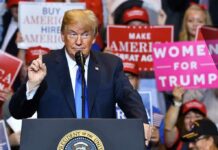
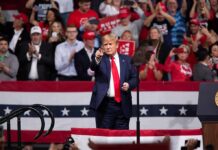
President Donald Trump has taken to social media to denounce California’s vote‑counting process as a “GIANT SCAM” and “RIGGED,” singling out mail‑in ballots as the centerpiece of his allegations.[1] He has claimed that “all ‘Mail‑In’ Ballots… is under very serious legal and criminal review,” urging supporters to “STAY TUNED” for investigations into what he portrays as systematic manipulation.[1] In separate posts, Trump accused California Democrats of trying to “steal” the gubernatorial and Los Angeles mayoral primaries, alleging misuse of mail‑in ballots and deliberate delays in tabulating votes, again without providing any documentation or specific evidence.[3]
Trump’s rhetoric echoes prior claims that elections are rigged and that mail‑in voting inherently invites fraud, despite multiple studies showing that voter fraud in mail‑ballot systems is rare.[1] His latest intervention comes as California continues to process a large volume of vote‑by‑mail ballots in closely watched races, giving his allegations a platform even as officials emphasize that current procedures are routine and lawful.[3]
California Democratic leaders have pushed back sharply, dismissing Trump’s allegations as politically motivated and factually baseless.[3] California Democratic Party Chairperson Rusty Hicks told ABC News that Trump’s claims are “baseless,” adding that “everyone knows California will complete a fair and accurate count. End of story.”[3] Other Democratic officials have echoed that sentiment, arguing that Trump is using the normal pace of a large mail‑ballot count to stoke suspicion and erode public trust in the election system.
Officials’ Defense: “This Is Normal”
California election officials stress that slower final tallies are built into the state’s legal framework and do not indicate rigging or misconduct.[3] California Secretary of State Shirley Weber told ABC News that on Election Night the public can expect a “good picture” of most outcomes, but that it will “take weeks to know the final results,” which she described as “normal.”[3] County elections officials are required to complete a 30‑day canvass period in which every valid ballot is counted and a post‑election audit is conducted, a process that intentionally extends the timeline beyond election night.[3]
State law also allows vote‑by‑mail ballots that are postmarked by Election Day to be received and counted up to seven days later, which further stretches the window between the close of polls and the final certified results. County officials and nonpartisan guides explain that mail ballots must be received, opened, verified, and scanned before being totaled, steps that are standard across many states and do not in themselves suggest fraud.[1] Broadcast election‑night coverage has reported large numbers of mail ballots being processed without any reported security breach, reinforcing the view that the system is operating as designed.[3]
Nonpartisan analysts note that California’s mail‑ballot‑heavy environment naturally creates a gap between early unofficial counts and final certified totals, especially in close races.[1][2] They argue that this predictable delay is exactly the kind of scenario in which allegations of “rigging” tend to surge, even when officials are following long‑standing procedures and there is no evidence of wrongdoing.[1][2][3]
Broader Pattern: Slow Counts and Fraud Allegations
The current dispute fits a broader U.S. pattern in which slow ballot counting, heavy mail‑ballot use, and tight races are often reframed as evidence of fraud before the canvass is complete.[1][3] In California, the combination of universal mail‑ballot distribution, post‑Election‑Day receipt rules, and multi‑week canvass periods creates a structure where final results are expected to lag by days or even weeks, regardless of party control.[3] Analysts caution that interpreting this structural delay as proof of manipulation risks undermining confidence in legitimate election processes.[1][2]
At the same time, critics of mail‑ballot systems argue that the opacity of the post‑Election‑Day count can fuel doubt, especially when results shift as late ballots are added.[1][2] Some conservative commentators have seized on anecdotes of ballot‑handling issues or perceived irregularities to question the integrity of California’s system, even as officials insist that any isolated problems are being investigated under existing safeguards.[3] The tension between these narratives—on one side, claims of systemic rigging, and on the other, assertions of normal, lawful procedure—highlights the ongoing challenge of maintaining public trust in elections at a time of deep political polarization.
As California’s canvass continues and federal and local authorities review any reported incidents, the core question for voters is whether the delayed and shifting totals reflect the ordinary mechanics of a large mail‑ballot system or something more sinister.[3] For now, state officials maintain that the process is transparent, auditable, and consistent with state law, while Trump and his allies continue to frame the same procedures as a deliberate effort to “steal” the election.[1][3]
For conservative readers, the episode underscores the importance of scrutinizing both the pace of ballot counting and the evidence—or absence thereof—behind fraud allegations.[1][3] It also raises concerns about efforts to weaponize normal election procedures for political gain, whether through unfounded claims of rigging or through rules that make the system appear opaque or unaccountable.[1][2][3] As the 2026 cycle moves toward the general election, the California experience may serve as a test case for how the nation reconciles the need for secure, transparent elections with the political incentives to cast doubt on results that are not immediately favorable.
Sources:
[1] Web – WATCH: Trump Says “They’re Rigging the Election” in California as …
[2] Web – Trump Pushes Baseless Claims of ‘Rigged’ California Election …
[3] YouTube – President Trump claims California’s special election is ‘rigged’