Two privately operated spy planes have circled key stretches of the southern border for months, and Washington still will not say why.
Story Snapshot
- A U.S. military contractor’s aircraft have flown repeated surveillance tracks over Arizona, New Mexico, and Texas.
- The Pentagon confirms Metrea is a contractor but will not discuss mission details, citing operational security.
- Metrea markets advanced airborne intelligence and surveillance services and runs border-monitoring programs overseas.
- Homeland Security says privacy rules exist, but watchdogs say gaps remain in real-world border tech programs.
What We Know About The Flights
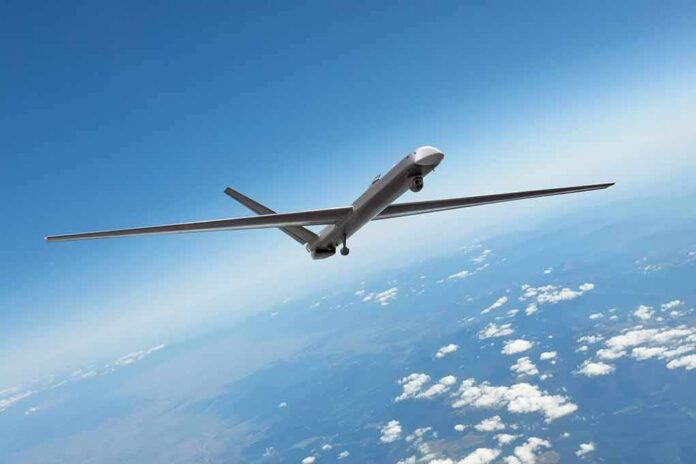
Arizona-based reporting traced two surveillance-equipped aircraft flying along the United States–Mexico border for months. Flight paths looped above communities in Arizona, New Mexico, and Texas. The aircraft are operated by Metrea, a U.S. defense contractor. The Department of Defense confirmed that Metrea is one of its vendors but declined to describe specific missions. Officials cited operational security and said all activities follow procedures that protect civil liberties and legal rights.
Public records and company materials show Metrea specializes in airborne intelligence, surveillance, and reconnaissance. The company promotes “turnkey” surveillance services for government partners. That expertise aligns with what spotters saw over the border. The company also announced it was chosen to provide advanced aerial surveillance for the Australian Government, reinforcing its role in border security work beyond the United States.
Metrea’s Border Work Overseas
Government announcements in Australia describe a major aerial-surveillance contract with Metrea. The Australian Border Force said the deal will field 11 crewed aircraft that cover short- and long-range patrols around the clock. The goal is stronger national coverage of maritime and border zones. Separate defense industry reporting added that Metrea will partner with Australia’s Department of Home Affairs and the Australian Border Force to monitor those regions.
Metrea also highlighted work with the European Union’s border agency. The firm said a border-security test campaign in Portugal met aviation and safety rules. It said sensitive data, like flight telemetry and sensor recordings, was encrypted and protected under European data laws. These claims show how companies frame compliance and controls when they operate surveillance platforms near civilian areas.
Privacy, Oversight, And The U.S. Border
The Department of Homeland Security says Customs and Border Protection is updating a privacy-impact assessment. The update covers newer tools, such as maritime and ground radar, better video sensors, and even location data sold on the open market. The agency says it aims to identify risks and set limits. That process matters if contractors collect, share, or store data that could involve people near the border, including U.S. citizens.
Digital-rights advocates point to gaps between policy and practice. A recent analysis cites Government Accountability Office findings that Customs and Border Protection failed key privacy safeguards across several surveillance programs, including towers and aerostats. Critics warn that such gaps can allow mission creep, weak data handling, and quiet sharing with other agencies. Those concerns grow when private firms fly advanced sensors under opaque terms.
Why This Matters Across The Political Spectrum
Border security is a top issue for many Americans. People want fewer cartels, fewer deadly drugs, and less chaos at crossings. Others fear that unchecked surveillance near communities chips away at basic rights. Both groups share a deeper worry: the government makes major choices in the dark, while contractors profit and the public learns little. The secrecy around these flights, paired with corporate growth in border monitoring, feeds that distrust.
The private military contractor Metrea Aerospace is conducting surveillance operations along the United States-Mexico border, utilizing King Air 350 aircraft equipped with DRT 3300 "dirtbox" systems (cellular tracking) and "Windjammer" systems (geolocation and jamming), etc.
— Worldwar_x (@worldwar_x) August 14, 2026
The facts so far leave a narrow window. The flights happened. The contractor has deep surveillance experience. The Pentagon will not explain the mission, but says rules apply. Homeland Security is updating privacy reviews, yet watchdogs see holes. The missing piece is clear public guidance on what sensors are used, what is collected, and how long data is kept. That clarity would help secure the border and protect rights without asking the public to simply trust unnamed missions.
Sources:
zerohedge.com, metrea.aero, digit.site36.net, aerotime.aero, abf.gov.au, azmirror.com, visahq.news, bombardier.com