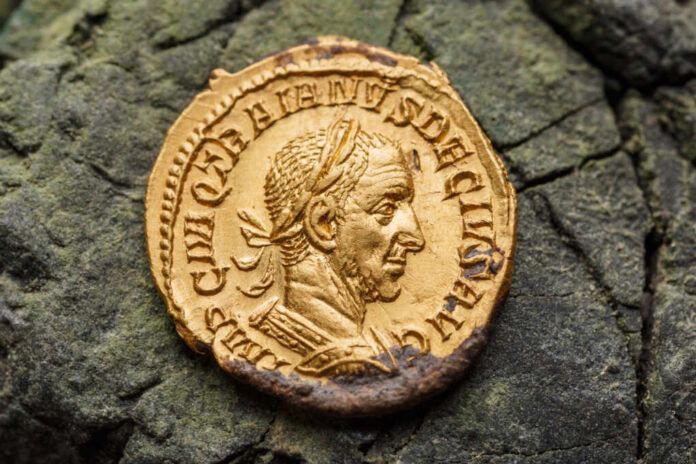
A significant discovery of approximately 15,000 Roman coins was made in August 2025 in North Wales by metal detectorist David Moss. The coins, found buried in two clay pots, are currently undergoing analysis at the National Museum Cardiff. This find could represent the largest Roman coin hoard ever discovered in Wales.
Story Highlights
- David Moss discovered a Roman coin hoard of up to 15,000 coins in north Wales using Minelab MANTICORE technology.
- The detectorist guarded the treasure for three nights to prevent theft before delivering it to archaeologists.
- The discovery potentially surpasses the previous Welsh record of 10,000 coins.
- National Museum Cardiff is analyzing the hoard, with a full assessment anticipated by 2026.
Discovery in Rural Welsh Field
David Moss, a 36-year-old metal detectorist from Cheshire, located the Roman coins in a rural field in north Wales. The area is described as having historical layers, including evidence of Druid, Viking, and Roman presence. Moss utilized Minelab MANTICORE detecting technology during the discovery.
Roman Treasure Unearthed in Wales 🇬🇧
36-year-old David Moss discovered two ancient clay pots believed to be Roman-era treasures in a “virtually untouched area” of North Wales.
Archaeologists say the find may be 2,000 years old. pic.twitter.com/9PayItbfQW— Chidozie Onovo (@onovo_simon) October 23, 2025
Protection of the Find
Following the discovery, Moss remained at the site for three consecutive nights to guard the hoard. His friend, Ian Nicholson, assisted in the initial find. The coins were subsequently delivered to archaeologists.
Analysis Underway
Anthony Halse, chairman of the South Wales and Monmouthshire Numismatic Society, has suggested that the hoard may have belonged to Roman soldiers who buried their savings during periods of instability. This theory is consistent with historical patterns of coin hoards found in Roman Britain, typically dating from the 1st to 4th centuries AD. North Wales was situated on the periphery of Roman control, making such discoveries notable. The coins are currently undergoing cleaning, dating, and cataloguing at the National Museum Cardiff, with the assessment expected to be completed by 2026.
This discovery follows Moss’s previous finding of approximately 3,000 Roman coins in the same general area in 2018, suggesting the region may have been a Roman military or civilian settlement. The current find exceeds the previous Welsh record of around 10,000 coins discovered near Chepstow in the 1990s.
Heritage Laws and Stewardship
Under Britain’s Treasure Act, Moss and the landowner are eligible to share any financial reward determined by the Treasure Valuation Committee. This legal framework aims to encourage the responsible reporting of archaeological finds and landowner cooperation. Museum and heritage authorities retain decision-making power regarding the hoard’s future, balancing public education with historical preservation. The discovery is seen as reinforcing the effectiveness of Britain’s heritage protection laws in encouraging amateur archaeologists to operate within established legal channels.
The find highlights the role of amateur detectorists in British archaeology, particularly when advanced technology is combined with adherence to historical stewardship. The ongoing analysis is expected to contribute to museum collections and educational opportunities concerning Roman-era Wales.
Watch the report: Incredible HOARD discovered-Metal Detecting UK
Michael Jordan Debuts New Series: “Insights to Excellence” on NBC
Sources:
And finally… all hoards lead to Rome
Detectorist Unearths 15,000 Roman Silver Coins in Hoard That Could Be Wales’ Biggest Find
Minelab MANTICORE Uncovers One of the Largest Roman Coin Hoards Ever Found in the UK
Possible record-breaking discovery of 15,000 Roman coins in north Wales