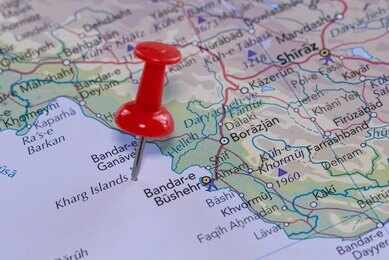
As President Trump vows to “take Kharg Island” and hints at bombing Iran’s energy and water systems, Americans are left wondering whether this war is about security or seizing another country’s economic lifeline.
Story Snapshot
- Trump now openly talks about seizing Iran’s main oil hub, Kharg Island, after weeks of U.S. bombing raids.[2][4][6]
- Officials insist strikes so far hit only military targets and spared oil facilities “for reasons of decency,” but outside proof is still thin.[1][2][5][6]
- Experts warn that taking or crippling Kharg could choke global oil, spike prices at home, and drag the U.S. deeper into a long war.[6]
- Both U.S. and Iranian leaders are talking in extreme terms, while ordinary people on every side bear the costs without seeing clear, honest answers.[5][6]
What Trump Is Now Threatening To Do On Kharg Island
President Donald Trump has moved from airstrikes to talking about physically taking Kharg Island, Iran’s main oil export hub in the Persian Gulf.[2][4][6] In recent days he has told interviewers and rallies that the United States “will take Kharg Island” and has warned of “more bombing tonight” if Iran does not give in on reopening the Strait of Hormuz and accepting a deal to end the war.[2][4][6][5] In one televised segment, he doubled down, saying the United States could “completely obliterate Iran’s civilian energy and water infrastructure” if Tehran refuses to comply, framing seizure of the island as one of several options to cut off Iran’s oil money and use it as leverage.[3][4][6] These remarks come after earlier comments to the Financial Times, where Trump called taking Iran’s oil his “favorite thing” and openly floated seizing Kharg as a way to control that revenue stream.[3][1]
Kharg Island is not some empty rock in the sea; it is the core of Iran’s export economy and tightly linked to its broader civilian life.[6] The New York Times and policy analysts describe it as Iran’s main crude oil export terminal, handling the majority of the country’s seaborne oil and connecting to pipelines and storage that feed the national budget. BBC and the Council on Foreign Relations explain that any major damage or seizure there would hit not only the regime but also state salaries, basic services, and the wider regional economy that depends on stable energy flows. Satellite-based reporting has already shown oil jetties standing empty at times and a large oil slick near the island as the war grinds on, signs that the system is under stress. When a U.S. president talks about using that vulnerability for pressure, both supporters and critics hear the same thing: Washington is ready to squeeze an entire society to force its leaders’ hand.[3]
What The U.S. Says It Has Hit So Far – And What We Do Not Know
The Trump administration insists that the strikes carried out so far on Kharg Island have focused only on military targets, not the oil infrastructure that keeps Iran’s economy running.[1][2][5][6] In a Truth Social post quoted by several outlets, Trump claimed the U.S. had “totally obliterated every military target” on the island but chose not to strike oil facilities “for reasons of decency.”[1][2][6][7] U.S. Central Command and a U.S. official told reporters that the March 13 strike package hit “nearly 100 military missile and navy sites,” including naval mine storage, missile bunkers, and other military facilities, and that later re-strikes again focused on military locations.[5] Associated Press–syndicated reports and television coverage echoed this line, saying oil terminals, pipelines, and storage tanks were left intact.[2][4][7] This narrative paints a picture of careful, controlled use of force: hard on Iran’s military, gentle on its economy and civilians. Yet almost all of this picture comes from official U.S. statements repeated by media, not from independent on-the-ground inspections or declassified targeting documents.[1][5][6] There is no public strike order, detailed target list, or full battle damage assessment that outside experts can inspect to confirm what was hit and what was spared.[1][5][6]
Iranian officials and state-linked media have not denied that strikes took place, but they tell a different story about what those strikes mean.[7] BBC reporting notes that Iranian outlets and a provincial official said no residents or oil workers were harmed and that oil operations continued, while also acknowledging that air defenses, a naval base, an airport control tower, and a helicopter hangar were hit.[7] From their side, the message is: yes, the U.S. attacked, but it failed to break the island’s vital oil role. Independent imagery adds more layers but not full clarity. Satellite views show oil jetties sitting empty on multiple days and a spreading oil slick near Kharg, which suggests serious disruption and environmental damage even if tanks and terminals were not directly bombed. What these sources do not show is a precise map of which structures were struck, whether water or power systems were damaged, or how many ordinary people have been affected—questions that matter deeply for anyone worried about war crimes, humanitarian law, or simple human decency.[1][2][5]
Why This Fight Over One Island Matters For Americans At Home
Kharg Island is at the center of a much larger struggle over who controls energy flows through the Strait of Hormuz and who pays the price when that control is used as a weapon.[1][5][6] Marine and regional reporting say Trump has tied U.S. operations there to a simple warning: if Iran interferes with shipping through the strait, Washington is prepared to target Kharg’s oil infrastructure as leverage.[1][6] Experts told outlets like PBS and BBC that an outright seizure or crippling of the island could choke a big share of Iran’s exports and risk a wider energy shock, with higher global oil prices that would show up as pain at the pump and in power bills for American families already squeezed by years of inflation and energy swings. Iran has answered U.S. strikes with its own attacks on U.S. bases and communications infrastructure across the region, a pattern that military analysts say is designed to degrade the “bones” of American power projection. Each round of escalation gives both governments more reason to keep fighting, even as ordinary people in both countries worry they are just pawns in a contest between elites, generals, and political careers.
🌍 2026-06-08 09: 58 PM EST
🗞️ The Record:
🇮🇷 Iran: Claimed it “draws a red line” and later “launched attack on U. S. bases,” per @barnes_law. A magnitude 5 earthquake struck Hormozgan province in southern Iran, per Iranian media. Iran’s UN ambassador Amir-Saeid Iravani said… https://t.co/gNwrl3BygN— U.S.A.I. 🇺🇸 (@researchUSAI) June 8, 2026
This clash over Kharg Island also fits a familiar pattern in modern wars: both sides claim their bombs are precise and lawful, while accusing the other of brutality, and outside observers struggle to find the truth through layers of secrecy and propaganda.[1][2][4][5][6] U.S. officials describe a restrained campaign focused on military sites, echoing how they previously framed the 2025 strikes on Iranian nuclear facilities as tightly limited and designed to avoid escalation. Iranian media counters with stories of resistance and downplays damage to its own critical systems, while boasting about hitting American bases.[7] Independent satellite images and neutral legal reviews could narrow the gap, but access to Kharg is heavily restricted, and key U.S. strike documents remain classified.[6] For Americans who feel the “deep state,” defense contractors, and political insiders make these choices without real accountability, this information fog feeds a deeper concern: that once again, decisions that can reshape the global economy and risk a larger war are being made behind closed doors, with both parties more focused on narrative control than on honest, full transparency to the people they serve.[1][5][6]
Sources:
[1] Web – Iran War Day 104: Trump Says, ‘We Will Be Taking Kharg Island’
[2] Web – U.S. Bombs Iran’s Kharg Island Military Targets, Threatens Oil …
[3] Web – US bombs military targets on Kharg Island, a key terminal …
[4] YouTube – US Carries Out Bombing Raid On Kharg Island; Claims “Total …
[5] Web – US bombs military targets on Kharg Island, a key terminal for Iran’s …
[6] YouTube – US strikes military targets on Iran’s Kharg Island
[7] Web – U.S. Embassy in Baghdad again urges Americans to leave Iraq as …