When America kills a foreign ruler, the first battle at home is fought quietly—on street corners, at synagogues, outside consulates, and inside fusion-center inboxes.
Quick Take
- Federal and local law enforcement raised security after joint U.S.-Israel strikes in Iran reportedly killed Ayatollah Ali Khamenei and other senior officials.
- The FBI put counterterrorism teams and Joint Terrorism Task Forces on a heightened posture, stressing prevention without citing a specific, credible threat.
- Major cities increased patrols at diplomatic, cultural, and religious sites—the classic “soft targets” that pay a propaganda dividend to attackers.
- DHS monitored the threat picture during a partial shutdown, with public messaging emphasizing vigilance and low-level cyber concern.
Security Ramps Up Fast When Retaliation Is Promised but the Target Is Unknown
Federal agencies and big-city police departments moved quickly after reports of a U.S.-Israel operation in Tehran that killed Iran’s top leader and other officials. The operational logic is simple: Iran doesn’t need to telegraph a plan to be dangerous. A public vow of retaliation can motivate proxy networks, lone actors, and opportunists who want to “do something” while attention is high and facts are still unsettled.
FBI Director Kash Patel’s message—counterterrorism teams on high alert—signals posture more than panic. A higher posture can mean more intelligence reviews, more deconfliction between agencies, and faster routing of tips, not just more agents in windbreakers. For ordinary Americans, the change shows up as visible patrols, more police cars near landmarks, and tightened screening at events that usually feel routine.
What “High Alert” Really Means: JTTFs, Credible Threats, and the Work You Don’t See
The Joint Terrorism Task Force model exists for moments like this. It binds federal, state, and local investigators into a shared lane so the right hand doesn’t miss what the left hand already knows. Running teams “24/7” isn’t theater; it’s an operational hedge against speed. A plot that takes weeks to mature can be disrupted early, but a small, fast-moving actor requires rapid triage.
Officials emphasized a key point: they had no specific, credible threat publicly identified. That line frustrates people who want certainty, but it’s actually a sign of professional restraint. Announcing “no threat” invites complacency; declaring “imminent attack” without proof creates chaos. The narrow, disciplined middle message—elevate vigilance, keep normal life moving—fits how counterterrorism is supposed to work in a free society.
Why Cities Guard Religious Sites, Diplomats, and Icons First
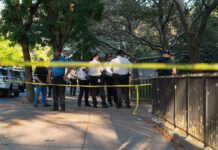
New York, Washington, Philadelphia-area jurisdictions, and others boosted patrols around places that carry symbolism: the United Nations, diplomatic facilities, cultural institutions, and religious sites. These locations are “high consequence” even when they’re not the most likely targets. An attempted attack there, even if unsuccessful, produces maximal headlines, spikes fear, and strains community relations—exactly the kind of social friction adversaries try to create.
Police leaders also understand the copycat problem. After a major overseas strike, American streets can attract people with mixed motives: ideological revenge, personal grievance, or sheer thirst for notoriety. Increased presence changes the math. It hardens targets, improves response times, and deters the marginal attacker who is searching for an easy win. That deterrence effect is invisible when it works—which is the point.
The Austin Shooting Thread: Investigate First, Speculate Last
A mass shooting in an Austin, Texas bar drew FBI counterterrorism attention as investigators worked to determine motive and any connection to the broader geopolitical flashpoint. That investigative choice doesn’t automatically imply terrorism; it reflects modern reality. When global events spike emotions, agencies test for linkage early so they don’t miss warning signals. Common sense says treat facts as provisional until investigators lock down the shooter’s intent.
Americans should demand that officials avoid politicized shortcuts here. Calling everything “terror” dilutes the term and can warp policy; ignoring potential nexus because it’s inconvenient is worse. A conservative, constitutional approach favors disciplined investigation, clear standards of evidence, and equal application of the law—without smearing communities that had nothing to do with any act of violence.
DHS Constraints, Cyber Posture, and the Cost of Staying Ready
DHS operated amid a partial shutdown, a detail that matters because homeland security work depends on continuity: staffing, grant management, intelligence support, and interagency coordination. Public assessments described low or slim cyber threat levels in the immediate aftermath, but experienced planners still watch for probing and harassment operations. Iran-aligned actors have historically favored asymmetric tools—proxies, influence, and cyber—when direct confrontation is costly.
The uncomfortable truth is that heightened security has a price tag. Overtime budgets strain. Routine policing shifts. Protective details expand while everyday quality-of-life complaints pile up. Cities make these trade-offs because the alternative—waiting for a “credible” threat to become an actual incident—produces a far worse bill in lives, legitimacy, and social trust.
What This Moment Reveals About American Resilience
Public safety works best when it respects normal life while protecting it. That balance—more patrols without martial-law vibes, more intelligence sharing without guilt-by-association—keeps communities onside. Some commentators warn of sleeper cells and rapid activation by groups aligned with Iran; others emphasize that preparedness predates any single strike. Both can be true: readiness is constant, while risk surges around catalytic events.
American common sense says this: lock doors, don’t live in fear, and don’t let bureaucratic messaging substitute for practical security. Law enforcement should focus on protecting soft targets, disrupting plots early, and communicating honestly about uncertainty. Citizens can help by reporting suspicious behavior, not suspicious neighbors. A free country stays free by refusing to panic—and by refusing to be naïve.
Sources:
FBI, big cities increase patrols and counterterrorism efforts following military strikes on Iran
FBI raises counterterror teams high alert amid Iran tensions
2026 Homeland Security Threat Forecast, Part I: Terrorism
FBI, U.S. terrorism high alert, Iran retaliation, Kash Patel, DHS