
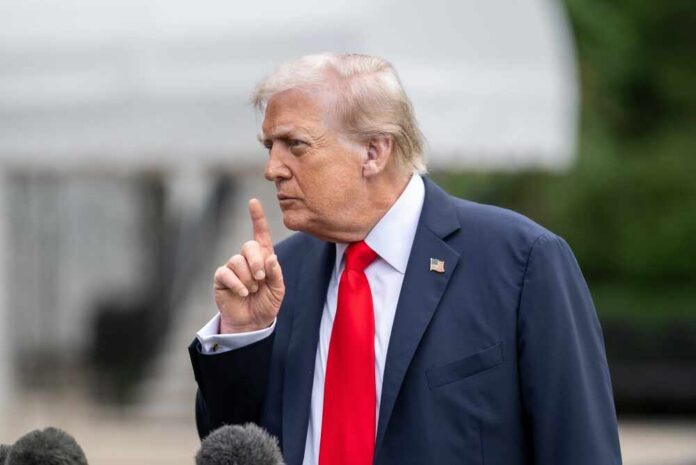
President Trump’s decisive military action has obliterated a significant portion of Iran’s naval threat in the Strait of Hormuz, securing the world’s most critical oil chokepoint while leftist critics predictably wring their hands over American strength.
Story Snapshot
- U.S. forces destroyed 9 Iranian warships in Operation Epic Fury, crippling Iran’s naval capabilities in the strategic Strait of Hormuz
- Trump announced Navy escort operations for commercial tankers and offered federal insurance guarantees to restore energy flow
- Maritime traffic dropped 70% as Iran’s IRGC threatened attacks, driving U.S. gas prices up 11 cents to $3.11 per gallon
- The administration projects a 4-5 week operation, refusing negotiations short of Iran’s unconditional surrender
Trump Restores American Naval Dominance
President Trump announced March 1 that U.S. military forces successfully destroyed nine Iranian warships in coordinated strikes across the Strait of Hormuz and Chabahar port. U.S. Central Command confirmed the sinking of an Iranian corvette as part of Operation Epic Fury, marking the most significant naval engagement against Iran in decades. The President posted triumphantly on Truth Social about obliterating Iran’s naval threat to secure free passage through the waterway that handles approximately 20 million barrels of oil daily. This decisive action demonstrates the strength patriots demanded after years of Biden-era appeasement that emboldened Iranian aggression.
Strategic Response to Iranian Hostility
The military operation followed escalating Iranian Revolutionary Guard Corps threats to close the strait and strike commercial vessels transiting the critical chokepoint. Iran’s IRGC issued emergency alerts and commander Ebrahim Jabari threatened that Iranian forces would set ships on fire. The Trump administration responded with overwhelming force, deploying a second carrier to the Mediterranean, over 50 fighter jets, and B-1B Lancers to UK bases. This buildup signaled America’s commitment to weeks-long air and sea operations without the quagmire of ground troops, a sharp contrast to previous administrations’ failed Middle East strategies.
Protecting American Energy Interests
On March 3, Trump announced the Navy would provide escort services for tankers and offered risk insurance through the U.S. Development Finance Corporation, directly addressing the 70% drop in maritime traffic strangling global energy supplies. Secretary of State Marco Rubio signaled initiatives to counter rising oil prices affecting American families. Defense analysts including Bryan Clark from Hudson Institute noted that Navy escorts require sustained air campaigns to counter Iranian missile threats, making current operations riskier than 1980s precedents. This approach prioritizes American energy security over globalist hand-wringing about escalation, ensuring the free flow of resources that hardworking Americans depend on daily.
Economic and Geopolitical Implications
The operation’s immediate impact includes spiking fuel costs, with U.S. gasoline averaging $3.11 per gallon, and stranded commercial tankers anchored offshore awaiting security guarantees. Long-term, the strikes significantly weaken Iran’s ability to threaten the strait while pressuring the regime toward collapse or surrender. Trump projects operations lasting four to five weeks, rejecting any deals short of Iran’s unconditional capitulation. European allies deployed warships including a Greek frigate to support allied protection efforts. This unilateral American action, though lacking the coalition-building previous administrations favored, demonstrates the resolve necessary to protect constitutional principles of national sovereignty and economic freedom from rogue regimes threatening global stability.
'More Fun to Sink Them': Trump Celebrates as 46 Iranian Warships Become Artificial Reefs https://t.co/XPKsE0hXfF
— ConservativeLibrarian (@ConserLibrarian) March 10, 2026
Iran analyst Vatanka confirmed the regime’s primary goal remains survival, retaining missile capabilities despite weakening from a 2025 conflict. The administration’s refusal to seek congressional or UN approval for defensive operations affirms executive authority to protect American interests. While critics fear escalation, Trump’s supporters recognize that strength deters aggression better than the previous administration’s failed diplomatic overtures that produced nothing but emboldened enemies and vulnerability for American allies.
Sources:
Axios: Trump US Sinks 9 Iran Warships Strait of Hormuz
Navy Times: Trump Says US Navy Could Escort Ships Through Strait of Hormuz
Breaking Defense: Trump Says US Navy Vessels Could Accompany Tankers in Strait of Hormuz
WRKF: Second US Carrier Nears Middle East as Trump Pressures Iran to Make a Deal