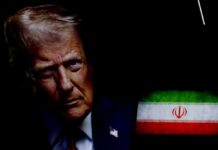
President Trump’s new Iran orders are forcing MAGA voters to confront a question they didn’t expect in 2026: is “peace through strength” turning into another open-ended Middle East fight?
Quick Take
- Trump used a March 31 Oval Office address to announce fresh executive actions tightening pressure on Iran, alongside Pentagon and State Department directives.
- Reports of major blasts over Isfahan the same day underscored that U.S. military operations and escalation risks are active, not theoretical.
- The White House fact sheet emphasizes sanctions, tariffs, and a national-emergency framework aimed at Iran’s government, not nation-building.
- Trump publicly claimed Iran had “surrendered” after U.S. and Israeli strikes..
What Trump announced from the White House—and what it changes
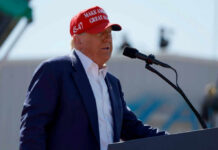
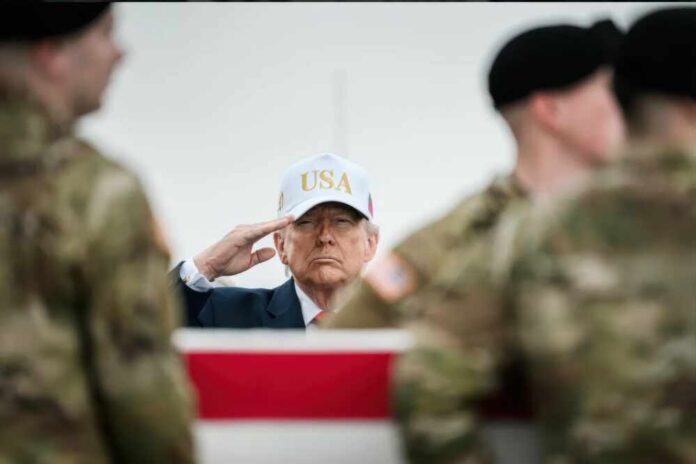
President Donald J. Trump delivered a live address from the Oval Office on March 31, 2026, announcing new executive orders designed to intensify pressure on Iran’s government. The stated approach combines economic isolation with strategic direction for federal agencies, including the Pentagon and the State Department, to carry out the administration’s policy. The message framed the moment as decisive, with additional warnings of expanded targeting if Iran continues hostile actions.
Trump’s rhetoric included a claim that Iran had “surrendered” and apologized to its neighbors after U.S. and Israeli attacks. That assertion is significant politically because it suggests the administration views the conflict as nearing an endpoint, rather than entering a prolonged phase. The limitation is verification: the White House policy materials and the strike footage referenced in the research confirm pressure and kinetic activity, but do not independently confirm capitulation.
Isfahan strikes highlight escalation risk—and energy anxiety at home
Video reporting from March 31 showed large explosions and a fireball over Isfahan, Iran, described as a U.S. strike hitting military and nuclear-related targets. That timeline matters because it places Trump’s evening address after visible kinetic events, not before them. For conservative households already angry about high costs, Middle East instability raises a practical concern: oil price spikes and supply shocks can filter quickly into gasoline, groceries, and overall inflation.
The administration’s posture also creates a security trade-off for Americans stationed in the region. The research notes Iran’s use of asymmetric tactics through proxies, and those proxy networks historically give Tehran options short of direct conventional war. When Washington and Israel hit high-value targets, retaliation risk often shifts toward U.S. forces, shipping lanes, or allied infrastructure. That reality helps explain why “no new wars” voters are watching every step for signs of mission creep.
Sanctions, tariffs, and executive power: the constitutional pressure points
The White House fact sheet outlines a national-emergency framework and a renewed “maximum pressure” toolkit, including sanctions and tariffs aimed at parties doing business with Iran. For constitutional conservatives, the biggest question is not whether Iran’s regime is dangerous—Washington has long cited terrorism sponsorship and nuclear ambitions—but how much policy is being routed through executive orders rather than Congress. Emergency authorities can expand quickly and become semi-permanent fixtures.
Tariffs on countries trading with Iran are also a blunt instrument, even when the target is a hostile regime. They can reshape trade flows, invite workarounds, and complicate relationships with third countries—while still falling short of ending Iran’s proxy warfare. That matters for voters who want a policy that is tough yet bounded: punish the regime, deter attacks, protect Americans, and avoid the kind of vague, rolling commitments that defined prior era “forever wars.”
MAGA’s internal split: backing Israel vs. rejecting regime-change drift
U.S. and Israeli actions are closely linked in this phase, with Israel described as a co-striker and regional partner benefiting from weakened proxies. That alignment is familiar, but today’s conservative base is not monolithic about where it leads. Many voters strongly support Israel’s right to self-defense while also insisting America’s first duty is protecting U.S. citizens, securing borders, and lowering costs at home. Those priorities collide when escalation looks indefinite.
Trump also hinted a “deal soon” could be possible, even amid escalation. That combination—strikes, maximal pressure, and deal talk—may be an attempt to force rapid concessions without a long ground commitment. Still, the “surrender” framing creates expectations that the administration will be judged against. If Iran’s leadership remains operational, proxies keep firing, or U.S. deployments expand, skeptical supporters will argue the policy is drifting from deterrence into another cycle of retaliations.
Sources:
Moment US strike sends massive fireball into sky over Iran’s Isfahan