
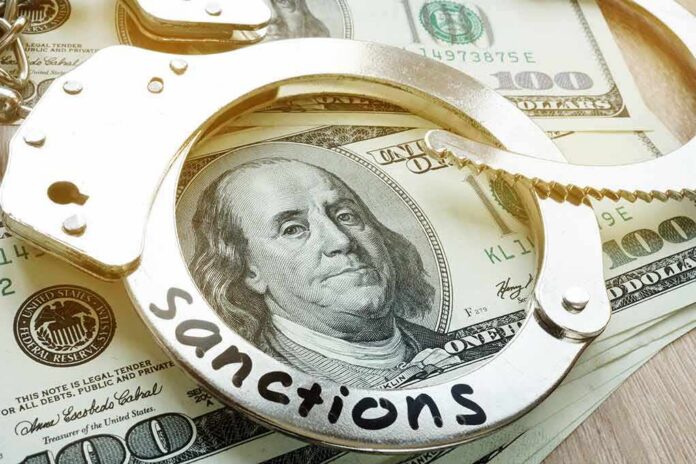
Iran’s rial plunged on the black market after new U.S. sanctions hit exchange-house networks that Washington says power Tehran’s shadow banking system.
Story Highlights
- U.S. Treasury sanctioned Iran-linked exchange houses and front companies tied to “shadow banking.”
- The rial fell further on the street market as access to hard currency tightened.
- Treasury named individuals, firms, and routes in Hong Kong and the United Arab Emirates.
- Academic work links sanctions to weaker oil income, a cheaper rial, and higher inflation.
What Triggered The Latest Rial Slide
U.S. Treasury officials announced new sanctions targeting Iranian exchange houses and foreign front companies that move money for sanctioned parties. The actions are part of Operation Economic Outcast, a campaign that names people, firms, and accounts that Washington says form a parallel banking system for Tehran. Prior Treasury actions tied billions in flows to named operators and companies across several hubs, including Hong Kong and the United Arab Emirates. Those steps raised pressure on Iran’s access to dollars and other hard currencies.
Local currency traders reported the rial weakened further on the street market after the designations. When sanctions raise risk for middlemen and banks, access to foreign exchange often tightens. That squeeze can push buyers into smaller channels and raise the price of dollars. The Central Bank of Iran faces limited options when reserves are strained and oil sales face hurdles. Street rates can move fast in that kind of environment, even if official rates change slowly.
How The Sanctions Are Built To Bite
Sanctions officials described a standing playbook where exchange houses inside Iran rely on layers of front companies and foreign commercial bank accounts. Payments move through those accounts to hide the true Iranian end users. Prior rounds named specific exchange operators, facilitators, and companies that helped move funds for sanctioned banks and state firms. By listing people and firms, rather than labeling a whole sector, Treasury aims to choke known corridors while warning others off similar routes.
The pressure campaign targets what officials call shadow banking. That term, in this setting, means networks of money exchangers, front companies, and sympathetic banks that handle payments outside normal correspondent channels. Financial Crimes Enforcement Network publications say Iran uses these networks to move oil proceeds and to pay for imports. The more those paths close, the more difficult it becomes for Tehran to steady the currency by selling dollars into the market or paying key bills abroad.
Why Iran’s Currency Reacts So Sharply
Economists who study Iran find that sanctions tend to cut oil revenues, weaken the rial, and raise inflation. When export income drops and banking links shrink, the supply of hard currency falls. At the same time, demand for dollars rises as businesses and families seek safety. That mix hurts growth and feeds higher prices. Research covering three decades shows these links are not new, and that repeated waves of sanctions deepen the effect on exchange rates and the wider economy.
Multiple exchange rates and tight access to banks can also create side effects. Gaps between official and street rates draw in brokers, add fees, and reward those with special access. That raises costs for importers and, in the end, for households. It also widens mistrust in formal tools. Each new sanctions round can worsen those gaps. The latest designations focus on the middle channels that once bridged those gaps, so the shock to street pricing is not surprising.
The Stakes For Washington, Tehran, And Ordinary People
U.S. officials say these steps aim to deny funds to sanctioned state bodies, security services, and proxy groups. Naming new facilitators signals active policing of back channels and warns banks worldwide to avoid risky ties. For Washington, the message is about enforcement and deterrence. For Tehran, the move raises the cost of trade, strains the central bank, and complicates efforts to calm markets. Each squeeze point can feed a cycle of weaker currency and higher living costs.
AFP: Iran's rial plunged on the black market after new US Treasury sanctions on exchange houses, with the dollar at ~2.82M rials, up ~5% from 2.68M. Central bank chief Hemmati said the US had "run out of targets." #Iran #Sanctions
— Hormuz Watch (@HormuzWatch) November 24, 2026
Ordinary Iranians often feel the hit first through food and medicine prices when the rial drops. Importers must find dollars at higher rates, and those costs pass through fast. People across the political spectrum in the United States see a familiar pattern too. They note that complex sanctions systems, government red tape, and global finance rules can punish citizens while elites adapt. That view feeds broader frustration that powerful networks thrive while regular families pay the bill.
Sources:
home.treasury.gov, egyptian-gazette.com, x.com, hsgac.senate.gov