As children lined up for a routine school flag ceremony in the southern Philippines, a powerful 7.8 earthquake turned a familiar ritual into a frightening lesson in how fragile normal life has become under distant, distracted leaders.
Story Snapshot
- A magnitude 7.8 quake struck off Mindanao at about 7:37 a.m. local time, during the start of the school day.[4][5]
- Philippines and international agencies issued tsunami warnings and urged immediate evacuation to higher ground.[1][4][5]
- Buildings collapsed, power failed, and students were reported trapped in at least one school as coastal regions scrambled to respond.[2][3][5]
- Officials ordered classes canceled across affected regions, yet the specific “flag ceremony disruption” remains only partly documented.[1][5]
Quake Strikes As School Day Begins
On June 8, 2026, at about 7:37 a.m. local time, a magnitude 7.8 earthquake struck off the southern coast of Mindanao, just as many schools were beginning morning routines.[4][5] The Philippine Institute of Volcanology and Seismology recorded the epicenter offshore Sarangani province, with shaking lasting around 30 seconds and reaching severe levels for nearly a million residents in the region, including the coastal city of General Santos.[4][5] That timing aligns closely with the daily flag-raising ceremonies held at public schools across the country.
People in affected cities reported rushing into the streets as the ground moved, abandoning vehicles, workplaces, and schoolyards mid-activity.[2][3][5] In General Santos and neighboring provinces, power outages and falling debris quickly turned a normal morning into a chaotic scramble for safety.[2][3][5] Government data later estimated that millions experienced strong to very strong shaking, stretching across the Soccsksargen, Davao, and Bangsamoro regions where many children were already gathered at school campuses.[5]
Tsunami Warnings, Evacuations, And School Closures
Within minutes, Philippine authorities and international monitoring centers issued tsunami warnings for large portions of the southern Philippines.[1][4][5] The Philippine seismology agency and the United States Embassy in Manila warned that the first waves could arrive between 7:37 a.m. and 9:37 a.m., and urged residents in coastal areas to evacuate immediately to higher ground or move inland.[1][4] The Pacific Tsunami Warning Center said waves up to about three meters were possible along parts of the Philippine coast and smaller waves could reach Japan, Taiwan, Guam, and Papua New Guinea.[1][5]
Philippine President Ferdinand Marcos Jr. publicly pressed residents to “move to higher ground” and emphasized that “life is more important than anything left behind.”[1] His government announced that classes across all education levels in affected areas would be canceled until further notice, reflecting concerns about both structural damage and ongoing aftershocks.[1][5] Local disaster agencies reported at least 138 aftershocks, including several measuring above magnitude 6, reinforcing decisions to suspend school operations while inspections and rescue work continued.[5]
Damage To Schools And Communities
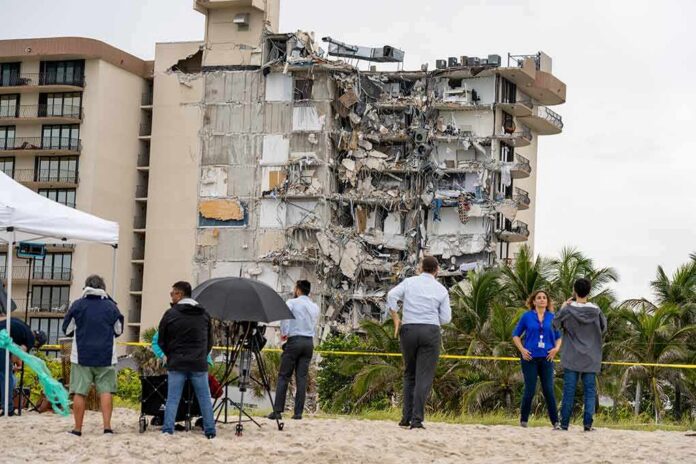
The earthquake caused visible destruction in several communities, with the strongest shaking centered along the southern coast.[2][5] In General Santos, buildings partially collapsed, power lines went down, and emergency services struggled with debris-blocked streets as they searched damaged structures.[2][3][5] National disaster officials later confirmed at least 19 deaths, more than 130 injuries, and several missing persons, including reports that students were trapped inside a two-story school building in the city.[5] These accounts underscored how school facilities stood directly in the path of the disaster.
🇵🇭 Major M7.8 earthquake hits the southern Philippines
On Monday, June 8, 2026, at 7:37 a.m. local time, a major M7.8 earthquake struck the Celebes Sea near southern Mindanao. According to the USGS, the epicentre was located 26 km southwest of Cablalan, with a hypocentre at a… pic.twitter.com/PW0Q4CdJ8J
— Windy.com (@Windycom) June 8, 2026
Across coastal Mindanao, authorities evacuated entire barangays as tsunami waves were recorded at multiple sites, though most measured well below worst-case projections.[4][5] Still, the combination of ground shaking, structural failures, and the fear of incoming waves left families separated, with parents desperate to locate children who had left for school only minutes before the disaster.[2][5] For many, the quake deepened an existing sense that public infrastructure, from classrooms to evacuation routes, has been allowed to age and weaken while elites in Manila and abroad debate bigger geopolitical agendas.
Verifying The Flag Ceremony Narrative
Video clips and social posts quickly circulated claiming to show a school in the region whose morning flag ceremony was interrupted as the quake hit, with students scattering while buildings shook. That image resonates because it compresses the entire event into a single, relatable moment: ordinary children honoring their country, suddenly confronted by a force of nature. However, available mainstream reporting and official bulletins do not yet identify a specific named school where a documented ceremony was in progress at the exact second of the quake.[1][2][3][5]
What is firmly established is the broader pattern: the quake struck at the start of the school day, led to widespread class suspensions, and caused serious damage to at least one school where students were reported trapped.[1][4][5] What remains less certain is whether any specific piece of viral footage accurately shows a flag ceremony at a clearly verifiable location and time. Without released school security video, Department of Education incident reports, or on-the-record testimony tied to a named campus, journalists must treat the flag-ceremony detail as plausible but not yet fully confirmed.[2][5]
Shared Frustrations And Systemic Questions
For many Americans watching from afar, the story lands on familiar nerves about how institutions respond when disaster strikes. Conservatives who distrust international bureaucracies see yet another example of global warning systems and glossy press conferences that do little for children standing in poorly reinforced buildings when the ground moves. Liberals who worry about inequality see how underfunded public schools and crowded coastal neighborhoods bear the brunt while political and business elites ride out emergencies from safer, stronger structures.
In the Philippines, as in the United States, citizens hear leaders promise that “no one will be left behind,” yet they also know that disaster drills, building code enforcement, and school retrofits often lag behind speeches and hashtags.[1][5] The Mindanao quake shows how quickly things can go wrong when real life collides with systems calibrated more for appearances than resilience. Whether or not one viral clip of a disrupted flag ceremony is ever fully authenticated, the larger truth is hard to miss: when institutions fail to prioritize ordinary people’s safety, it is families, students, and teachers who pay the immediate price.
Sources:
[1] YouTube – 7.8 magnitude earthquake in Philippines disrupts morning school flag …
[2] Web – Magnitude 7.8 earthquake strikes off the coast of the Philippines, …
[3] Web – Major earthquake in southern Philippines kills at least 12, spawns …
[4] YouTube – 7.8 magnitude earthquake hits Philippines, tsunami warning issued
[5] YouTube – 7.8-magnitude earthquake strikes off southern Philippines