U.S. forces launched “self-defense strikes” after Iranian missiles and drones targeted three Navy destroyers near the Strait of Hormuz, raising the risk of a wider fight in a vital oil corridor.
Story Snapshot
- Central Command said U.S. strikes followed Iranian fire at Navy destroyers and hit launch, drone, and radar assets.
- No U.S. warship was hit, according to U.S. officials; Iran disputed the U.S. account and claimed U.S. violations.
- Named U.S. ships included USS Trenton, USS Rafael Peralta, and USS Mason, per outlet reports.
- The back-and-forth fits a repeating pattern of strike and counter-strike across the Gulf this year.
What Triggered The Strikes
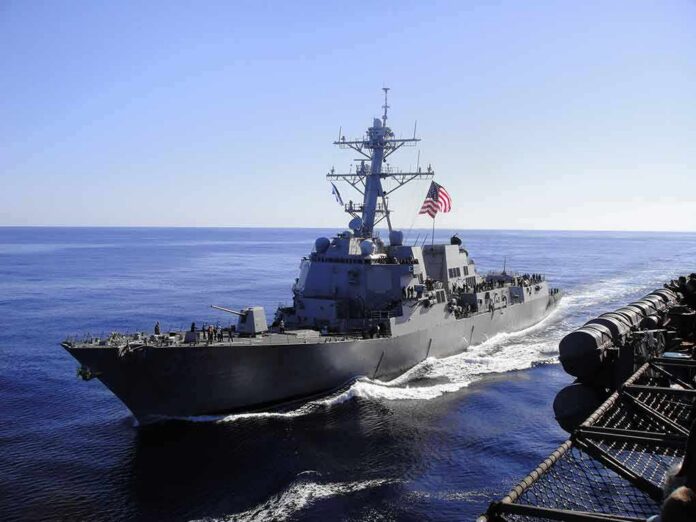
U.S. Central Command said American forces carried out “self-defense strikes” after Iranian missiles, drones, and small boats targeted U.S. Navy destroyers transiting the Strait of Hormuz. Reports named the USS Trenton, USS Rafael Peralta, and USS Mason as the ships under fire. U.S. officials said the destroyers were not hit, but the attempted strikes crossed a clear line and prompted immediate action. This account appeared in multiple outlets that cited official statements and briefings.
Central Command described targets that match an effort to stop ongoing or near-term attacks. The U.S. hit missile launch sites, drone facilities, coastal radar, and boats used to lay sea mines. These targets support the claim that the strikes aimed to protect ships and restore maritime safety. Public releases and summaries from major outlets reported this target set, tying it to a defensive goal rather than an open-ended campaign.
Competing Claims And What We Know
Iran said the United States violated a ceasefire and struck targets on Iranian territory. The United States said it acted in self-defense and that none of its assets were hit during the maritime incident. The clash of official stories makes verification hard in real time. Still, the U.S. presented a sequence of Iranian fire, U.S. intercepts, and follow-on strikes aimed at launch and surveillance nodes to deter more attacks that night.
Some reports bundled separate episodes into one narrative, which can blur timelines. One recent Central Command release linked other U.S. strikes to an Iranian attack on a U.S. Army Apache helicopter, also labeled “self-defense.” That shows how several close-in clashes across the Gulf are now overlapping in public reporting. The result is a foggy picture of cause and effect, even as both sides escalate and public stakes grow across the region.
Why This Matters At Home
The Strait of Hormuz moves a major share of the world’s oil. Any fight there can raise prices for fuel, shipping, and goods. Many Americans, on the left and the right, already feel squeezed by high costs and doubt that leaders level with them during crises. When facts arrive in fragments and each side frames itself as blameless, trust erodes further. The latest cycle fits this pattern of strike, reply, and renewed risk across Gulf states hosting U.S. forces.
Both parties in Washington say they support protecting U.S. troops and ships. Yet people across the spectrum worry about mission creep, unclear rules, and selective releases of evidence. The government holds ship logs, radar tracks, and strike authorizations, but most of it stays classified. Clearer timelines and verified data would help the public judge claims of self-defense and keep pressure on officials to prevent a slow slide into a larger war without a defined end state.
What To Watch Next
Watch for a full timeline from Central Command, including intercept data and the sequence from first launches to U.S. strikes. Look for congressional oversight on rules of engagement and briefings on maritime security. Monitor whether Iran targets U.S. positions in Kuwait, Bahrain, or Jordan after these strikes, which has happened before. Finally, track oil and shipping insurance moves, which often react before politicians admit how serious an escalation has become.
Sources:
youtube.com, abc7news.com, reuters.com, navytimes.com, centcom.mil, cnbc.com