When a close U.S. ally bombs a capital city on the very day Washington says a “peace deal” is hours away, it raises old fears that war and backroom interests still outrank the public’s demand for stability and honesty.
Story Snapshot
- Trump says Israel’s strike on Beirut “should not have happened” because a U.S.–Iran deal was close.
- Israeli leaders defend the strike as self‑defense against Hezbollah rockets fired from Lebanon.
- Iran’s top negotiator says the Beirut attack shows Washington cannot or will not rein in its ally.
- The near-miss highlights how fragile peace efforts are when military and political elites act on their own timelines.
Trump’s Sharp Warning After the Beirut Strike
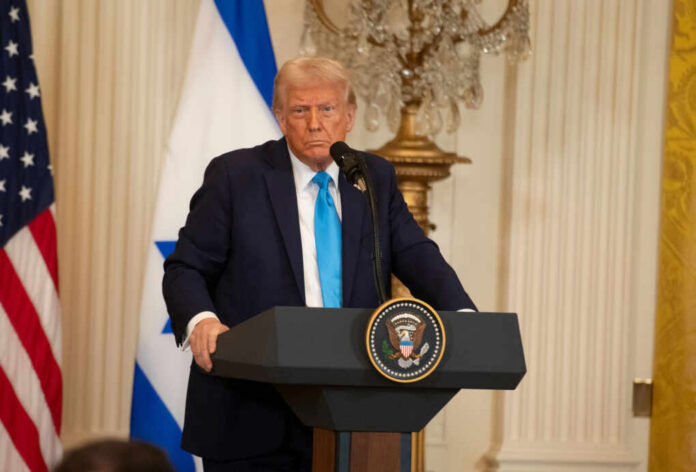
Television reports say Israel hit the southern suburbs of Beirut, claiming it struck a command center run by the Iran-backed group Hezbollah after rockets were fired at Israel.[2] At least three people were killed and more than a dozen wounded in the Lebanese capital. President Donald Trump then posted on social media that this morning’s attack on Beirut “should not have happened,” especially when the United States was “so close” to a peace deal with Iran.[2][3] Trump also urged both Israel and Hezbollah to “stand down” and stop firing.
Other outlets report Trump privately called Israeli Prime Minister Benjamin Netanyahu and sharply questioned the decision to launch the strike.[6] One report quotes Trump telling Fox News he asked Netanyahu, “What the f are you doing?” and warning that more attacks on Beirut could derail a planned agreement with Iran.[6] Trump’s team had suggested a ceasefire and memorandum with Tehran might be signed that same day, even down to claiming a possible “two to three hour” window for a virtual signing ceremony.[1][2] Instead, the strike triggered new doubt about whether the deal could move forward on schedule.
How the Beirut Strike Shook an Almost-There Iran Deal
Several reports describe a U.S.–Iran framework that would extend an existing ceasefire for about sixty days and reopen the Strait of Hormuz, a key oil shipping lane that affects global prices.[3][6] Mediators from countries such as Qatar and Pakistan were said to be helping both sides lock in details of a memorandum of understanding just as the Beirut strikes took place.[1] White House sources cited in one report blamed the Israeli attack for freezing the process and forcing officials to scramble to salvage the plan.[1] That same coverage notes Trump had publicly framed the deal as “imminent,” tying its success to all parties avoiding fresh escalation.
Iran’s chief negotiator seized on the Beirut attack to argue that Washington was either unwilling or unable to restrain its ally.[2] In one broadcast, he is quoted saying there was “no point” in continuing talks after Israel bombed Beirut while claiming to answer small Hezbollah rocket attacks.[2] Another report says military leaders from Iran’s powerful Revolutionary Guard signaled there would be no signing on the promised Sunday, while stopping short of rejecting a deal outright.[2] This pattern fits a broader cycle where battlefield events and diplomatic timelines collide, leaving ordinary people caught between promises of peace and nightly images of explosions.
Israel’s Security Argument and U.S. Mixed Signals
Israeli officials insist the Beirut strike was a legitimate response to rocket fire launched from Lebanon into Israeli territory, even if that fire caused no casualties.[2][3] Trump himself said the initial Hezbollah rockets were “small” and “meaningless” because no one was hurt, yet he still affirmed Israel’s right to defend itself.[3][4] That double message—backing an ally’s security needs while condemning the timing and scale of its response—shows the tension between deterrence and diplomacy. It also reflects a long pattern where Washington talks de‑escalation in public while green-lighting or overlooking allied actions on the ground.
News outlets covering the back-and-forth also note that Trump has, at other times, praised Israeli strikes as “excellent” and warned Iran that more pressure could force it to the negotiating table.[1] In this case, though, he stressed that both Israel and Iran should “stop shooting” so they did not “blow” the chance for a deal.[6][8] For Americans who already suspect foreign policy is driven by a tight circle of generals, lobbyists, and contractors, these shifting tones can look less like strategy and more like improvisation. When the president says peace is hours away but cannot prevent an ally from bombing a capital city, it deepens doubts about who is really in charge.
Why This Matters to Americans on Both Left and Right
People across the spectrum see the same troubling pattern here: secretive talks, sudden airstrikes, and leaders asking for trust without giving clear answers. Many conservatives worry that any Iran deal could repeat past mistakes, sending money or relief with weak enforcement while American taxpayers and soldiers bear the long‑term risk. Many liberals fear another endless Middle East conflict that drains resources from schools, health care, and roads at home. Both sides see elites making life-and-death decisions far above the reach of ordinary voters.
*TRUMP REITERATES CLAIMS U.S.-IRAN DEAL SIGNING STILL ON TRACK FOR SUNDAY DESPITE ISRAEL STRIKE IN BEIRUT AND IRANIAN RETALIATION THREAT IN INTERVIEW WITH BARAK RAVID: AXIOS
— ApeWire (@apewirenews) June 14, 2026
This episode also highlights how tightly war, oil, and the global economy are linked. The Strait of Hormuz matters not just to generals but to families already squeezed by high prices and inflation. A miscalculation in Beirut can ripple into higher fuel costs in Ohio or Arizona. When Trump says, “Let’s not blow it,” he is talking to foreign leaders—but many Americans hear another warning. If Washington and its allies keep mixing half‑secret deals with sudden strikes, they risk blowing what little trust the public still has in them.
Sources:
[1] Web – ‘Let’s Not Blow It!’: Trump Warns Israel’s Lebanon Strikes Could …
[2] Web – Trump tells ABC Israel strikes on Iran ‘excellent’ and warns ‘more to …
[3] YouTube – Trump warns Israel not to “blow it” by attacking Iran before nuclear …
[4] Web – Trump attacks Iran as Israeli officials rage over emerging nuclear …
[6] Web – Trump Says He Canceled Strikes On Iran, Hours After Making Threat
[8] YouTube – US-Iran Deal Confusion Deepens As Trump, Tehran Trade Claims …