
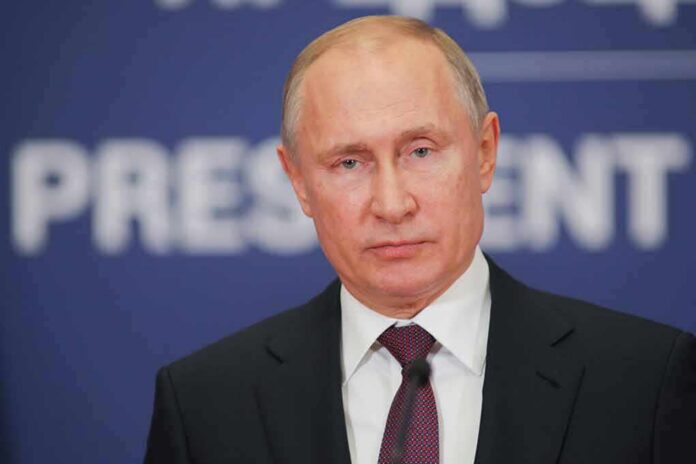
President Trump met Vladimir Putin in China and said the talks could help move the Russia‑Ukraine war toward progress, putting huge stakes on personal diplomacy with a longtime rival.
Story Highlights
- Trump said his relationship with Putin is longstanding and productive, and that progress is possible.
- The leaders discussed Ukraine and prepared for trilateral talks with China’s president.
- Agenda items included Ukraine, Iran, and nuclear arms control, according to advance briefings.
- No specific outcomes were announced after the one‑on‑one meeting, though Trump voiced optimism.
Trump’s Stated Goals and What He Said After Meeting Putin
President Trump met with Russian President Vladimir Putin ahead of a three‑way session with China’s leader in Shenzhen. After the one‑on‑one, Trump said the meeting “set the stage” for the larger talks and that “something will come out,” pointing to efforts to help with the Russia‑Ukraine war. During the visit, Trump also framed his relationship with Putin as long and positive, saying they had “a great relationship for many years” and hoped the talks would start “wonderful things”.
Reporters tracking the summit said Ukraine would be a central focus in both the bilateral and trilateral formats. They also identified Iran and nuclear‑arms control as expected topics. That framing came from pre‑meeting briefings and from a senior adviser to Putin, who previewed themes for the sessions. The leaders did not issue a detailed joint statement after the Trump‑Putin meeting, leaving the public record centered on aims rather than signed deliverables.
Why This Meeting Matters for Americans Watching Costs, Security, and Trust
Rising energy prices, military spending, and global risks all touch family budgets and daily life. When the United States and Russia talk, the stakes include nuclear stability and war costs. Past meetings show how leader‑level talks can open channels without sealing deals on the spot. In 2018, Trump said relations with Russia had “gotten substantially better” and could improve further, listing nuclear weapons and regional hotspots as focus areas, which shows a repeat pattern of big aims paired with long implementation paths.
That history cuts two ways. Supporters see value in direct contact to limit mistakes and test deals. Critics fear photo‑ops without firm concessions can boost an adversary’s image. The current meeting reflects that tension. Trump voiced optimism about progress on Ukraine after speaking with Putin, yet did not announce concrete steps. That mirrors the common gap between high‑level rhetoric and the hard work of technical talks that usually follows at lower levels before any real change appears on the ground.
What Was on the Agenda: Ukraine, Iran, and Nuclear Risks
Before the Shenzhen summit, public briefings pointed to three headline issues: the Russia‑Ukraine war, Iran’s regional threats, and nuclear‑arms risks. Ukraine dominated expectations, given the scale of fighting and global supply shocks. Iran’s actions and the region’s flashpoints add risk to oil markets and shipping. Nuclear talks are complex but vital, since missteps can be catastrophic. Advisers to Putin highlighted Ukraine for the Trump‑Putin bilateral, aligning with those public signals about what the leaders would tackle.
Trump said the meeting with Putin prepared the ground for the three‑way discussion that included China’s president. He suggested leaders were looking for ways to help with the war. That signaled an interest in shaping conditions for talks or pressure, even if any final settlement would require hard bargaining and verification. The leaders did not give a point‑by‑point readout, which limits what can be confirmed publicly about specific proposals or red lines shared in the room.
The Long Shadow of Earlier Summits
The public memory of 2018 influences how many view current outreach. At their joint press conference then, both Trump and Putin described the talks as successful and said they aimed to improve trust and tackle nuclear issues and counterterrorism. Those statements set a hopeful tone but did not, by themselves, deliver a binding agreement. The record shows how leaders often spotlight momentum while concrete results usually require follow‑on steps by diplomats and defense experts.
⚡️JUST IN: The Big Meeting between Trump, Xi Jinping and Putin has Begun with Iran on the Agenda
Notice how Xi Jinping has taken center stage pic.twitter.com/eb2KCRBf01
— Iran Observer (@IranObserver0) November 19, 2026
For Americans across the political spectrum, this is where frustration grows. Many see a government that talks big but rarely lands clear wins. Conservatives worry about high energy costs and wars that drain resources. Liberals worry about human rights and the divide between the powerful and everyone else. Both worry that elite circles make decisions in private rooms. Meetings like this can either prove that engagement produces real gains or confirm fears that power politics ignores everyday people.
What to Watch Next: Signals That Talks Are Turning Into Action
Watch for official readouts that mention timelines, working groups, or specific follow‑ups on Ukraine. Look for signs of prisoner swaps, ceasefire testing, or talks on safe zones. On nuclear risks, look for statements about verification talks or guardrails on new weapons. On Iran, track any moves on maritime security or missile limits. Trump said the bilateral set the stage for action. The test now is whether that stage leads to measurable steps the public can see.
Sources:
youtube.com, bbc.com, trumpwhitehouse.archives.gov, npr.org, bbc.co.uk