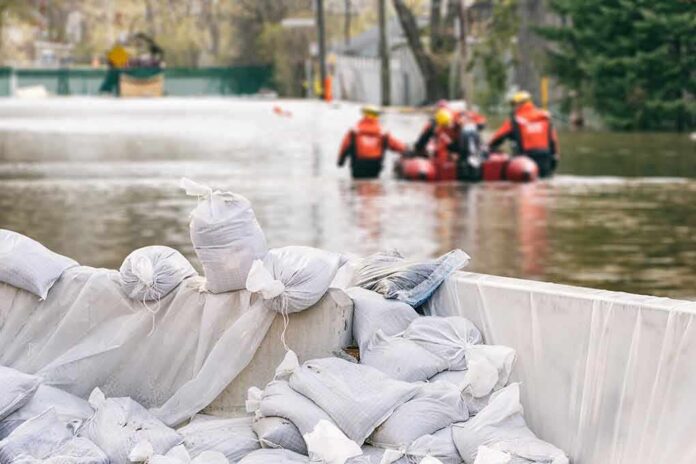
Nine days after deadly floods, rescuers pulled two workers alive from a Nepal hydropower tunnel as teams kept searching other sites for the missing.
Story Snapshot
- Two workers were rescued alive from a mud-choked tunnel nine days after the floods.
- Nepal’s government and army mounted multi-site tunnel operations with foreign experts.
- Officials made rescuing trapped hydropower workers a top national priority.
- Early counts of missing and trapped varied widely across projects and districts.
Rescue Teams Reach Survivors Inside a Flooded Tunnel
Rescue crews broke into an upper part of a mud-filled tunnel and pumped in air, then used drills and excavators to dig down to trapped workers at a Nepal hydropower site. The effort came nine days after flash floods slammed mountain valleys and buried power project tunnels with debris. Teams worked in tight chambers with unstable ground and low visibility. The operation showed that pockets of survivable space existed. Officials said more searches would continue at other tunnel locations across the region.
Nepal’s Energy, Water Resources and Irrigation Minister, Biraj Bhakta Shrestha, said rescuing workers in hydropower plants was the highest priority for the government. That stance put state resources behind tunnel access, pumping, and debris clearing. Crews used heavy machines and safety gear to reach blocked sections. Engineers assessed tunnel stability hour by hour. The focus stayed on speed and safety. Leaders signaled that saving lives came first, even as the wider damage tally was still forming.
Government and Army Lead Multi-Site Tunnel Operations
The prime minister’s office credited the Nepal Army with rescuing hundreds of people under very risky conditions during the early phase of the response. The army coordinated with police, local responders, and outside specialists. The Associated Press reported that army teams, backed by foreign experts, worked at several hydropower projects at the same time. That included clearing water and sediment, stabilizing slopes, and mapping access points. Commanders shared updates as crews shifted gear to where the odds of contact looked best.
Reuters reported that Nepal stepped up efforts to reach hundreds believed trapped in multiple tunnels, including at the Upper Trishuli complex. Those operations involved drilling through collapsed zones and removing tons of mud. Work cycles ran day and night. Managers staged fuel, spare parts, and pumps to keep progress steady. The scale of blocked infrastructure forced choices about which headings to open first. The goal was to create safe passages without triggering new collapses in fragile sections.
Unsettled Numbers and A Hard Lesson in Mountain Risk
Early reports gave very different counts for who was missing and who was trapped underground, with figures ranging from dozens to several hundred across sites. In at least one tunnel at Rasuwagadhi, searchers sent in a drone but found no one inside, suggesting some presumed entrapments were actually elsewhere. That confusion matched what often happens in fast disasters. Teams must separate tunnel entrapment from surface displacement before they finalize numbers.
🇳🇵 Trapped tunnel workers rescued in Nepal 'miracle'
Two hydropower workers have been pulled alive from a tunnel buried by debris in Nepal, a rare ray of hope on the tenth day of rescue efforts after catastrophic Himalayan flooding. pic.twitter.com/HMAvNRzlLy
— AFP News Agency (@AFP) September 4, 2026
This disaster fits a known pattern for run-of-river hydropower in Nepal, where monsoon floods have damaged dozens of projects in recent years and put workers at risk. Researchers have tracked repeated hits to dams, tunnels, and powerhouses during heavy rain. The narrow valleys amplify debris flows and surge waves. Operators and planners now face sharper questions about siting, early warnings, and safe rooms underground. The human rescue comes first. But the safety fixes must follow to prevent repeats.
Sources:
youtube.com, english.onlinekhabar.com, bbc.com, dtnext.in, abcnepal.tv, whalesbook.com, apnews.com