The fight over whether CNN “let a lie stand” or responsibly clarified a segment about President Trump’s mail-voting policies is less about a single on-air sentence and more about how technical election rules get flattened on television into sweeping claims about who gets to vote — especially troops and citizens overseas.
At a Glance
- UOCAVA absentee voting for military and overseas citizens is a carved‑out system in federal law; many new USPS mail‑ballot rules have explicitly exempted it.
- CNN anchor Wolf Blitzer issued a clarification after an interview suggested Trump’s mail‑balloting effort would hit troops; critics framed this as proof CNN platformed a falsehood.
- The White House’s earlier election executive order also directed changes to the military/overseas Federal Post Card Application — a separate vector that did implicate UOCAVA voters.
- Federal litigation has repeatedly constrained parts of the administration’s mail‑voting program, underscoring the complexity — and the stakes — of how these rules interact.
Why military and overseas ballots sit at the center of a broader mail-voting fight
The Uniformed and Overseas Citizens Absentee Voting Act (UOCAVA) guarantees absentee voting access for service members, their eligible family members, and U.S. citizens abroad in federal elections. It is a longstanding, distinct channel: states must offer these voters an absentee pathway that often uses different forms, timelines, and handling than domestic absentee or universal mail voting. That structural exception matters. When an administration or the Postal Service rewrites mail‑ballot handling, policymakers and courts often insist on UOCAVA carve‑outs to avoid disenfranchising voters who cannot reasonably vote in person. That is why, when critics warn that “the troops will lose their ballots,” defenders reflexively point to UOCAVA exemptions to argue there is no problem at all. Both instincts oversimplify a technical terrain built on multiple moving parts.
Enter the new USPS ballot mail rulemaking and Trump‑era directives. Summaries from nonpartisan analysts emphasized that the Postal Service’s compliance regime — unique barcodes and envelope rules, pre‑election voter list matching, and other handling protocols — would not apply to UOCAVA ballots, preserving the special track for military and overseas voters. That exemption is real. But it does not mean nothing else in the administration’s program touched UOCAVA voters; different prongs of federal policy moved on parallel tracks.
What CNN said, what it corrected, and why critics pounced
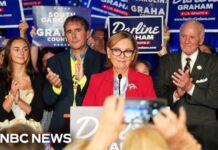
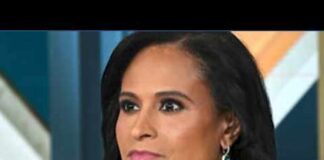
During a late‑August segment about court action on the Postal Service’s new ballot handling rules, CNN featured Virginia Governor Abigail Spanberger discussing mail‑voting restrictions and public fear. The segment’s framing linked her remarks to litigation that paused USPS implementation of parts of the administration’s plan. Afterward, CNN anchor Wolf Blitzer issued a clarification: the USPS rule did not restrict military and overseas voting — a nod to the explicit UOCAVA exemption critics had been citing all week. Conservative outlets and commentators presented the clarification as evidence that CNN had platformed a falsehood about harm to troops’ ballots, casting the episode as a clean “gotcha” moment.
On the narrow USPS question, the critics’ point lands: the Postal Service’s ballot rule, as proposed and summarized publicly, carved out UOCAVA ballots from its new mandates. That is precisely the sort of correction a broadcast anchor should make when a segment’s shorthand muddles a technical exemption. But stopping there misses the other half of the policy picture — and why Spanberger and others have treated the broader mail‑voting program as a live risk to military and overseas voters even when USPS is carved out.
The other prong: the White House order that did reach UOCAVA processes
Separate from the USPS rules, the White House’s 2025 executive order, Preserving and Protecting the Integrity of American Elections, directed the Defense Department to revise the Federal Post Card Application (FPCA) — the linchpin form UOCAVA voters use to register and request ballots — to require documentary proof of citizenship, among other additions. Changing the FPCA is not a cosmetic tweak; it alters what overseas citizens and service members must provide, and what local election officials must verify, before those voters can receive a ballot. Veterans’ groups, election‑law organizations, and some press analyses flagged this prong as adding friction for exactly the population politicians say they want to protect.
Courts have been actively refereeing these moving parts. Voting‑rights plaintiffs secured injunctions against elements of the mail‑voting program, particularly those routed through the Postal Service, while other pieces saw narrower wins for the administration, only to face further appellate or district‑court scrutiny. The litigation record confirms two things at once: UOCAVA exemptions exist in key USPS rules, and portions of the broader executive‑order framework did target processes that directly affect military and overseas voters — which is why lawsuits have repeatedly sliced, stayed, or re‑scoped specific provisions.
How precision gets lost: legal exemptions versus practical risk
Why does this keep devolving into dueling “lies” and “clarifications”? Because public rhetoric compresses. Policymakers warn that “troops’ votes are at risk,” intending to capture the cumulative effect of multiple rule changes; opponents reply that “UOCAVA is exempt,” meaning a particular USPS docket leaves the special channel untouched. Both statements spring from partial truths. The exemption is legally significant; the FPCA directive is operationally significant. In the real world, military and overseas voters move through a chain: registration or ballot request via FPCA, ballot transmission, postal carriage, and return deadlines. Touch any link and you alter failure points. The Postal Service’s carve‑out protects one link; the executive order’s FPCA changes tug at another.
When television compresses this into a 20‑second exchange, categorical claims become irresistible — and brittle. CNN’s clarification appropriately re‑centered the USPS exemption. Yet the existence of that exemption does not erase the separate, documented attempt to modify UOCAVA processes at the source by rewriting the FPCA. In that sense, declaring Spanberger’s broader concern a “lie” overreads what the narrow on‑air correction can bear.
SPANBERGER MILITARY BALLOT FEARS UPENDED CNN rushed a correction after Virginia Gov. Abigail Spanberger and Wolf Blitzer implied President Trump’s mail-voting warnings could leave U.S. military and overseas voters unable to cast ballots—despite the Posta… https://t.co/27g8QO4sff
— KOLLMAN REPORT (@RonKollman) September 2, 2026
What this means going forward
Three practical implications follow. First, treat mail‑voting debates as systems problems. Asking “are troops affected?” is not one question; it is four or five, each tied to a discrete step in the UOCAVA chain. Analysts and journalists should specify which step is in play — FPCA content, ballot production, USPS handling, acceptance deadlines — and cite the governing document for that step. Precision reduces heat and improves accountability.
Second, watch the courts, not just the press clips. Preliminary injunctions and merits rulings have repeatedly narrowed the administration’s program, especially where agencies arguably exceeded statutory authority or burdened protected voters. These decisions are the strongest arbiters of what is in effect and for whom.
Third, understand how corrections land in a polarized media ecosystem. Real‑time broadcast clarifications are healthy; they also become fodder for narratives that a side “lied” or a network “caved.” The better standard is evidentiary: Was the correction accurate on the specific rule at issue? Yes, with respect to the USPS UOCAVA exemption. Does that accuracy render all broader warnings baseless? No, given the parallel executive‑order directives that explicitly reached UOCAVA mechanisms. Holding both truths simultaneously is not evasion; it is the only way to describe the policy reality as it is, not as partisans wish it to be.
Sources:
thegatewaypundit.com, nypost.com, justthenews.com, usvotefoundation.org, usatoday.com, cnn.com, whitehouse.gov, congress.gov, independent.co.uk, apnews.com, yahoo.com