The Supreme Court’s emergency order temporarily blocking a lower court’s restriction on mail-order abortion pills exposes yet another battle where unelected judges override federal agency authority, leaving Americans caught in a ping-pong match over access that benefits neither those who value life nor those seeking stable healthcare policy.
Story Snapshot
- Supreme Court paused lower court ruling that blocked telehealth prescriptions and mail delivery of mifepristone
- Justice Alito’s emergency order maintains nationwide pharmacy and mail access while manufacturers’ appeals are reviewed
- Louisiana’s legal challenge leveraged the 1873 Comstock Act to revive in-person examination requirements
- Temporary stay continues through at least May 11, affecting approximately 500,000 annual users and a $1 billion pharmaceutical market
Emergency Judicial Intervention Halts Access Restrictions
Justice Samuel Alito signed an emergency order pausing a federal appeals court decision that would have required in-person doctor visits before mifepristone prescriptions. The temporary stay restores telehealth consultations and mail delivery nationwide, reversing restrictions imposed by the Fifth Circuit Court of Appeals in late April. Drug manufacturers GenBioPro and Danco Labs appealed the lower court ruling, arguing it would create patient confusion and disrupt access for hundreds of thousands of women. The Supreme Court’s intervention through its shadow docket avoided oral arguments, opting instead for a procedural pause while justices review written briefs from both sides.
Louisiana’s Legal Strategy Revives Century-Old Law
Louisiana Attorney General Liz Murrill spearheaded the challenge alongside anti-abortion organizations, citing safety concerns and invoking interpretations of the Comstock Act of 1873, an anti-obscenity statute some argue prohibits mailing abortion-related materials. Murrill characterized supporters of mail access as “pill pushers” and “pill traffickers,” framing the issue as protecting women from unsafe medical procedures conducted without physical examination. The legal strategy targets FDA regulations expanded in 2021 and 2023 that eliminated in-person requirements and allowed pharmacy dispensing. This approach leverages conservative Fifth Circuit precedents in a post-Dobbs landscape where fourteen states maintain full abortion bans, making medication alternatives critically important for women in restrictive jurisdictions.
Federal Authority Versus State-Level Challenges
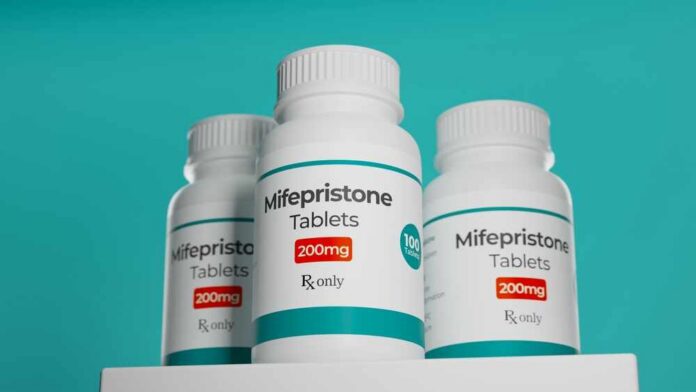
The FDA approved mifepristone in 2000 and deemed it safer than common over-the-counter medications like Tylenol, with medication abortions accounting for 63 percent of all U.S. abortions in 2023 according to the Guttmacher Institute. Federal health officials defended expanded access as evidence-based policy, yet face persistent state-level legal assaults questioning their regulatory authority. This case echoes a 2024 Supreme Court ruling that dismissed a similar challenge for lack of standing, where justices upheld FDA’s mifepristone regulations by a 6-3 margin. The current dispute reveals ongoing tensions between federal agencies exercising congressionally delegated powers and state governments asserting sovereignty over healthcare decisions within their borders—a conflict that leaves millions uncertain about access.
Broader Implications for Governance and Individual Rights
The Supreme Court’s reliance on emergency shadow docket procedures circumvents transparent deliberation, fueling concerns among citizens across the political spectrum about unaccountable judicial power. For conservatives who value limited government, the case highlights how courts and bureaucracies repeatedly override elected state legislatures attempting to regulate abortion. For those prioritizing healthcare access, the temporary nature of relief underscores how legal uncertainty disrupts medical practice and patient decision-making. The dispute also affects economic stakeholders including pharmacies like CVS and Walgreens, which face compliance whiplash as regulations shift. As the Court deliberates, approximately 500,000 annual mifepristone users remain in limbo, their access dependent on judicial timelines rather than consistent policy—illustrating how Washington’s dysfunction extends beyond Congress into the courts.
The temporary stay extends through May 11, 2026, with no further action reported, maintaining current access levels while parties submit legal arguments. Whether the full Court ultimately upholds FDA’s authority or sides with Louisiana’s challenge will determine if mail-order abortion pills remain available nationwide or face renewed restrictions. Either outcome will likely intensify 2026 midterm debates about federal overreach versus state rights, leaving everyday Americans frustrated that their representatives seem more focused on ideological battles than stable, predictable governance that serves citizens’ needs regardless of political affiliation.
Sources:
Supreme Court restores access to abortion pill mifepristone through telehealth, mail and pharmacies
Supreme Court Restores Temporary Mail Access to Abortion Pill Mifepristone
Supreme Court upholds mail-order access to mifepristone