Africa’s ancient continent is ripping apart at an accelerating pace, challenging our understanding of geological stability and reminding us how little control humans truly have over nature’s raw power.
Story Highlights
- 2025 studies reveal “heartbeat-like” mantle pulses speeding up the East African Rift System, forming a new ocean basin millions of years ahead of old predictions.
- A 35-mile rift tore open in Ethiopia’s Afar desert in 2005, destroying roads and homes, with cracks still widening at observable rates.
- Millions in Ethiopia, Kenya, and beyond face heightened earthquake and volcanic risks from non-linear rifting driven by superplume activity.
- Sensational media hype contrasts with scientific consensus: no imminent split, but real-time changes expose vulnerabilities in fragile regions.
Discovery of Accelerated Rifting
Emma Watts of Swansea University analyzed over 100 volcanic samples from Ethiopia’s Afar region. Her 2025 study in Nature Geoscience identified chemical “barcodes” in rocks revealing rhythmic mantle plume pulses. These surges, likened to a geological heartbeat, accelerate crustal thinning where the continent is weakest. Co-author Tom Gernon from the University of Southampton described the pulses moving like blood through a narrow artery, fueling faster separation in the East African Rift System.
Historical Rift Events and Monitoring
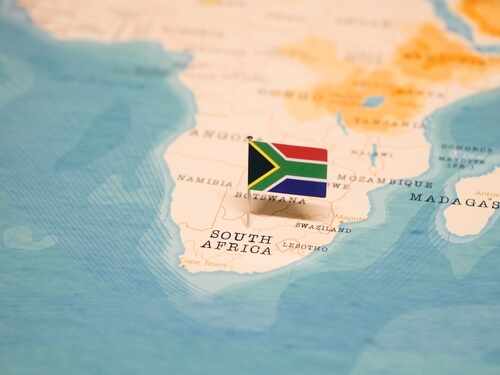
In 2005, a 35-mile rift suddenly opened in Ethiopia’s Afar desert due to tectonic displacement and magma pulses. This event destroyed roads, homes, and schools, marking the surface manifestation of deeper forces. NASA and USGS satellite data from the early 2020s confirmed faster crustal fracturing. The Afar Triple Junction, where Nubian, Somalian, and Arabian plates meet, drives Y-shaped rifting spanning 3,000 km from the Red Sea to Mozambique.
Ongoing monitoring shows fissures expanding at about 1.27 cm per year, with earthquakes and volcanism persisting. Pre-2025 models assumed steady 1-2 cm annual divergence, but new geochemical data highlights non-linear acceleration from superplume activity originating near Earth’s core-mantle boundary.
Impacts on African Communities
Afar residents in Ethiopia, Eritrea, and Djibouti endure immediate threats from seismic activity and eruptions. The 2005 rift displaced locals and disrupted infrastructure. Millions along the EARS corridor in Kenya, Tanzania, and Mozambique risk similar quakes. Economic hits include damaged mining, agriculture, and volcano tourism sites. Social displacement from growing fissures compounds hardships in already volatile regions.
Scientists just discovered Africa is closer to breaking apart than we thought https://t.co/hHddpmgkeK
— Beatrice Oki (@beatrice_oki) April 25, 2026
Long-term, over 5-10 million years, a new ocean will split Africa, creating coastlines for landlocked nations like Uganda and Zambia. This redraws the Horn of Africa, potentially boosting trade but altering biodiversity, weather, and geopolitics. Such uncontrollable forces underscore frustrations with distant elites who prioritize global agendas over practical hazard preparedness for vulnerable populations.
Scientific Consensus Amid Hype
Geologists hail the 2025 findings as a breakthrough, resolving why rifting varies beyond steady models. Afar serves as a natural laboratory for ocean basin birth, akin to Iceland’s ridge. Peer-reviewed sources like Nature Geoscience outweigh YouTube sensationalism claiming “terrifying speed.” Studies confirm millimeter-per-year rates, not human-timescale breakup. Uncertainties remain on western rift extension, demanding more data.
Sources:
Scientists Say a Newly Forming Ocean May Split Africa Apart
Scientists Warn Africa Is Gradually Breaking Apart, New Ocean Possible